Shopping Cart
There are no more items in your cart
BETA RR Race 2027: all updates, 8 models and specifications
The BETA RR Race 2027 range covers eight cylinders from 125 to 480 cm³. The 4Ts gain Launch Control and Quick Shift, while the France prices range from €9,390 to €10,950.
Discover the BETA RR Race 2027: France prices from €9,390 to €10,950, eight models 2T/4T, Launch Control, Quick Shift, KYB equipment and technical sheets.
BETA is evolving its family of competition-oriented enduro bikes for the 2027 model year. The RR Race range remains composed of eight models - 125, 200, 250 and 300 cm³ in two strokes, then 350, 390, 430 and 480 cm³ in four strokes - but it receives a series of targeted improvements. The four-strokes adopt in particular Launch Control and Quick Shift. The two-strokes benefit from different engine evolutions depending on the displacement, while the entire range gains new KYB suspension settings, an LED headlight, a Trailtech counter and several reinforced components.
This file reviews all the new features announced by Betamotor, explains their interest on the ground and gathers the French characteristics and prices of the eight BETA RR Race 2027. The numerical data comes from the French and English technical sheets as well as the sales price including VAT France in force on August 7, 2026. When BETA does not publish any performance measurements, we specify this in order not to transform a technical evolution into an unverified promise.
Key takeaway
- The range includes eight models: four 2T from 125 to 300 cm³ and four 4T from 350 to 480 cm³.
- The RR Race 4T 2027 receive a five-level Launch Control and a Quick Shift for gear changes.
- The two-level Traction Control and the two engine mappings remain controlled from the steering wheel.
- The 125 2T adopts a revised piston; the 250 and 300 2T gain new main crankshaft bearings.
- The 300 2T also receives a reworked cylinder head geometry and exhaust valve adjustment.
- The entire range benefits from new KYB settings, a reinforced chain guide, an LED headlight and a Trailtech counter.
- The 2T remain without separate series lubrication: the oil-gas mixture must be prepared by the user.
- Availability is announced for September 2026, with prices including VAT France between €9,390 and €10,950.
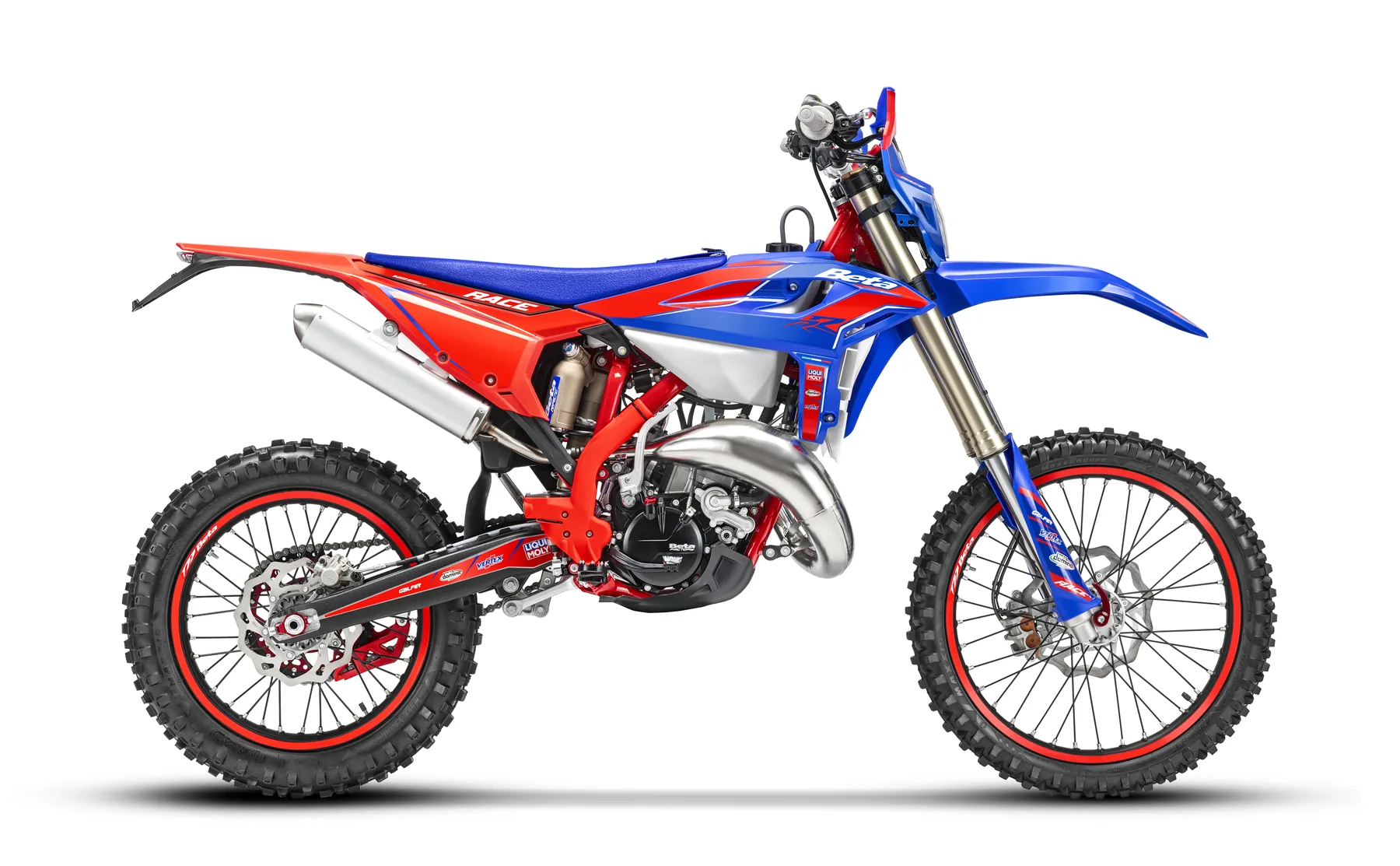
BETA RR Race 125 2T 2027 studio profile view. Photo: Betamotor.
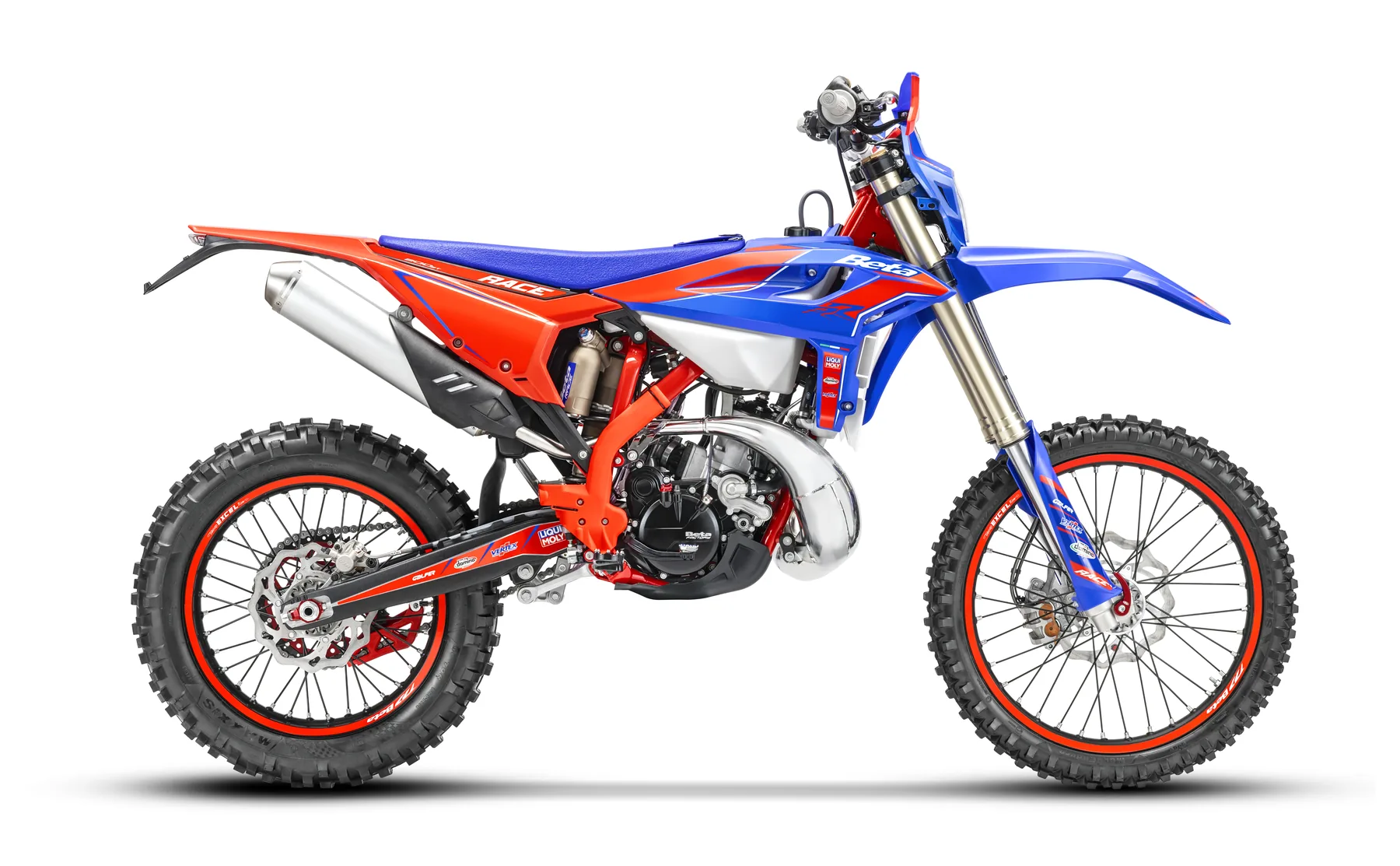
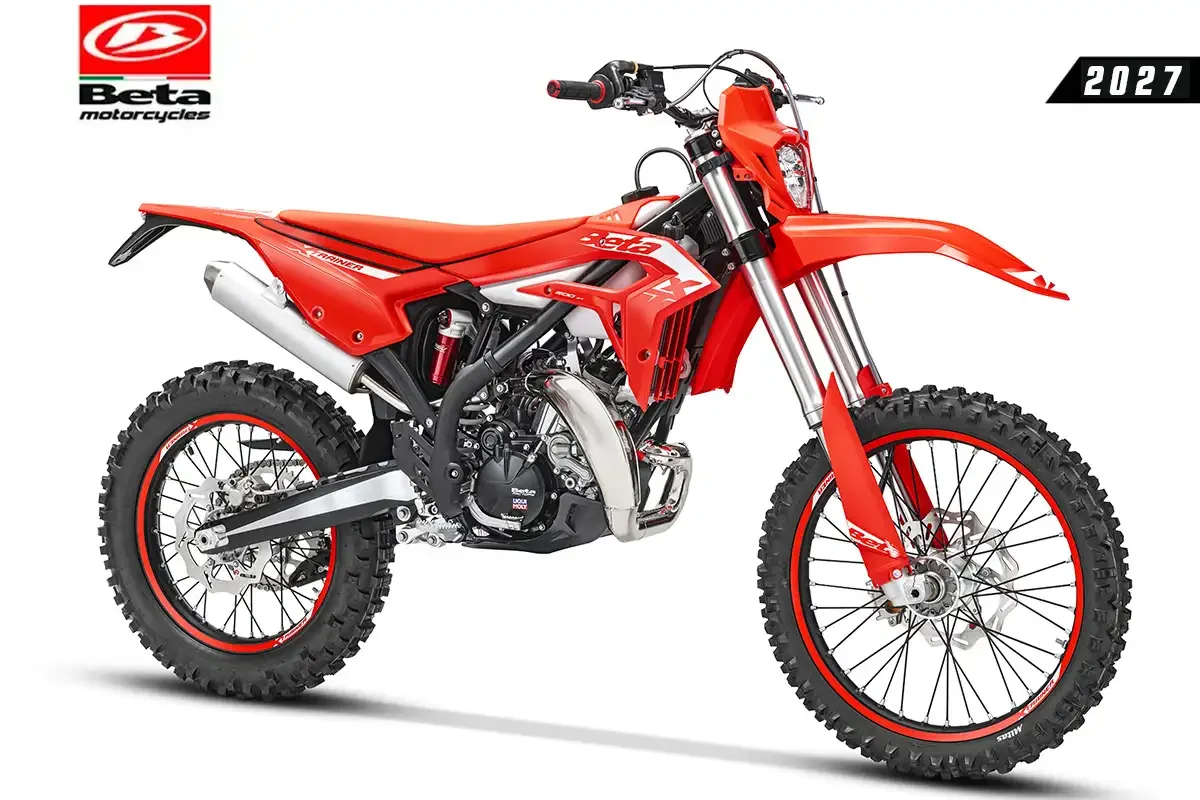
BETA RR Race 200 2T 2027 studio profile view. Photo: Betamotor.
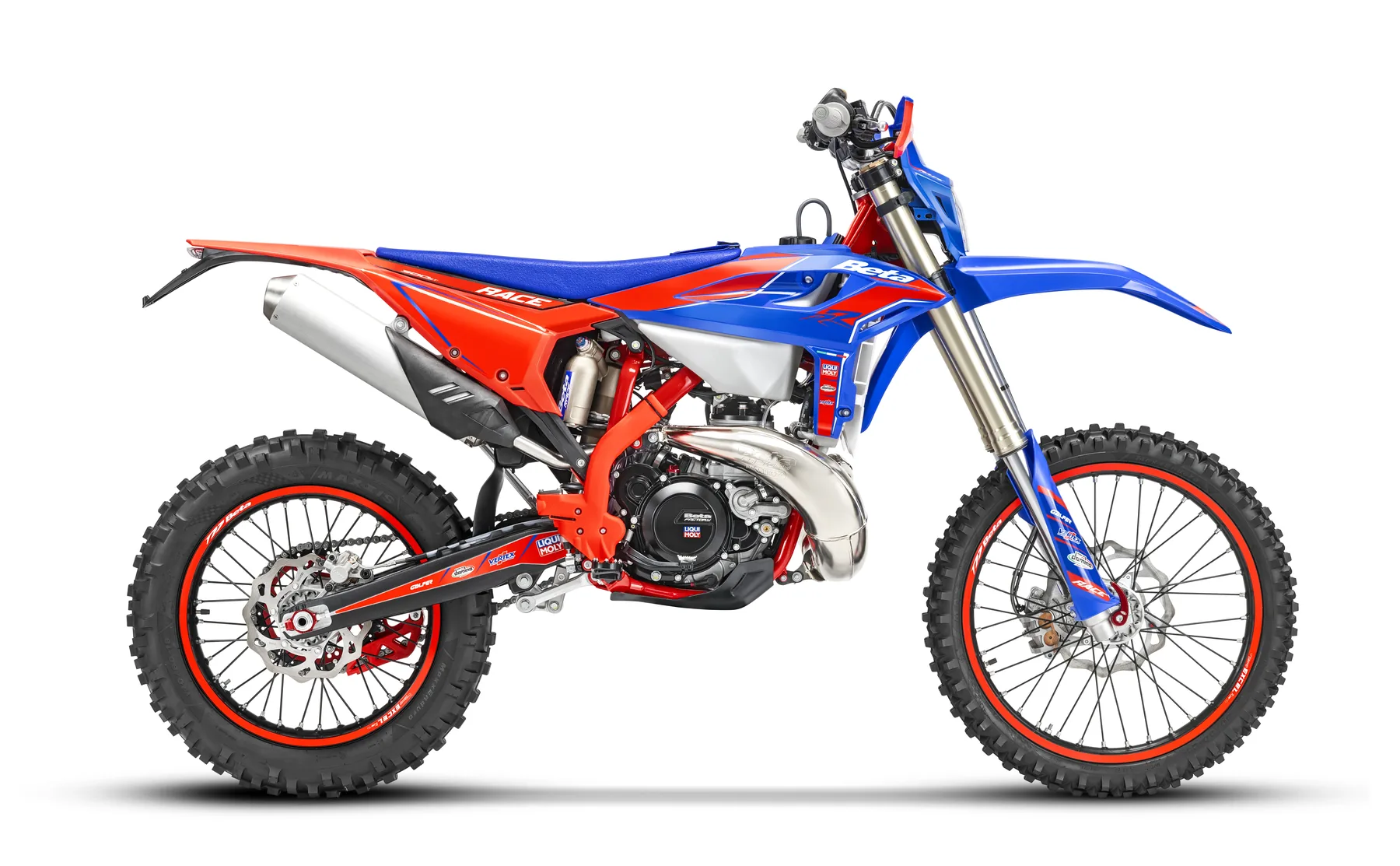
BETA RR Race 300 2T 2027 profile view in studio. Photo: Betamotor.
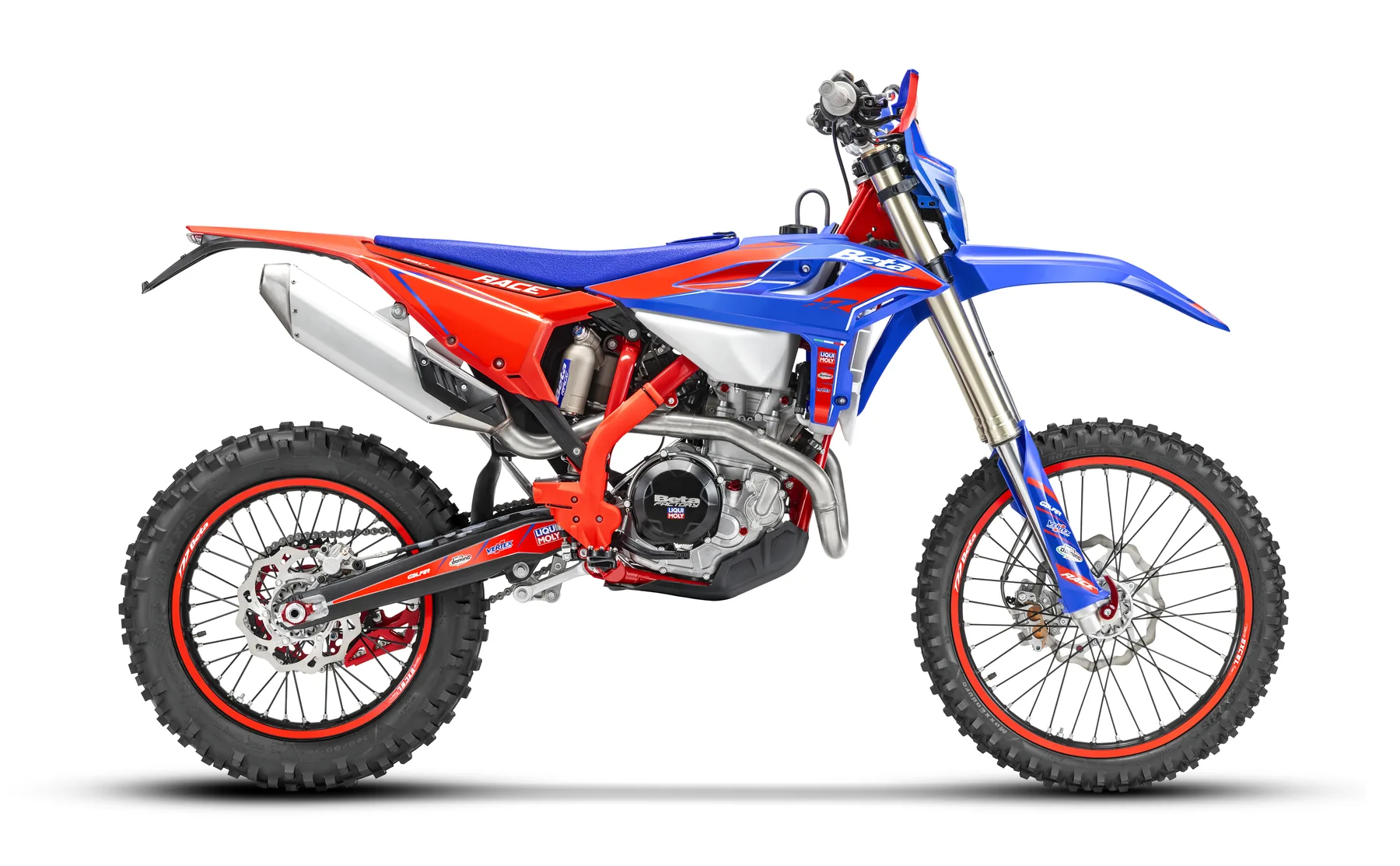
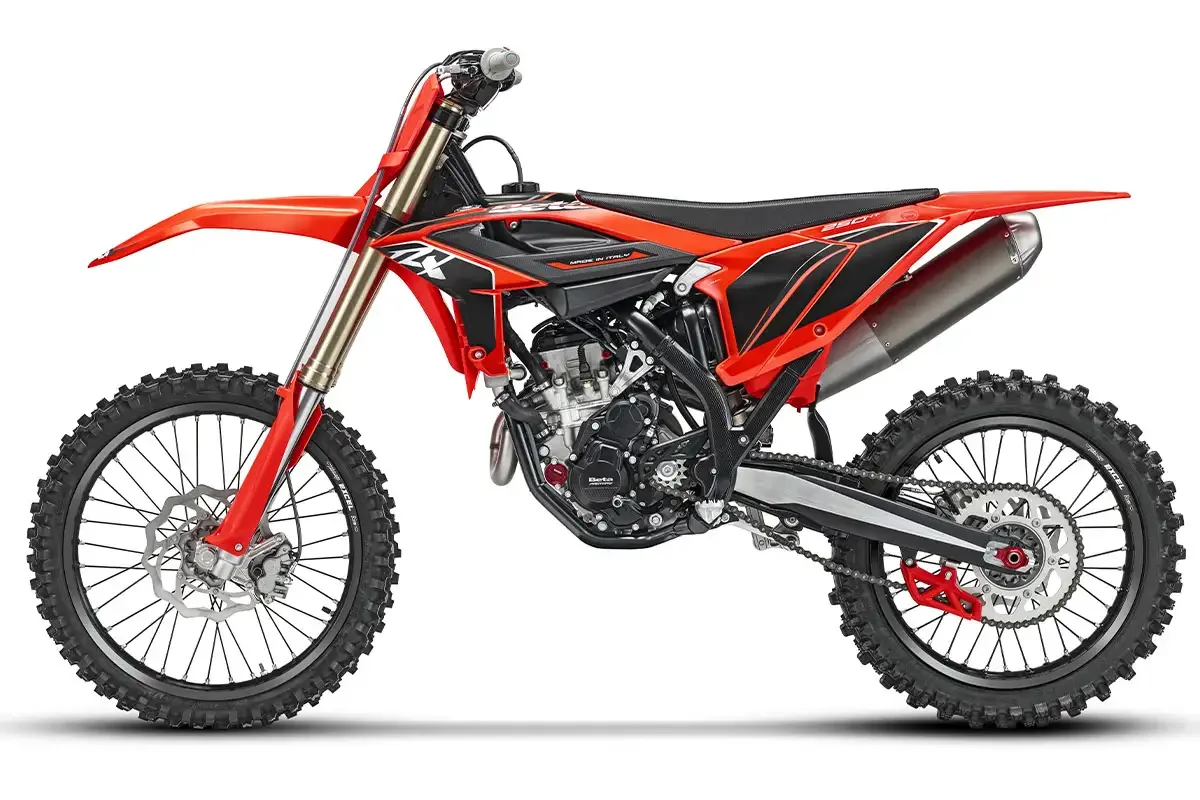
BETA RR Race 4T 2027 profile view in studio. Photo: Betamotor.
- The eight models
- All the new arrivals 2027
- Four-wheel drive developments
- Developments of the two-timers
- Racing equipment and KYB suspension
- Compared technical sheets
- Which displacement to choose?
- RR Race or RR X-PRO?
- Complete official gallery
BETA RR Race 2027: a range of eight models
BETA maintains a rare amplitude in the Enduro category. The rider can choose a very light and demanding two-stroke, a 200 with a specific compromise, the classic 250 and 300 2T, or one of the four-cylinder 4T. All share an architecture designed for racing, but their engines, masses and dimensions are not identical.
| model | Actual displacement | Announced dry weight | tank | starting up | nutrition |
|---|---|---|---|---|---|
| BETA RR Race 125 2T 2027 | 124,8 cm³ | 94 kg | 9.5 l | Kick | Keihin PWK 36 |
| BETA RR Race 200 2T 2027 | 190,2 cm³ | 97 kg | 9.5 l | electric | Keihin PWK 36 |
| BETA RR Race 250 2T 2027 | 249,4 cm³ | 103,5 kg | 9.5 l | electric | Keihin PWK 36 |
| BETA RR Race 300 2T 2027 | 292,6 cm³ | 103,5 kg | 9.5 l | electric | Keihin PWK 36 |
| BETA RR Race 350 4T 2027 | 349,1 cm³ | 107,5 kg | 9 l | electric | Double injection Elldor, body Ø 42 mm |
| BETA RR Race 390 4T 2027 | 385,6 cm³ | 107,5 kg | 9 l | electric | Double injection Elldor, body Ø 42 mm |
| BETA RR Race 430 4T 2027 | 430,9 cm³ | 107,5 kg | 9 l | electric | Double injection Elldor, body Ø 42 mm |
| BETA RR Race 480 4T 2027 | 477,5 cm³ | 107,5 kg | 9 l | electric | Double injection Elldor, body Ø 42 mm |
The term "dry weight" is the one used in the BETA documentation. It does not correspond to the weight of the motorcycle ready to ride with all its fluids and full tank. This distinction is important when comparing two manufacturers using different protocols.
What really changes on the RR Race 2027
The 2027 vintage is not a complete overhaul of the platform. BETA retains the molybdenum steel frame, the 300 mm and 287 mm front forks, the 260 and 240 mm Wave disc brakes, and the KYB suspension torque. The work focuses on the electronics of the 4T, the performance of certain engines 2T, hydraulic settings, and a series of details whose interest is mainly measured in racing or in difficult conditions.
| New MY 2027 | Models concerned | Objective announced by BETA |
|---|---|---|
| Five-level Launch Control | Every 4T | Manage the couple at the start and limit skidding or locking |
| Quick Shift on the climb | Every 4T | Pass the reports without cutting off the gas |
| Improved voltage regulator | Every 4T | Stabilize the electrical supply and improve charging |
| Mechanical distribution chain tensioner | Every 4T | Reduce friction and improve progressiveness |
| Titanium intake valves with optimized finish | 430 and 480 4T | Increase resistance and reliability under high stress |
| Piston reviewed | 125 2T | Improve the fluidity of operation |
| New main bearings | 250 and 300 2T | Reduce friction and improve rotation |
| Cylinder head and exhaust valve overhauled | 300 2T | Make the response more progressive at low and medium doses |
| Updated KYB internal settings | The whole range | Refine the balance and behavior of each cylinder displacement |
| Chain guide, pinion cover, handles, headlight and speedometer | The whole range | Strengthen resistance, comfort and legibility |
RR Race 4T 2027: Launch Control and Quick Shift are coming
A Launch Control adjustable on five levels
The Launch Control module regulates the delivery of torque during the start phase. Its purpose is to convert available power into traction, avoiding that too sudden an opening translates into sliding or stalling. The English documentation specifies that five levels are available. This number gives the rider a margin of adjustment according to grip, but BETA does not detail in the file the exact logic of each of the five levels.
On a special, a cross-test or an online start, this aid can make the implementation more repeatable. However, it does not eliminate the role of the clutch, the choice of gear ratio, or the placement of the body. Its interest will always depend on the terrain, the tire, the suspension setting and the level of grip.
Quick Shift: the gears go up without cutting off the throttle
The Quick Shift only acts when shifting gears up. The rider can engage the top gear without releasing the accelerator, which reduces the interruption of motion. BETA targets here the acceleration phases where every fraction of a second counts. The manufacturer does not communicate either measured time of passage or time gain: it is therefore necessary to present the system as a technical function, and not as a guarantee of numerical performance.
A new command at the wheel
The arrival of the LC and the QS imposes a redesigned command. It remains installed in the protection of the handlebar and now gathers the new functions with the Traction Control adjustable on two levels and the selector of the two engine mappings. The rider thus has four families of settings: mapping, traction control, start assistance and rapid gear shifting.
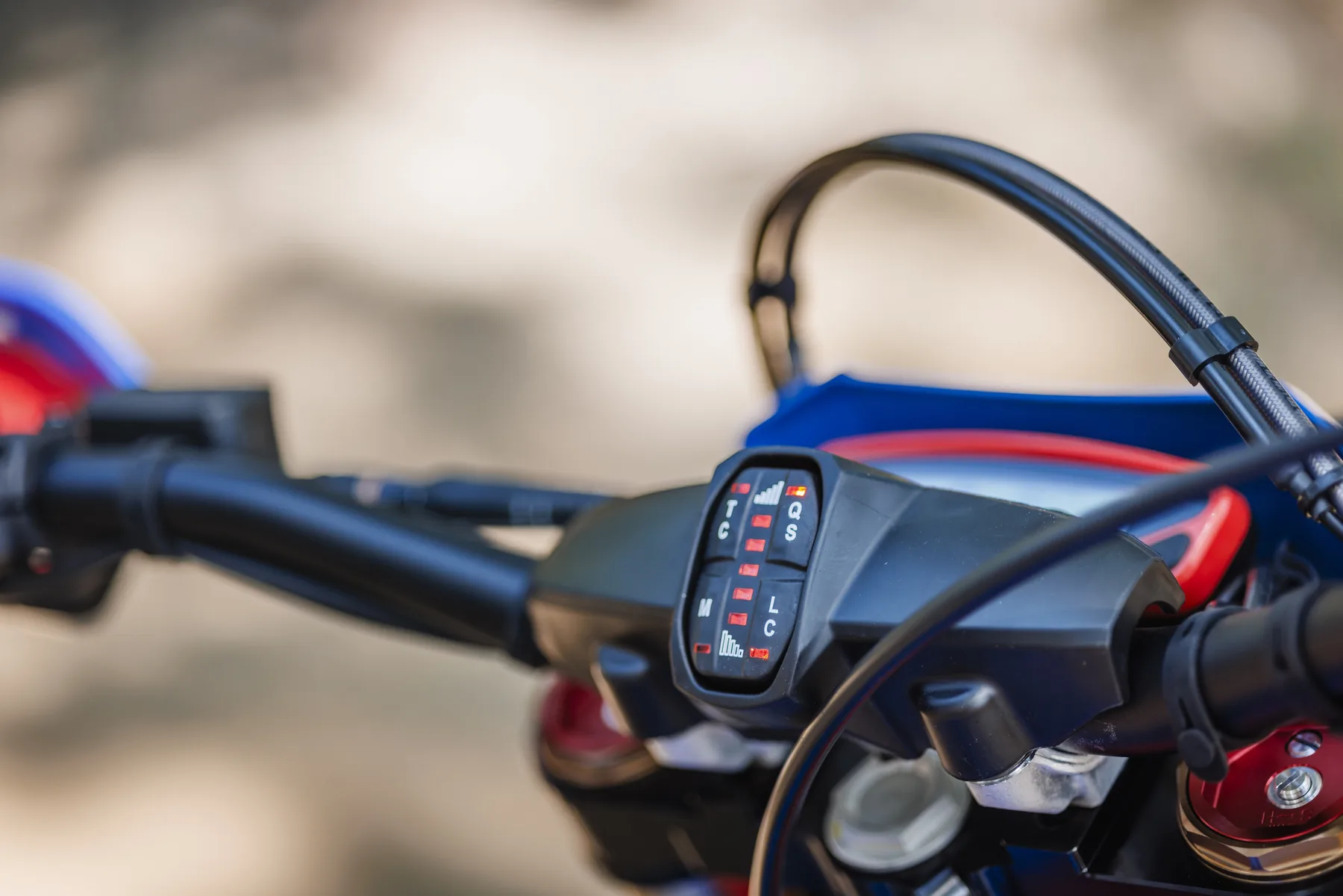
BETA RR Race 4T 2027, details of electronic controls on the handlebar. Photo: Betamotor.
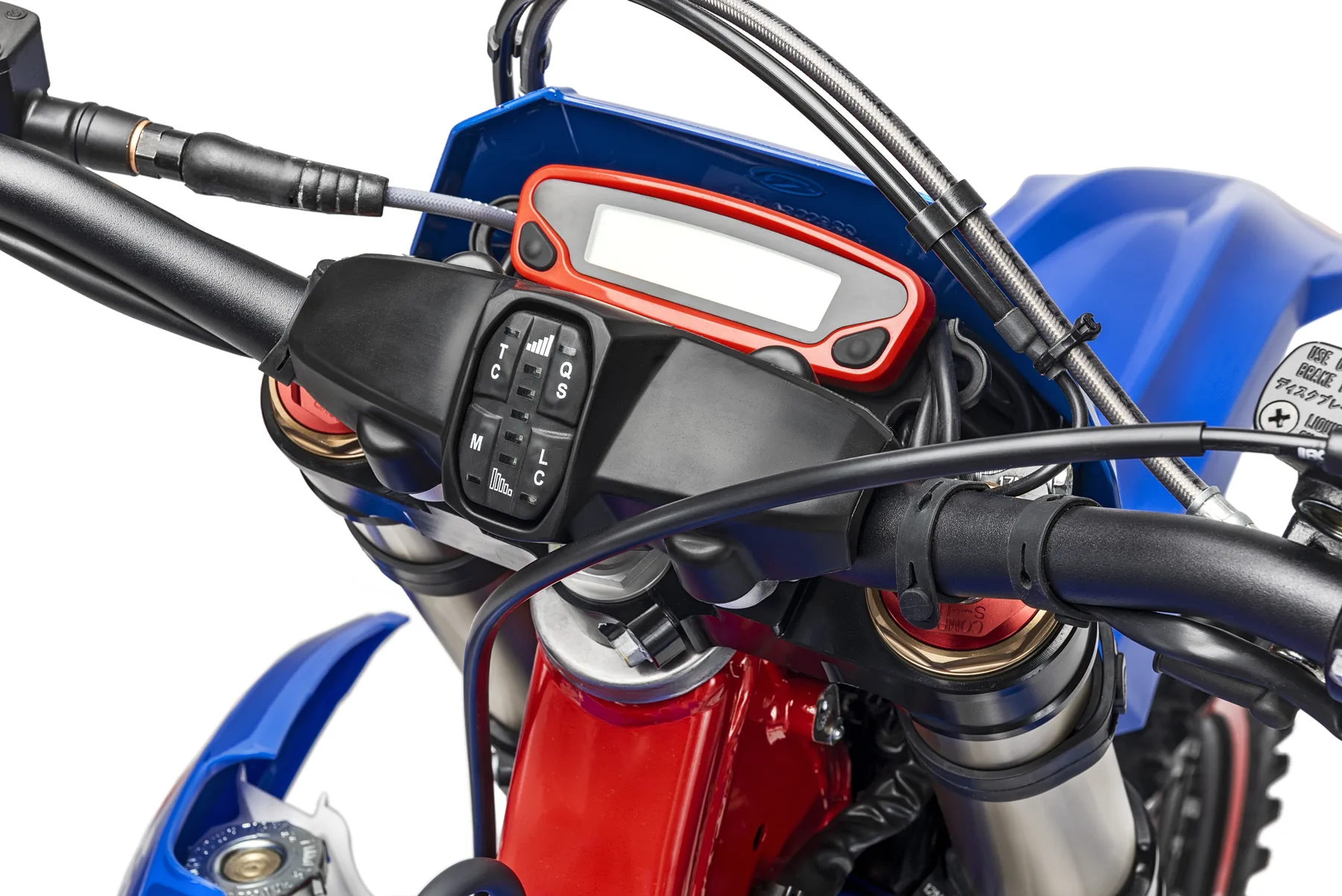
The new Trailtech counter is larger, more readable and more robust. Photo: Betamotor.
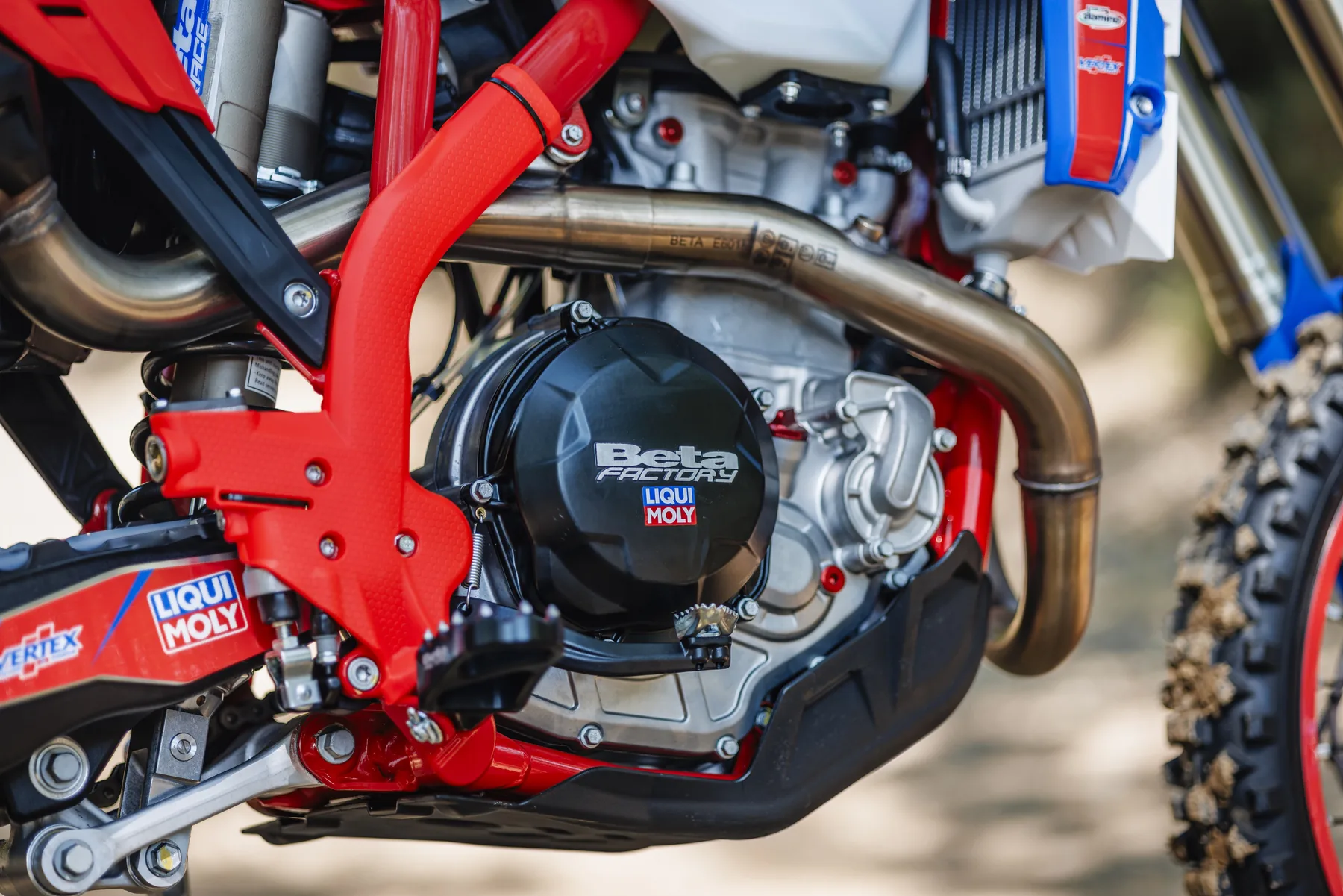
BETA RR Race 4T 2027, detail of the four-stroke engine. Photo: Betamotor.
Voltage regulator and battery charging
The new regulator must provide a higher, more stable and more efficient voltage. BETA announces more constant power supply to electronic components and increased charging capacity. This is a less spectacular point than a Launch Control, but potentially important on a modern enduro: electric start, injection, sensors, dashboard and electronic aids all depend on the quality of the electrical network.
Fully mechanical distribution chain tensioner
The tensioner abandons the hybrid mechanical-hydraulic solution with forced oil supply in favor of a purely mechanical mechanism with a recalibrated spring. According to BETA, this architecture, derived from the RX 450, optimizes friction and operating progressiveness, while favoring warm starts as well as cold starts.
Titanium valves on the 430 and 480
The two large cylinders receive titanium intake valves whose finish is optimized. BETA associates this evolution with resistance and reliability under the stresses of competition. The technical sheets indicate two titanium intake valves and two steel exhaust valves on the 430 and 480. The 350 and 390 are announced with four titanium valves.
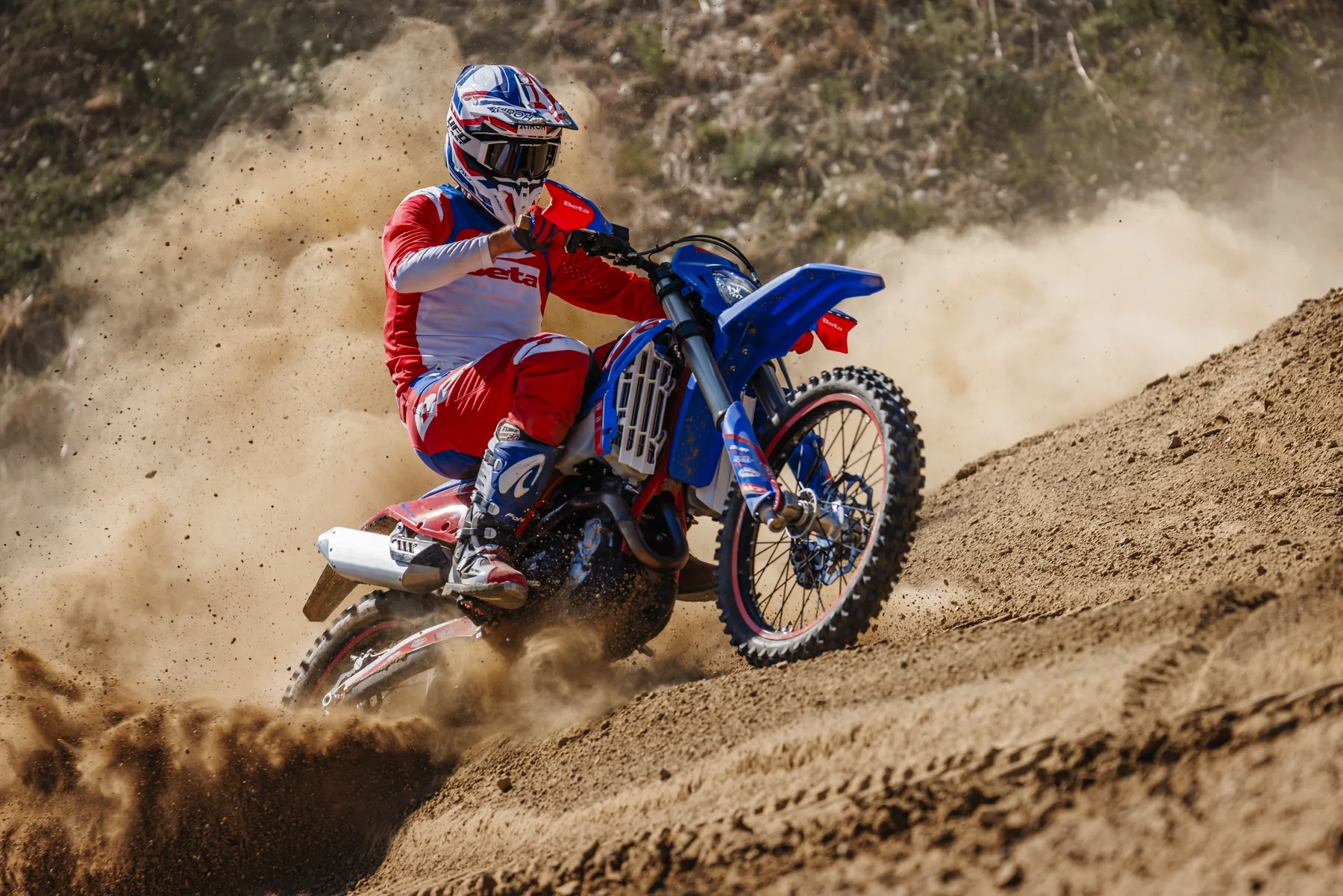
rider on a BETA RR Race 4T 2027 exiting a corner with a cloud of dirt. Photo: Betamotor.
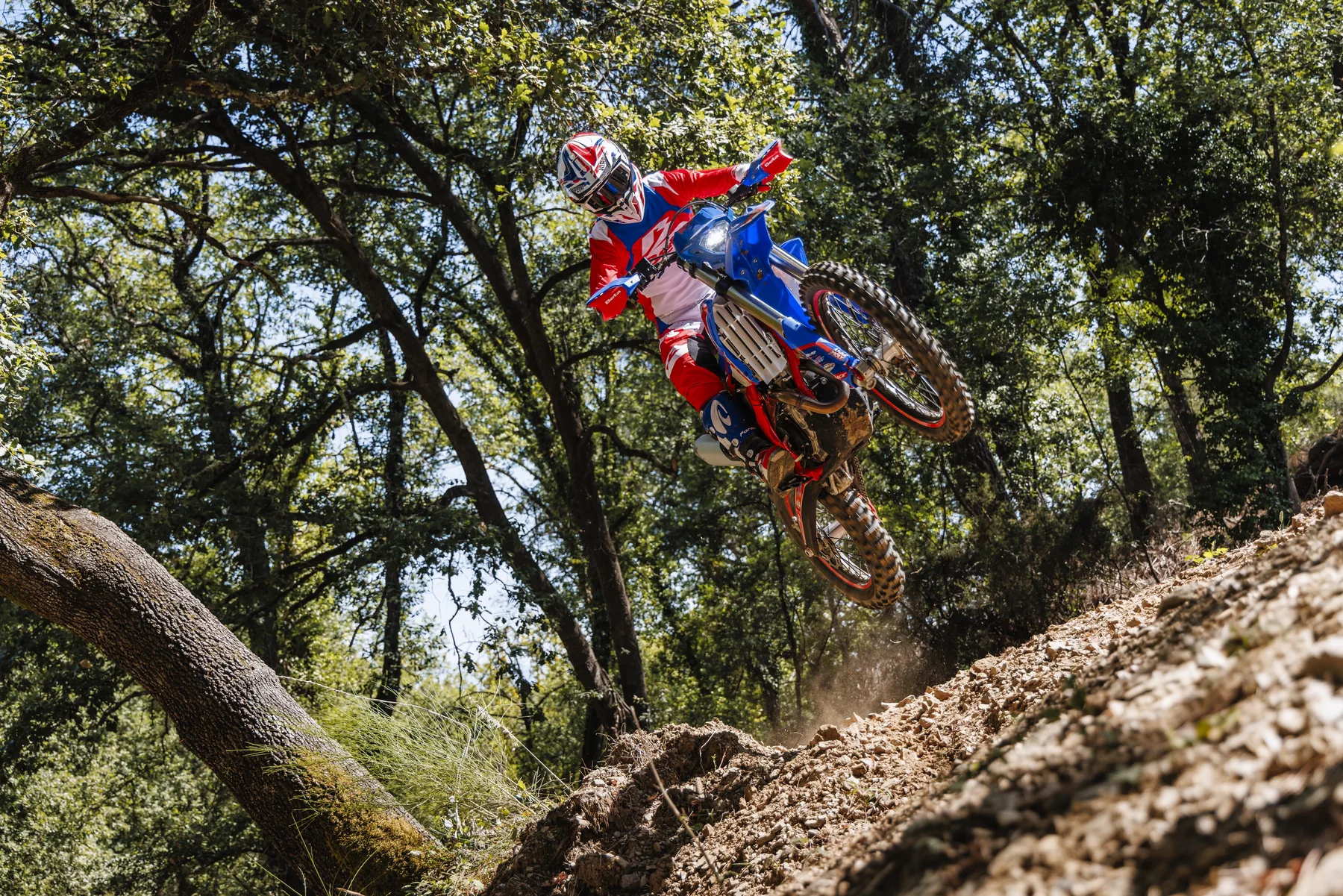
rider on a BETA RR Race 4T 2027 when crossing a natural obstacle. Photo: Betamotor.
RR Race 2T 2027: evolutions adapted to each engine
125 2T: a new piston
The lightest in the range receives an improved piston. The official goal is to increase operating fluidity and overall performance. No power, torque or lifespan figures are published. The 125 retains its Keihin PWK 36 carburetor, kick start and announced dry weight of 94 kg.
250 and 300 2T: new main bearings
The 250 and 300 engines adopt new main crankshaft bearings. BETA announces less internal friction, smoother rotation and better mechanical efficiency, with a reliability target. The French documentation mentions a more immediate response; due to the lack of a curve on the bench, it is impossible to quantify this evolution.
300 2T: exhaust valve head and control valve overhauled
The 300 receives the most specific work. The geometry of the cylinder head and the adjustment of the exhaust valve are modified to make the response more progressive at low and medium speeds. BETA therefore seeks less to harden the character of the big 2T than to facilitate the exploitation of its torque, without giving up performance at high speeds.
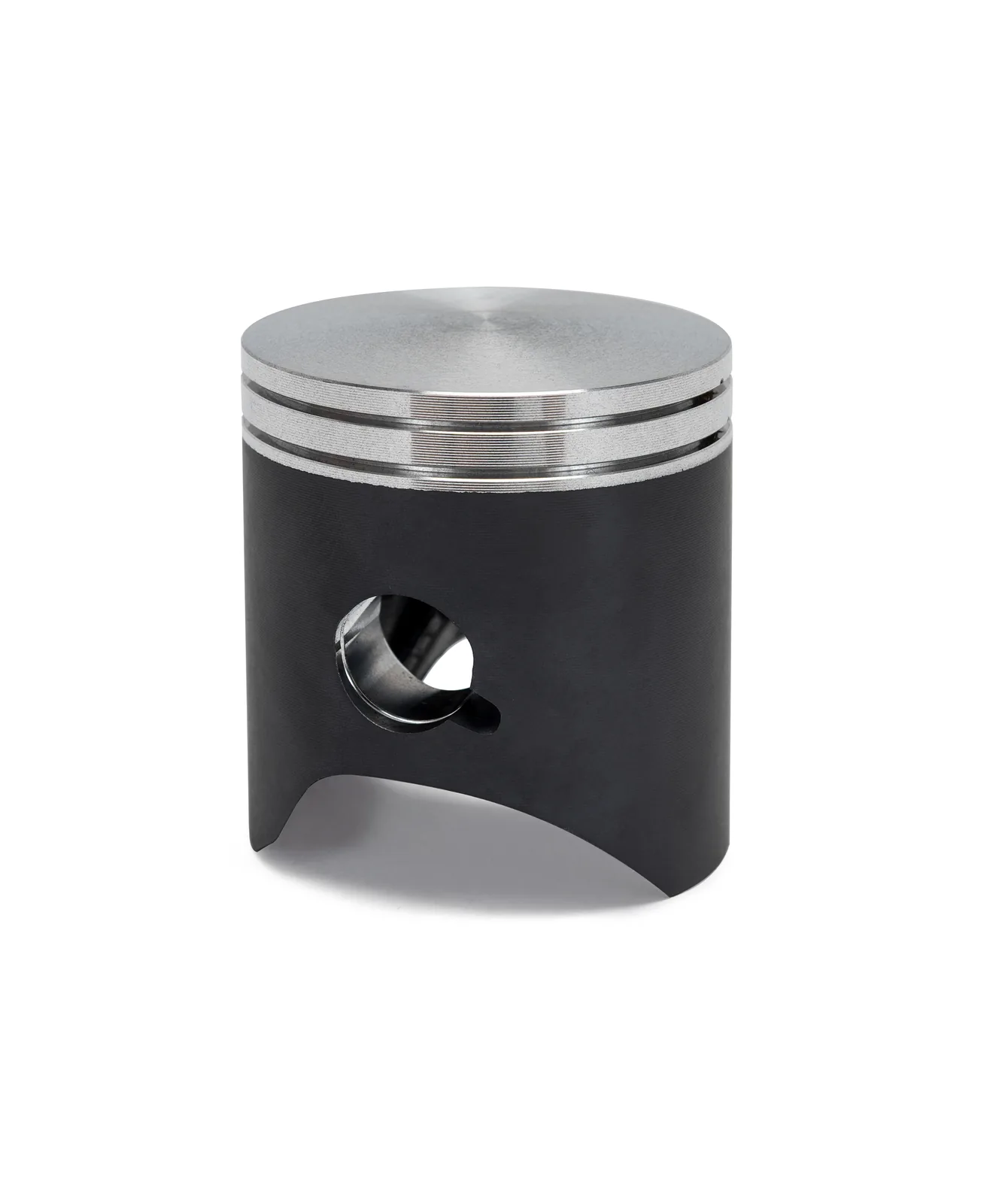
The piston of the 125 2T is evolving for the 2027 model year. Photo: Betamotor.
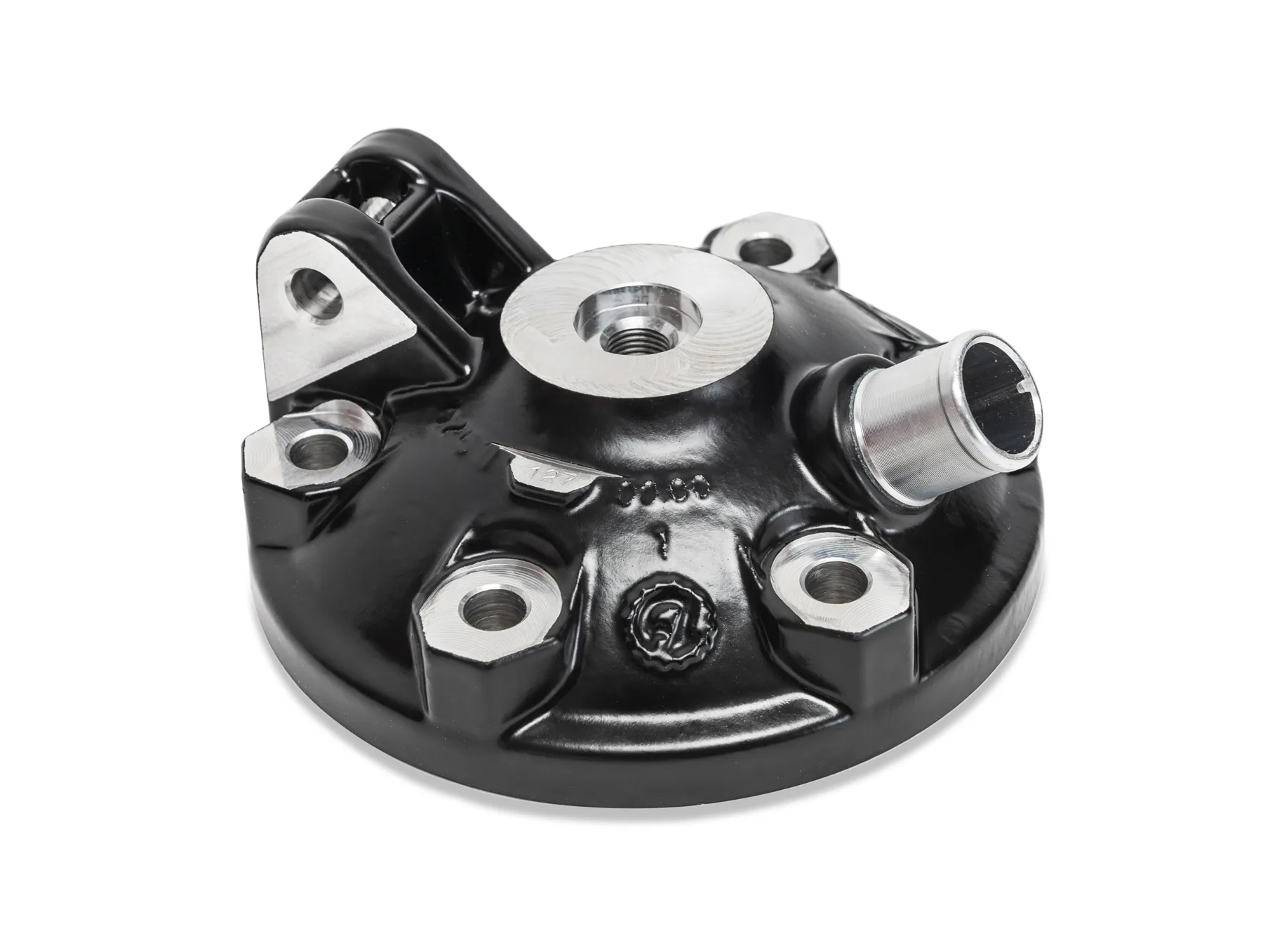
The 300 2T engine block geometry is revised for 2027. Photo: Betamotor.
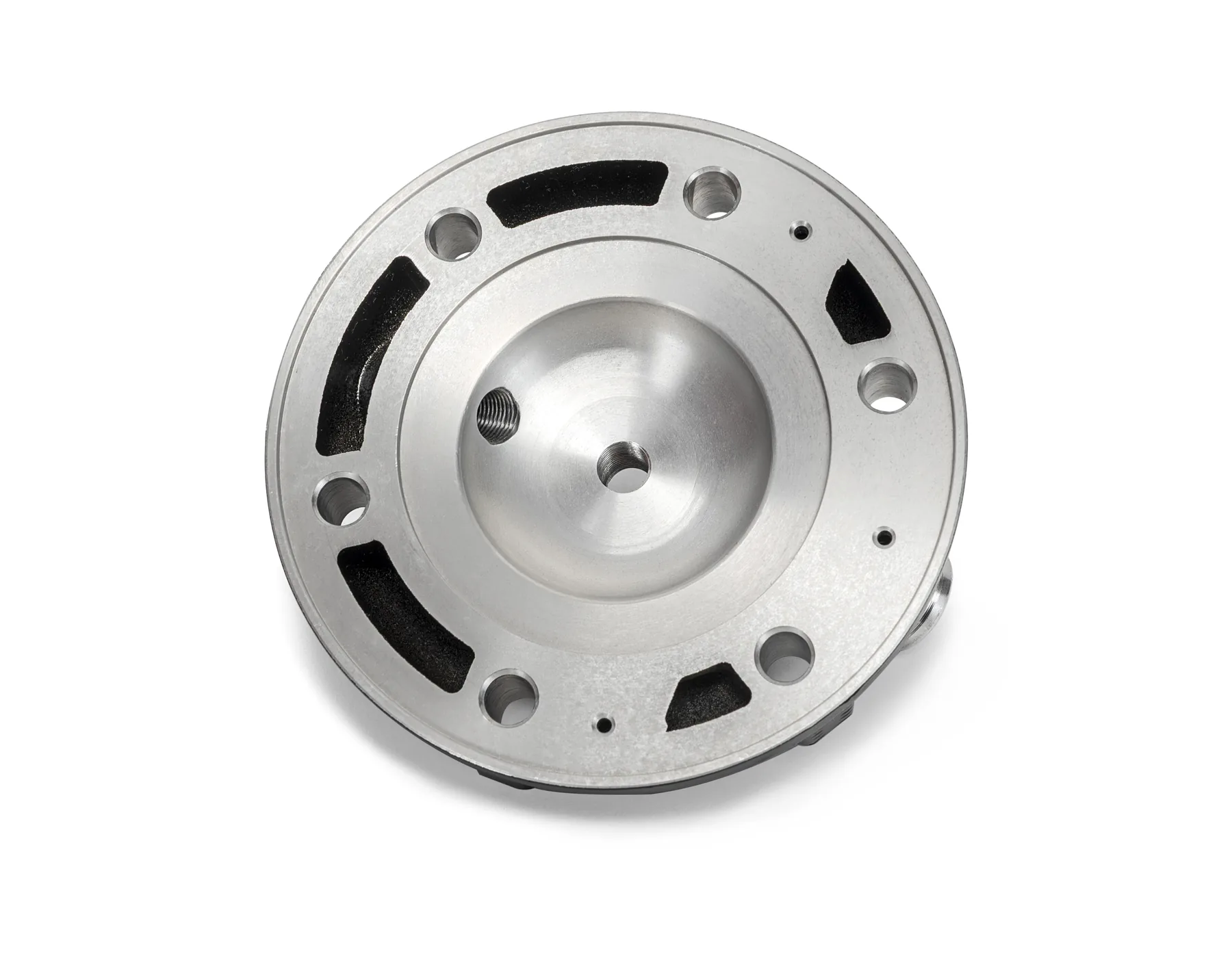
Interior view of the new cylinder head geometry of the 300 2T. Photo: Betamotor.
Still no separate lubrication on the Race versions
The four RR Race 2T are delivered without an automatic mixer in order to reduce the mass. The oil must be dosed in the gasoline. The separate lubrication device remains announced in the Factory Parts catalog, but its assembly, its homologation and its exact compatibility must be confirmed for the model concerned before ordering.
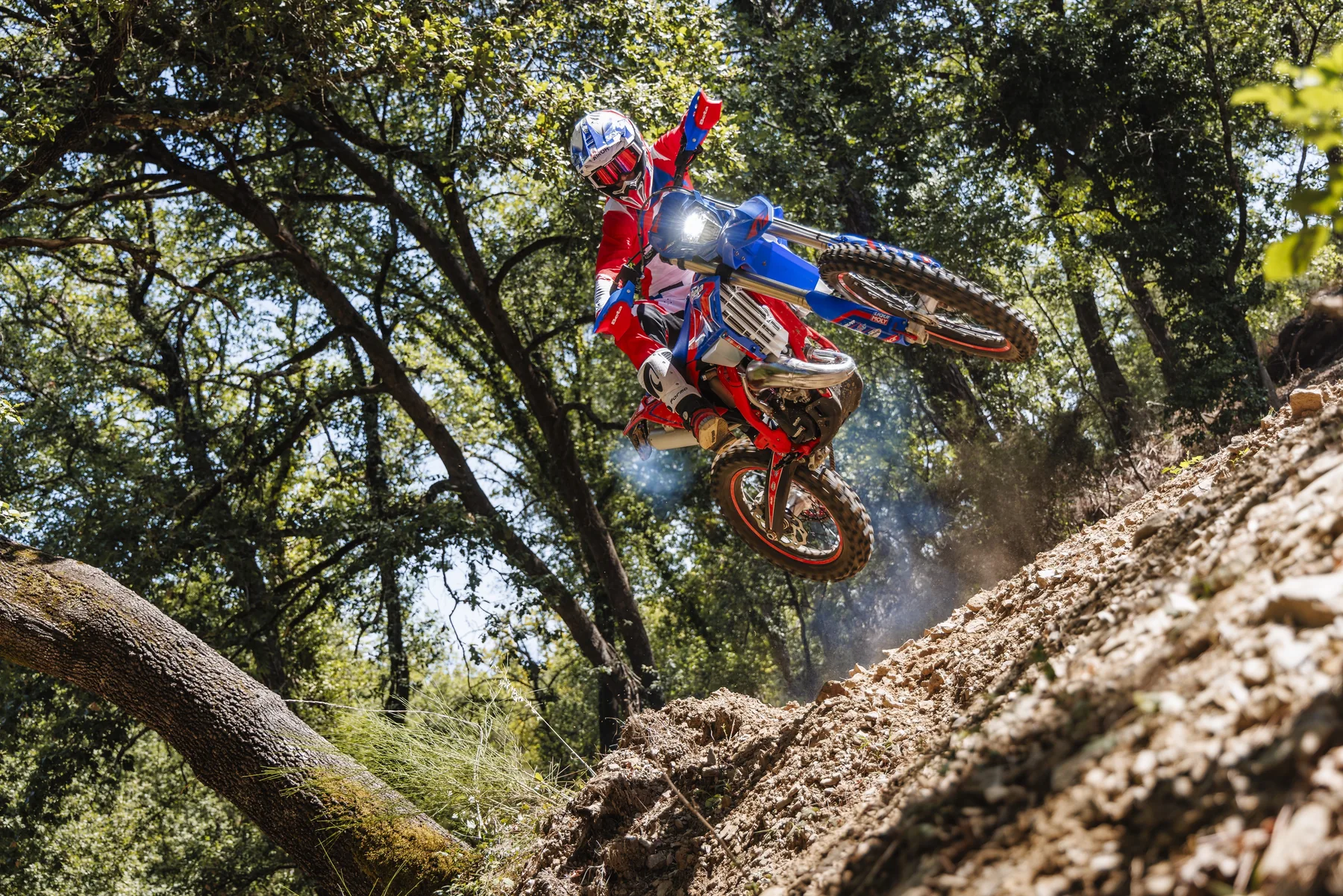
rider on a BETA RR Race 125 2T 2027 when crossing a natural obstacle. Photo: Betamotor.
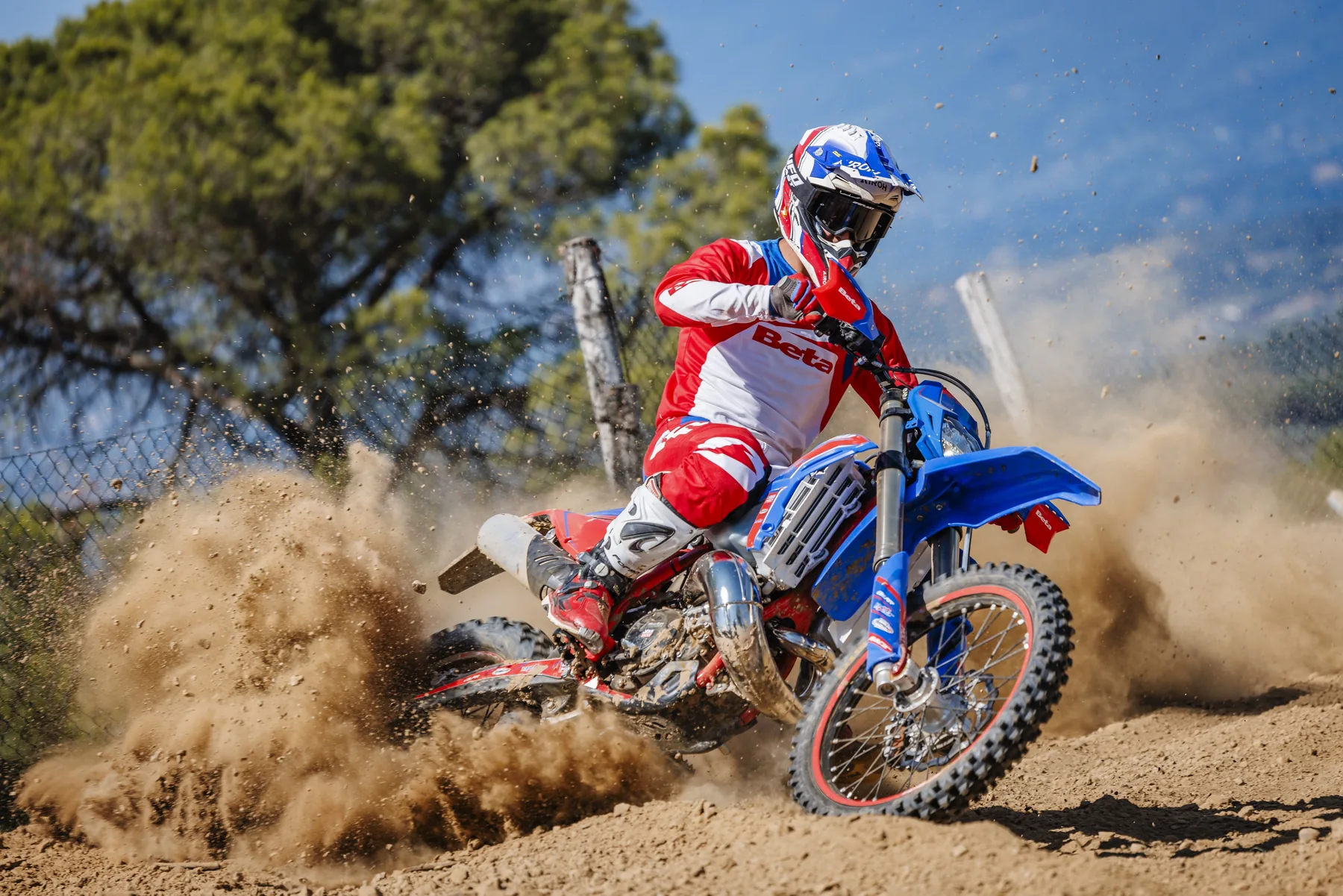
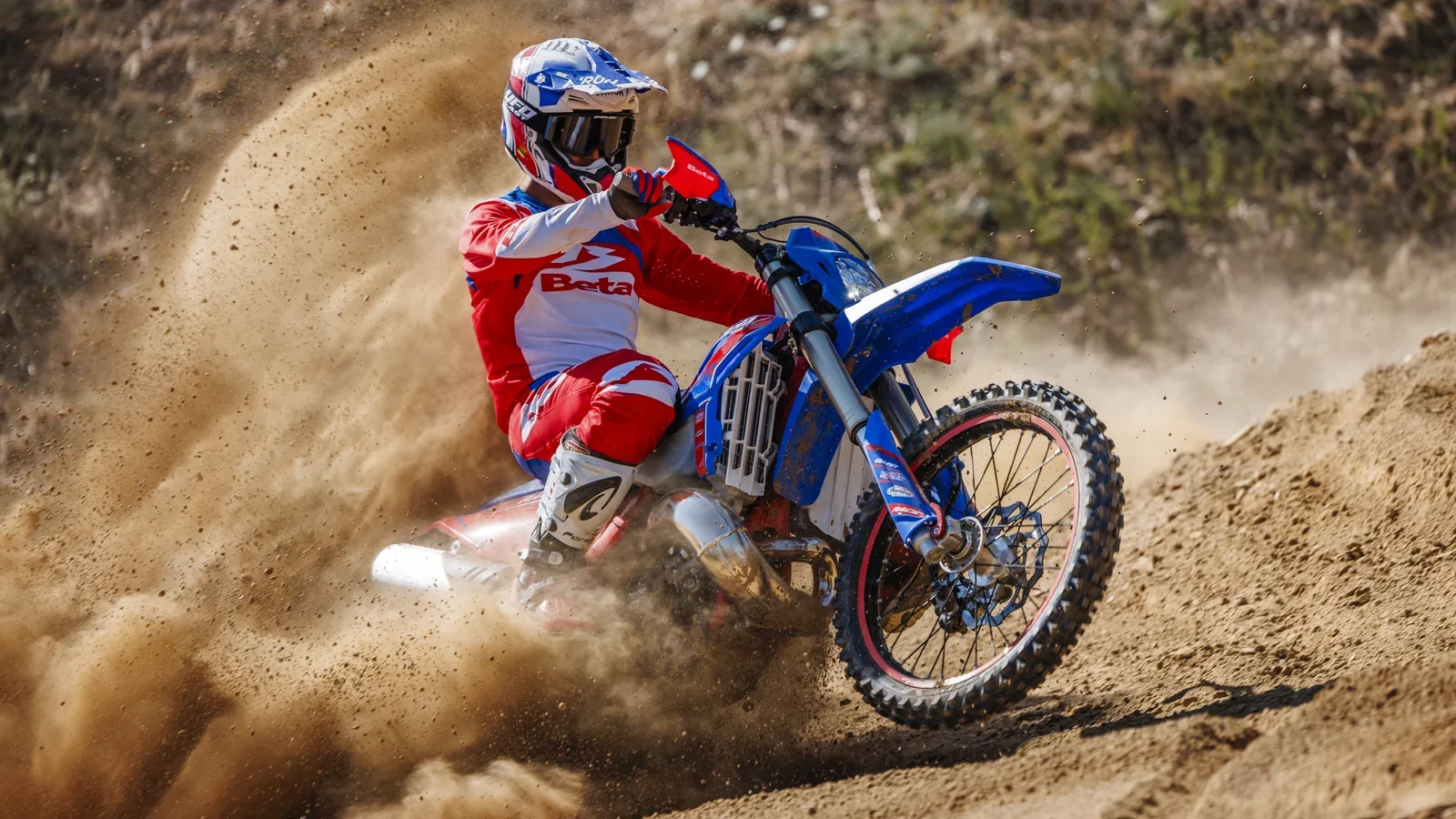
rider on a BETA RR Race 300 2T 2027 in support on a sandy curve. Photo: Betamotor.
Reinforced common equipment for 2027
Chain guide and sprocket protection
The chain guide receives a reinforced structure to better withstand mud, stones and impacts. The new chain guard covers a wider area and gains strength. These two changes are modest on a product sheet, but directly concern the preservation of chain alignment and the protection of the transmission in the grooves or rocks.
More flexible handles
The new handlebar rubber should better absorb vibrations and reduce the load on the forearms during long sessions. The real benefit will also depend on the adjustment of the controls, the chosen diameter, the condition of the gloves and the way the rider tightens the handlebar.
New LED headlight and new headlight cover
The flagship plate evolves with an announced more powerful and less energy-consuming LED block. This new lighting accompanies a very marked blue-red visual identity. It complements the racing graphics, the red-rimmed rims and the many anodized parts.
More readable Trailtech counter
The new Trailtech instrument retains information comparable to that of the previous meter, but its screen is larger, easier to read and its housing more robust. A new wheel sensor cable should improve the accuracy and reliability of speed measurement.
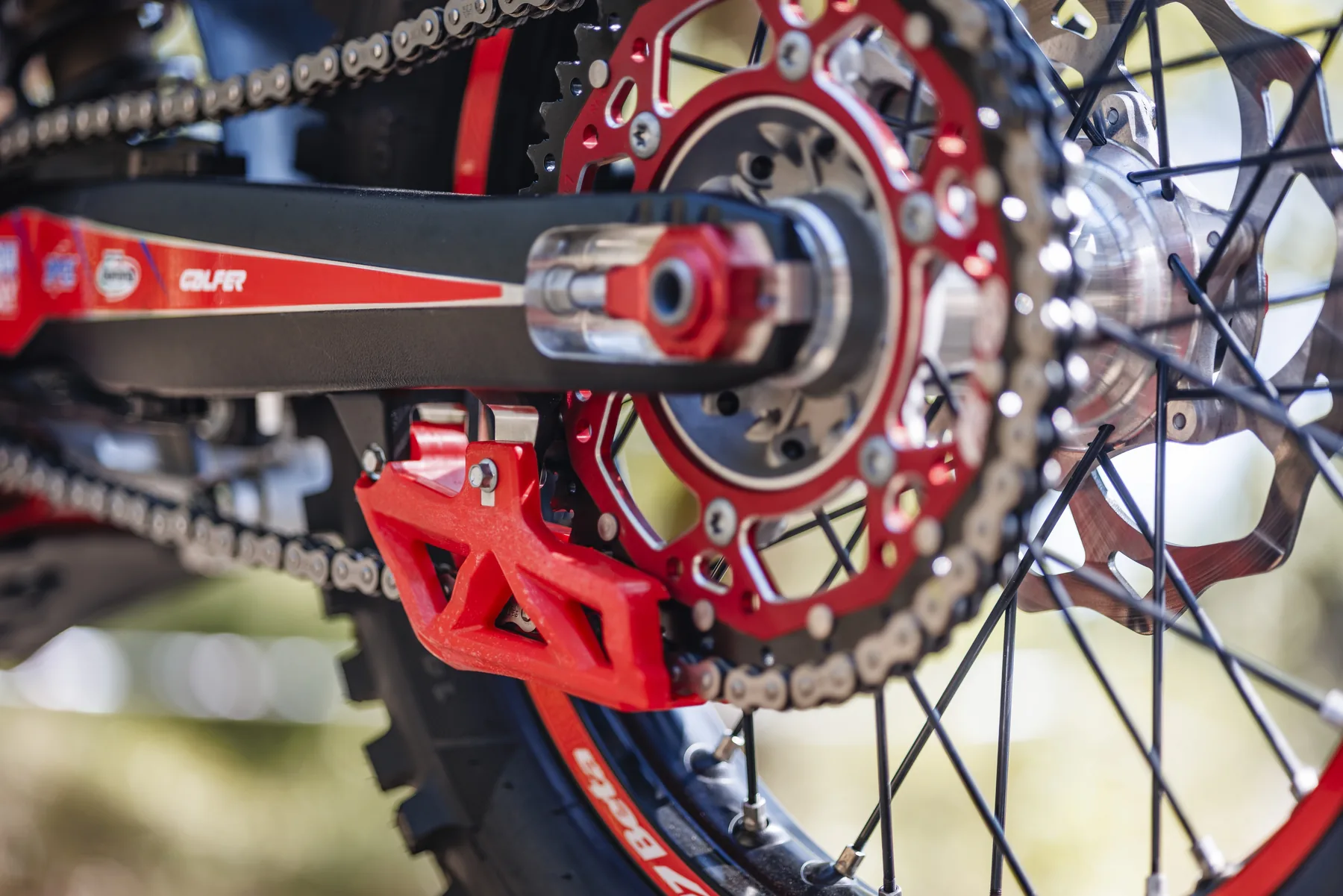
Reinforced chain guide and ZF crown Sprockets from the BETA RR Race 2027. Photo: Betamotor.
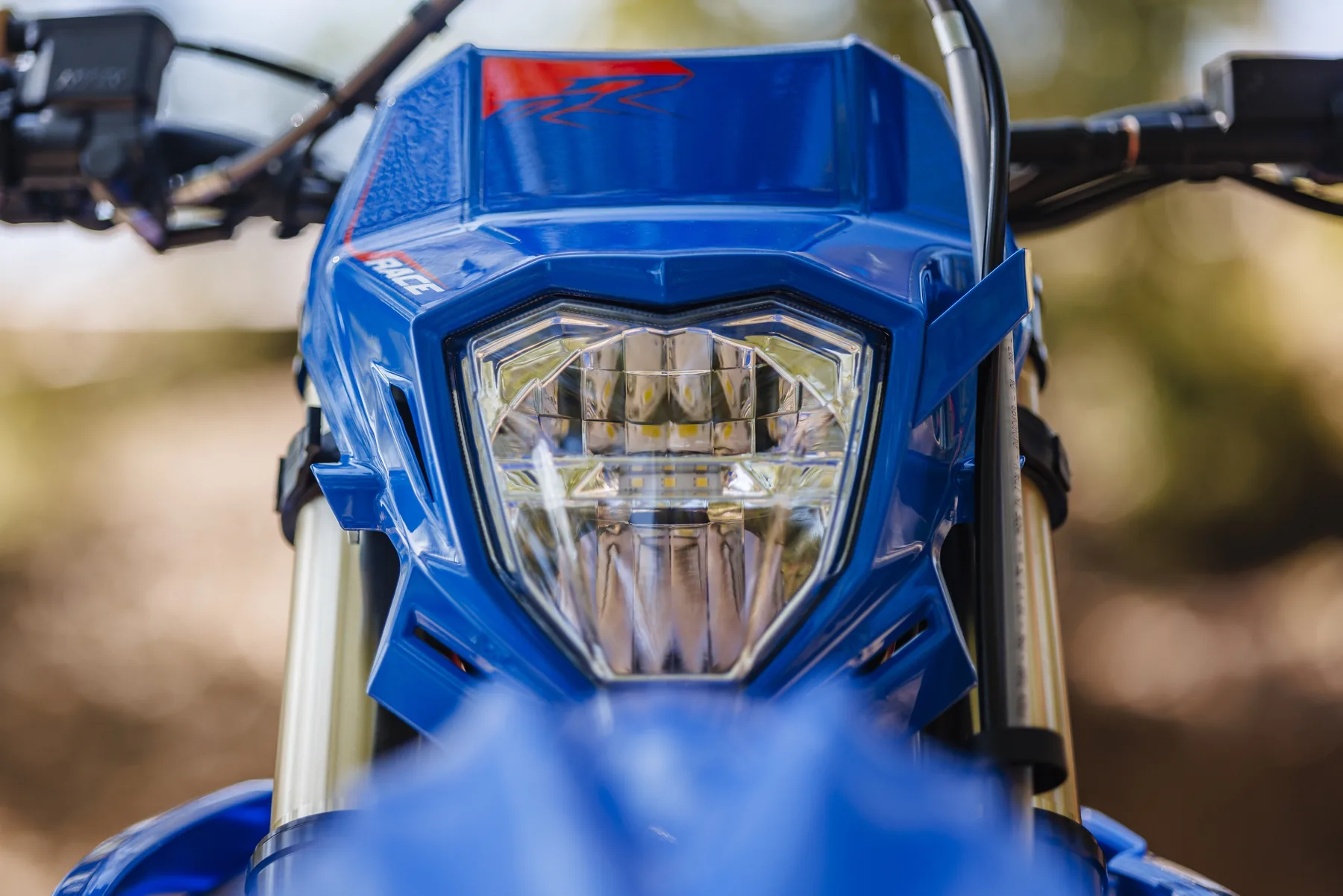
New LED headlight of the BETA RR Race 2027. Photo: Betamotor.
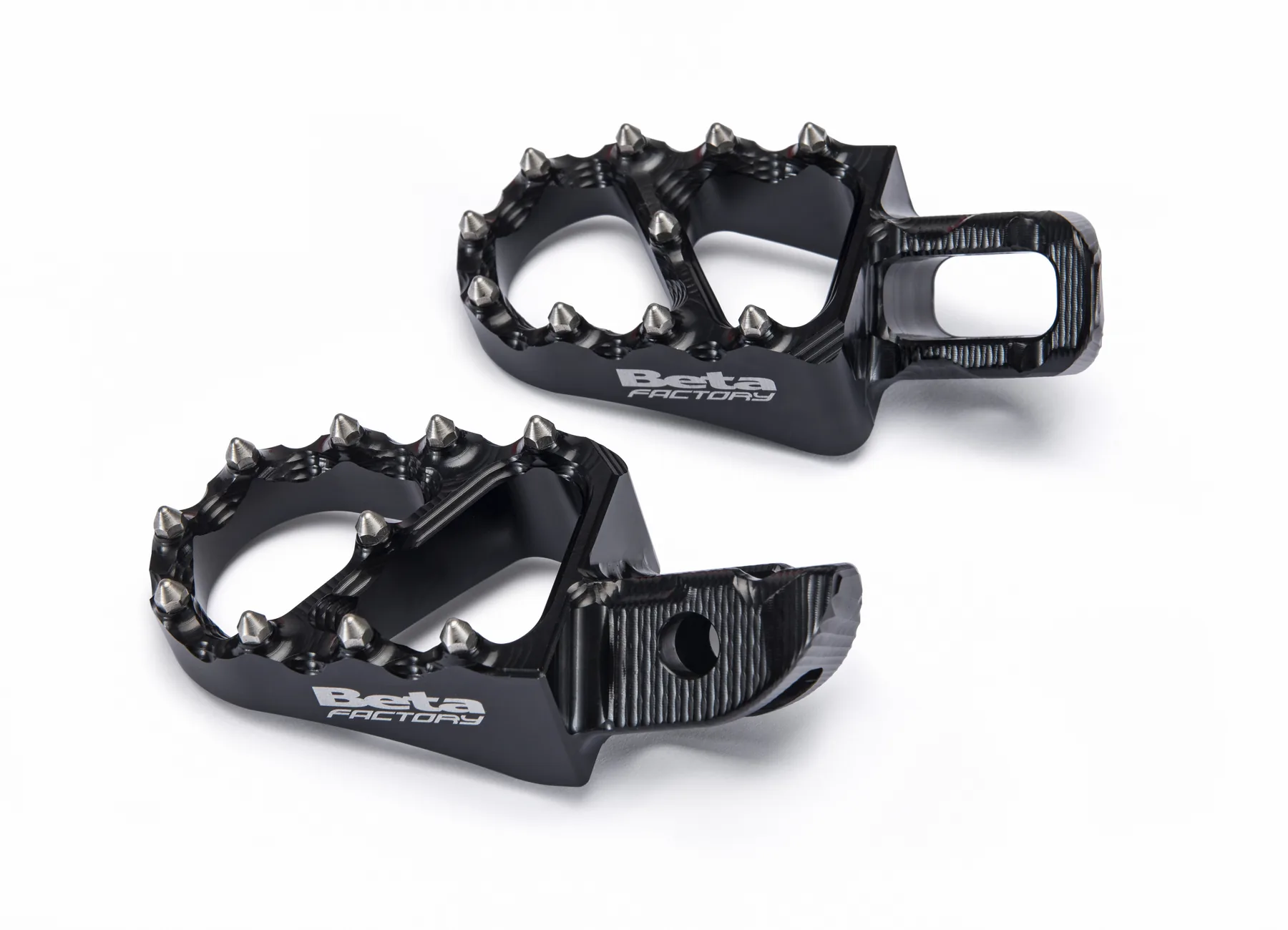
Footrests combine lightness, support and replaceable tips. Photo: Betamotor.
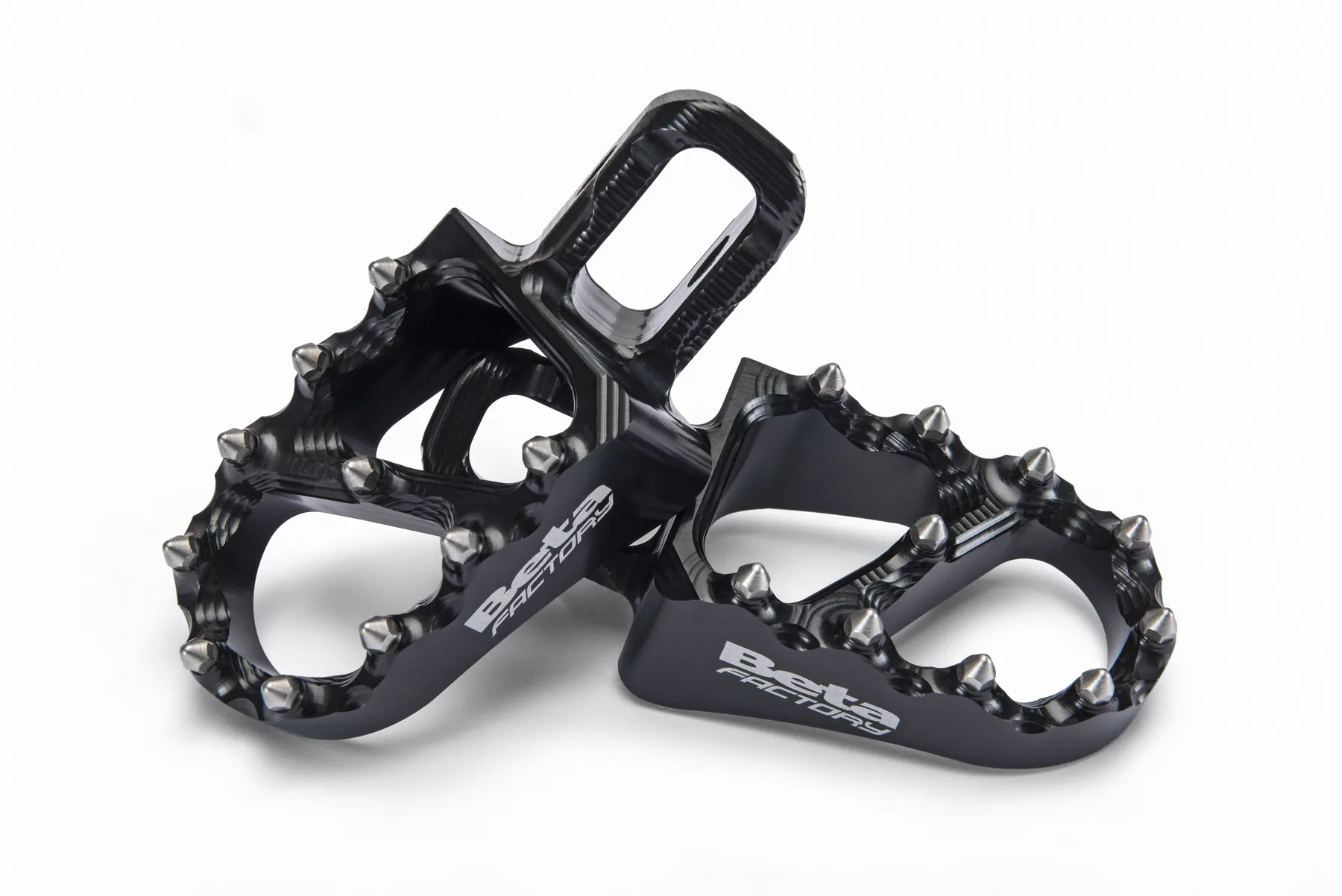
The racing footrests in Ergal receive interchangeable steel tips. Photo: Betamotor.
KYB suspensions: the signature of the RR Race
All RR Race 2027s retain an inverted KYB fork from 48 mm with a closed cartridge and a KYB C46 RCU shock absorber mounted on bushings. For 2027, the internal valve settings are updated model by model. BETA does not provide the valve stacks or the detailed basic settings described in the press release; this information must be found in the user manual for each engine displacement.
The shock absorber offers external compression settings at high and low speeds as well as rebound. The shock absorber travel is 130 mm, for 300 mm of travel at the front wheel and 287 mm at the rear. The consistency of the setting depends on the weight of the rider, the preload, the sag and the type of terrain: factory settings are a starting point, not a universal value.
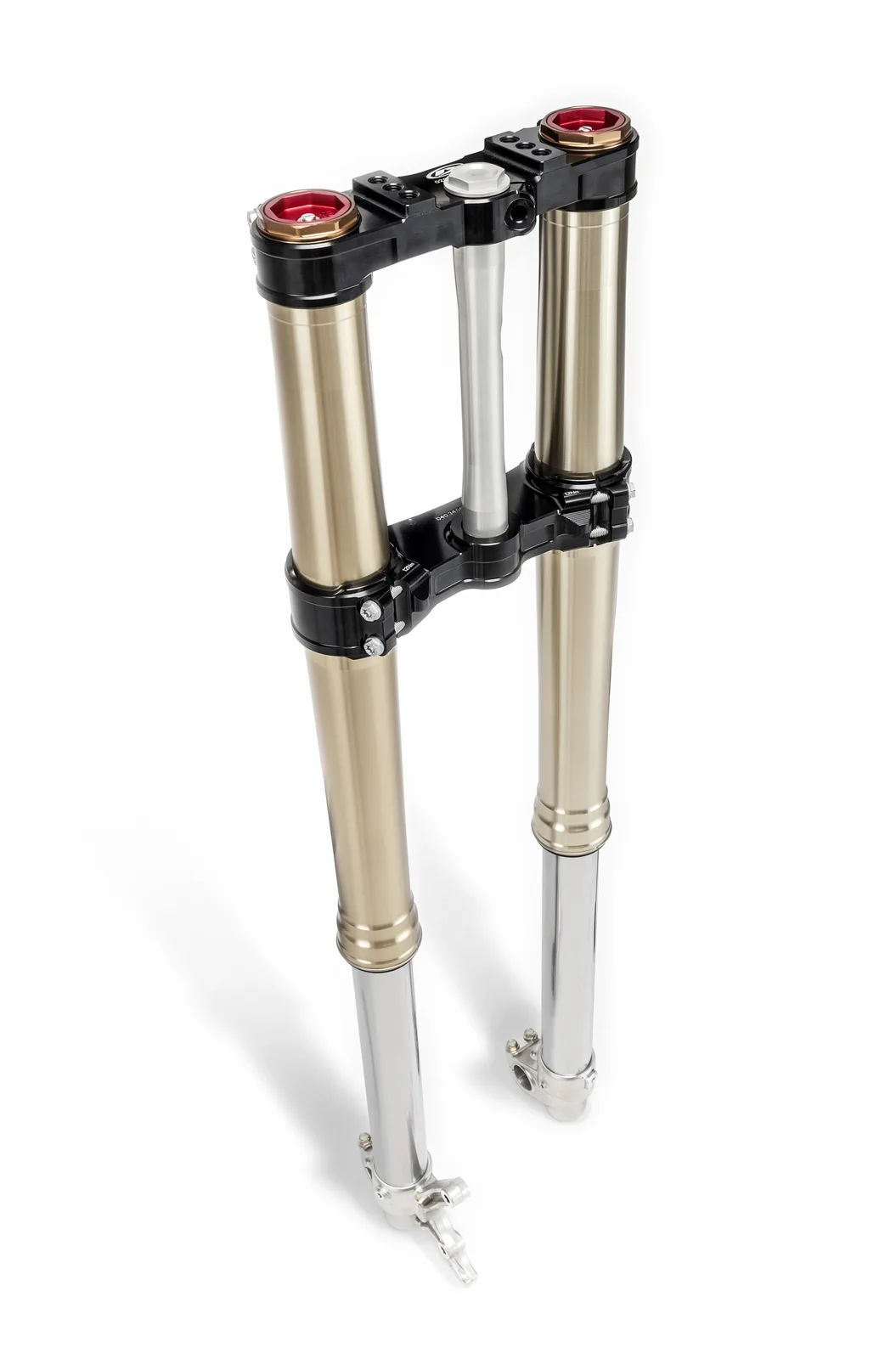
The 48 mm closed cartridge KYB fork equips the entire range. Photo: Betamotor.
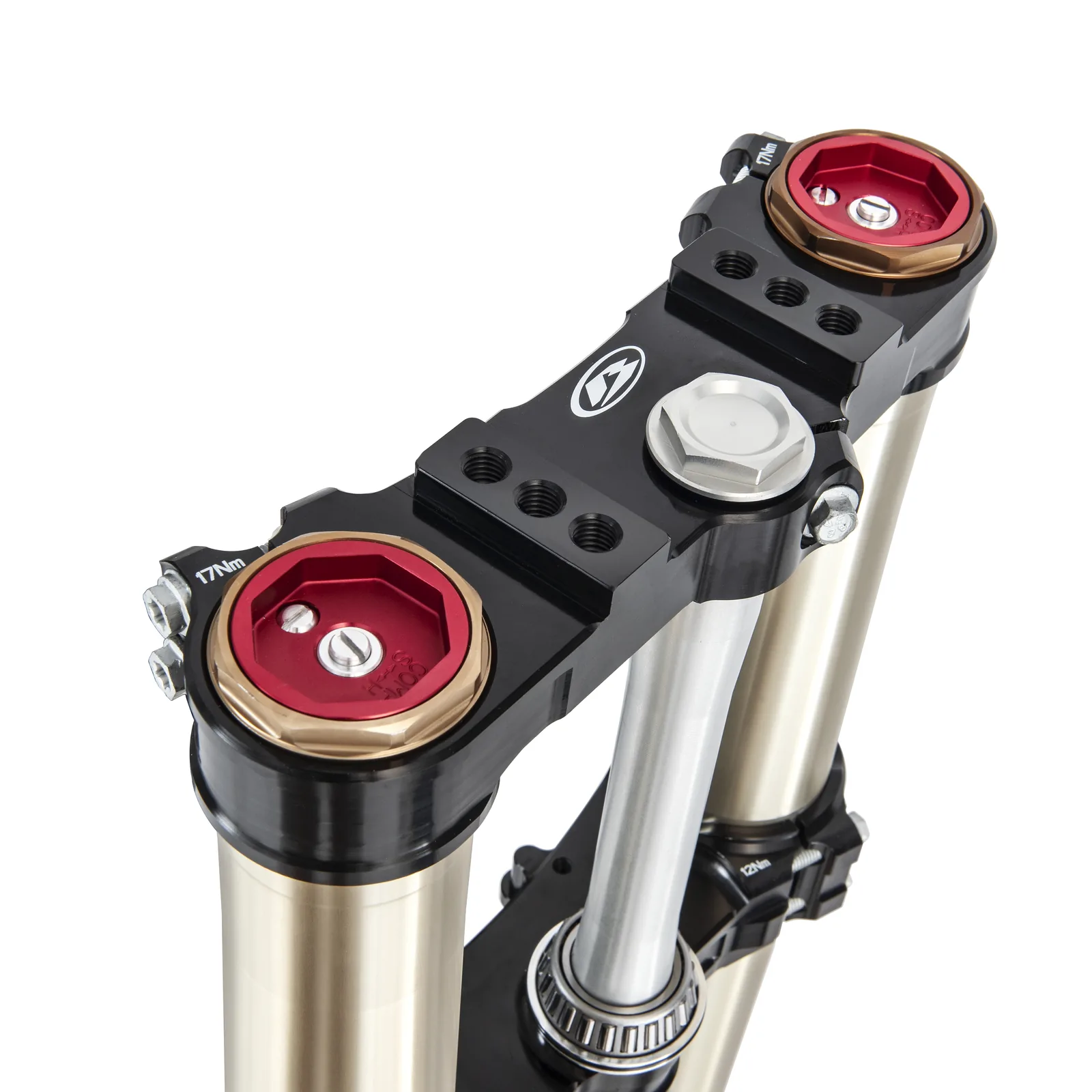
The KYB fork benefits from new internal settings adapted to each model. Photo: Betamotor.
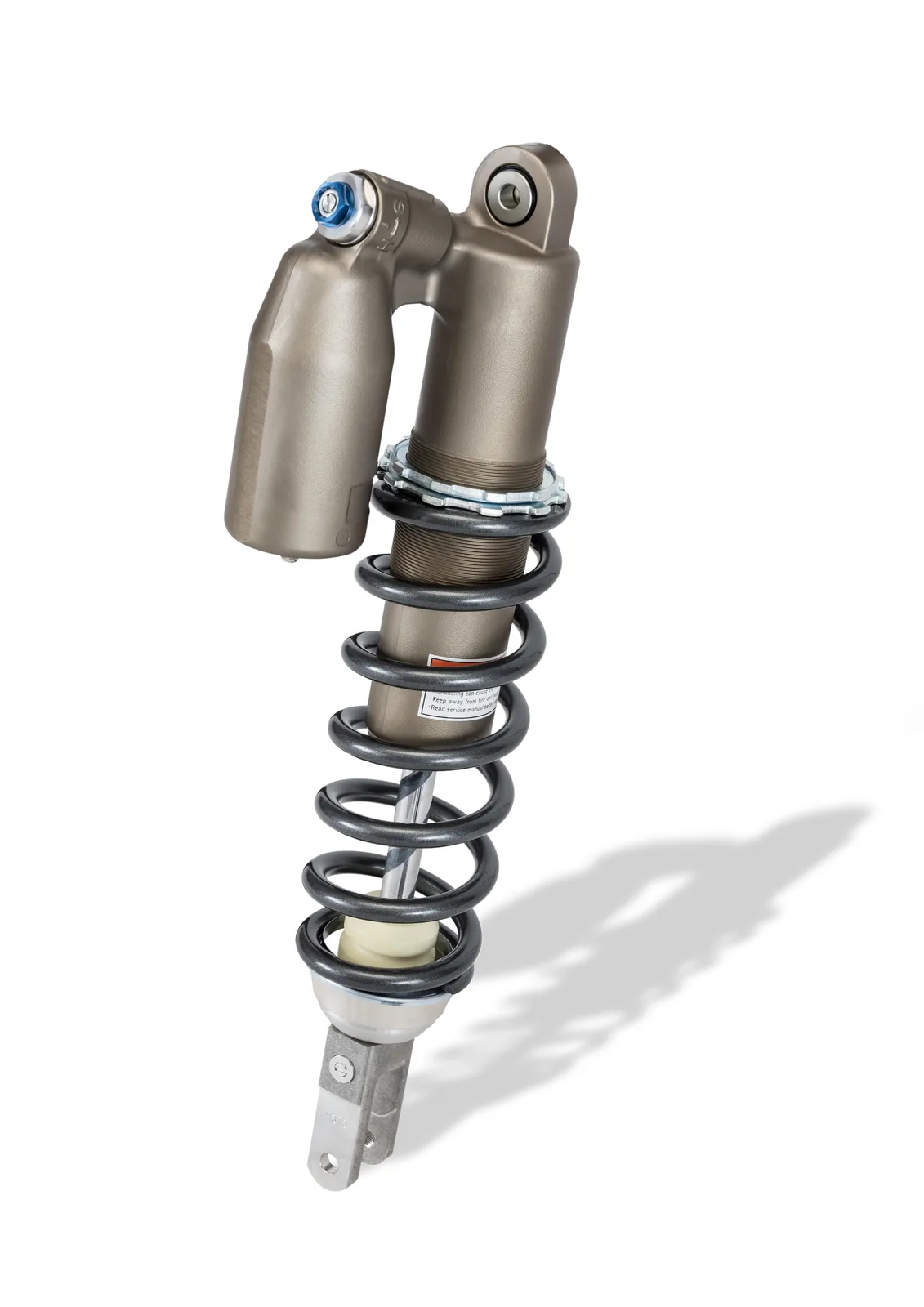
The KYB C46 RCU shock absorber remains fully adjustable in compression and extension. Photo: Betamotor.
Reconditioned Race components
- Front wheel hub for quick disassembly with red anodized mechanism;
- Reinforced molded hand protectors in two components;
- Ergal footrest with interchangeable steel tips;
- ZF crown Sprockets with anodized aluminum core and steel tooth;
- Non-slip saddle with document holder pocket;
- Black anodized speed selector and rear brake pedal;
- Red anodized oil and filter caps;
- Chain tensioners in red Ergal;
- Specific RR Race decoration.
BETA RR Race 2027: technical specifications compared
Engines of the eight models
| model | Thread × pitch | compression | nutrition | Consumption announced | CO₂ announced |
|---|---|---|---|---|---|
| 125 2T | 54 × 54,5 mm | 15,2:1 | Keihin PWK 36 | 2,5 l/100 km | 58 g/km |
| 200 2T | 62 × 63 mm | 14,4:1 | Keihin PWK 36 | 2,5 l/100 km | 59 g/km |
| 250 2T | 67.4 × 69,9 mm | 13,8:1 | Keihin PWK 36 | 2,2 l/100 km | 53 g/km |
| 300 2T | 73 × 69,9 mm | 11,3:1 | Keihin PWK 36 | 2,6 l/100 km | 61 g/km |
| 350 4T | 88 × 57,4 mm | 13,19:1 | Double injection Elldor, Ø 42 mm | 3,4 l/100 km | 80 g/km |
| 390 4T | 88 × 63,4 mm | 12,48:1 | Double injection Elldor, Ø 42 mm | 3,3 l/100 km | 79 g/km |
| 430 4T | 95 × 60,8 mm | 12,33:1 | Double injection Elldor, Ø 42 mm | 3,8 l/100 km | 91 g/km |
| 480 4T | 100 × 60,8 mm | 11,86:1 | Double injection Elldor, Ø 42 mm | 3,6 l/100 km | 88 g/km |
The consumption and emissions above are the values published in the BETA sheets. They do not prejudice the special consumption, which depends strongly on the terrain, the pace, the multiplication and the settings.
Dimensions, masses and cycle part
| model | wheelbase | length | Ground floor | Rear tire | Dry weight |
|---|---|---|---|---|---|
| 125 2T | 1 477 mm | 2 167 mm | 345 mm | 120/90-18 | 94 kg |
| 200 2T | 1 477 mm | 2 167 mm | 345 mm | 140/80-18 | 97 kg |
| 250 2T | 1 482 mm | 2 175 mm | 340 mm | 140/80-18 | 103,5 kg |
| 300 2T | 1 482 mm | 2 175 mm | 340 mm | 140/80-18 | 103,5 kg |
| 350 4T | 1 476 mm | 2 180 mm | 335 mm | 140/80-18 | 107,5 kg |
| 390 4T | 1 480 mm | 2 180 mm | 335 mm | 140/80-18 | 107,5 kg |
| 430 4T | 1 480 mm | 2 180 mm | 335 mm | 140/80-18 | 107,5 kg |
| 480 4T | 1 480 mm | 2 180 mm | 335 mm | 140/80-18 | 107,5 kg |
The maximum width is 830 mm and the saddle height is 950 mm across the entire range. The wheels measure 21 inches in the front and 18 inches in the rear. The 125 and 200 use an 1.85-inch rear rim; the other models go up to 2.15 inches. The frame remains a simple double-walled molybdenum steel cradle.
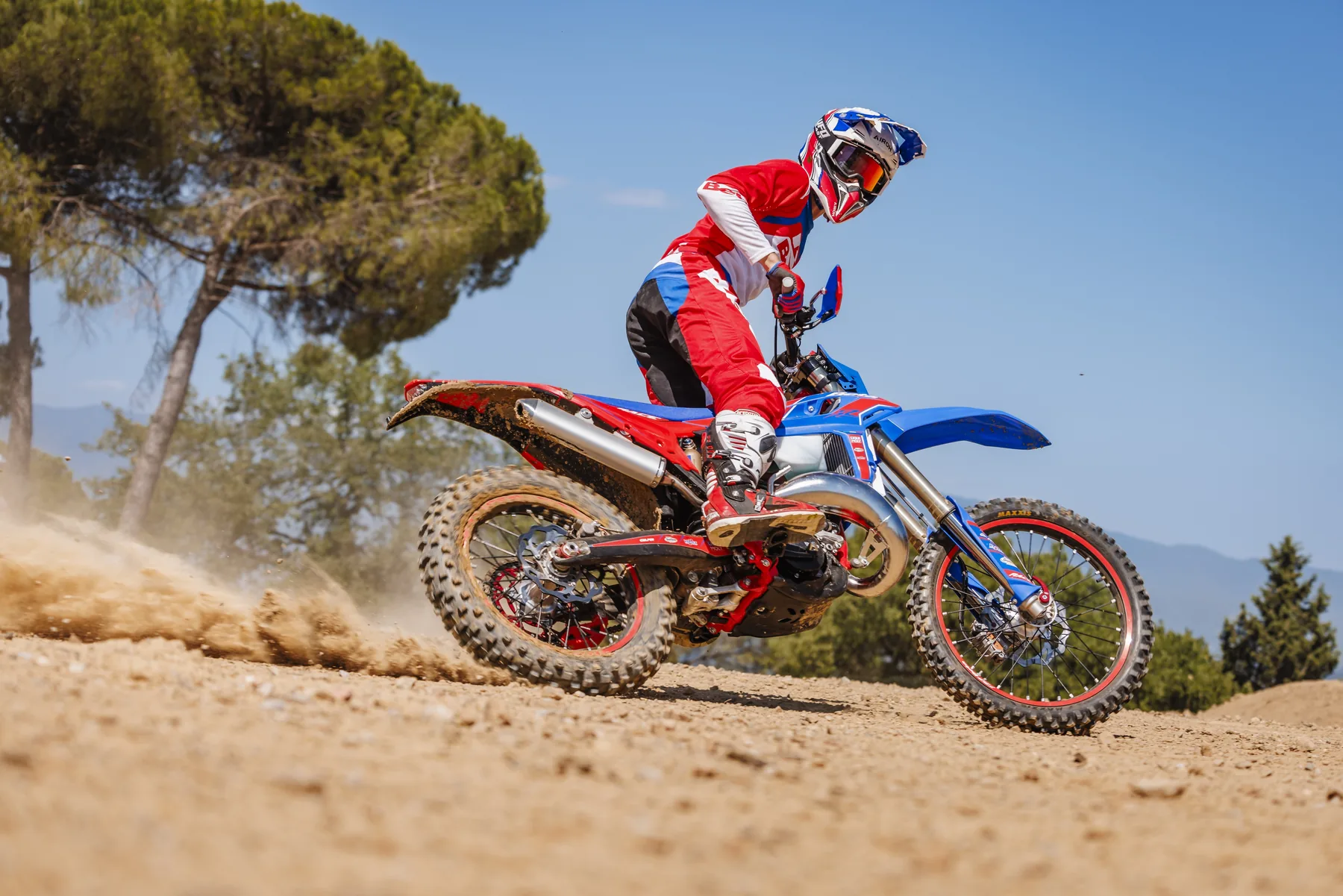
rider on a BETA RR Race 125 2T 2027 leaning into a sandy corner. Photo: Betamotor.
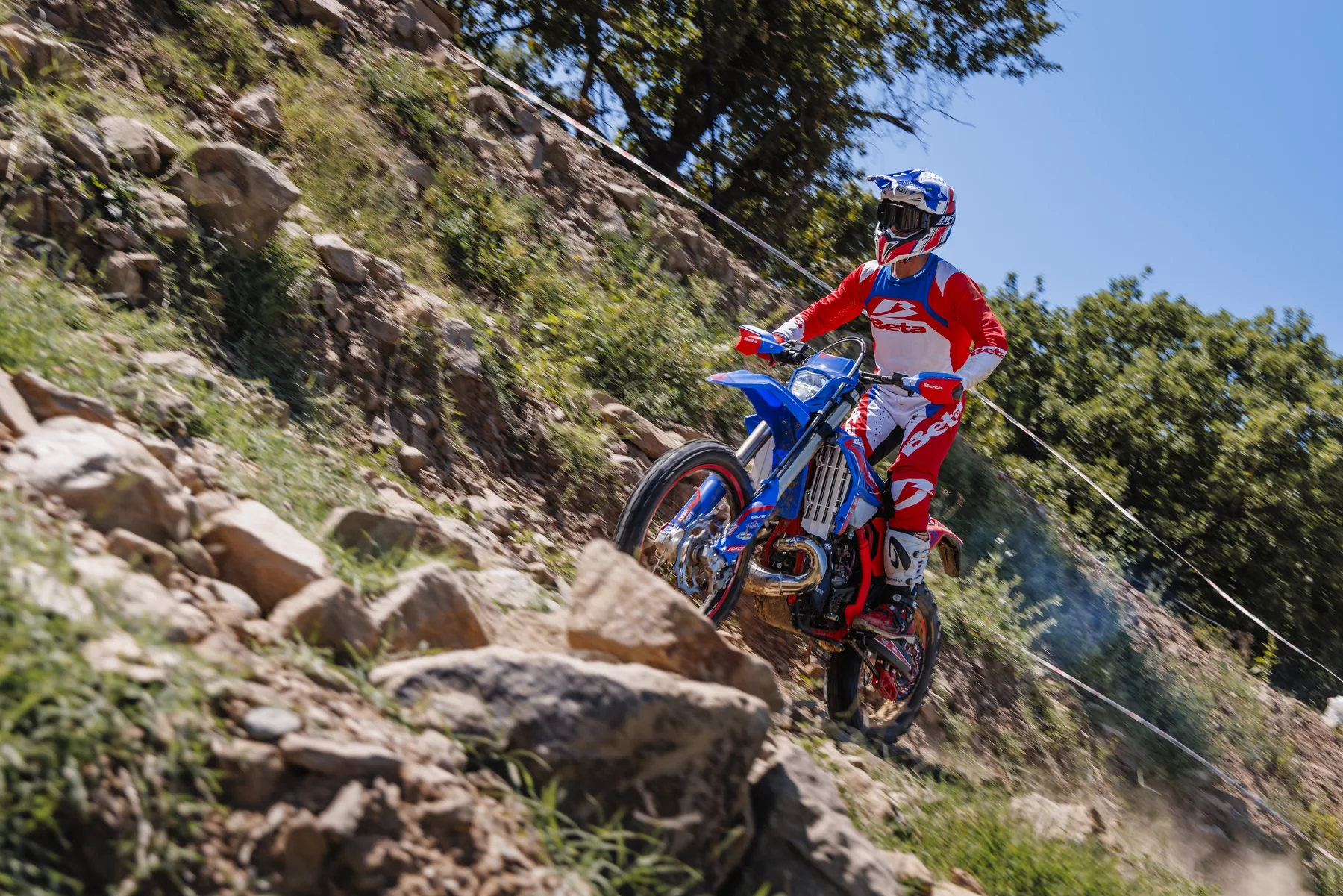
rider on a BETA RR Race 300 2T 2027 in a technical rocky section. Photo: Betamotor.
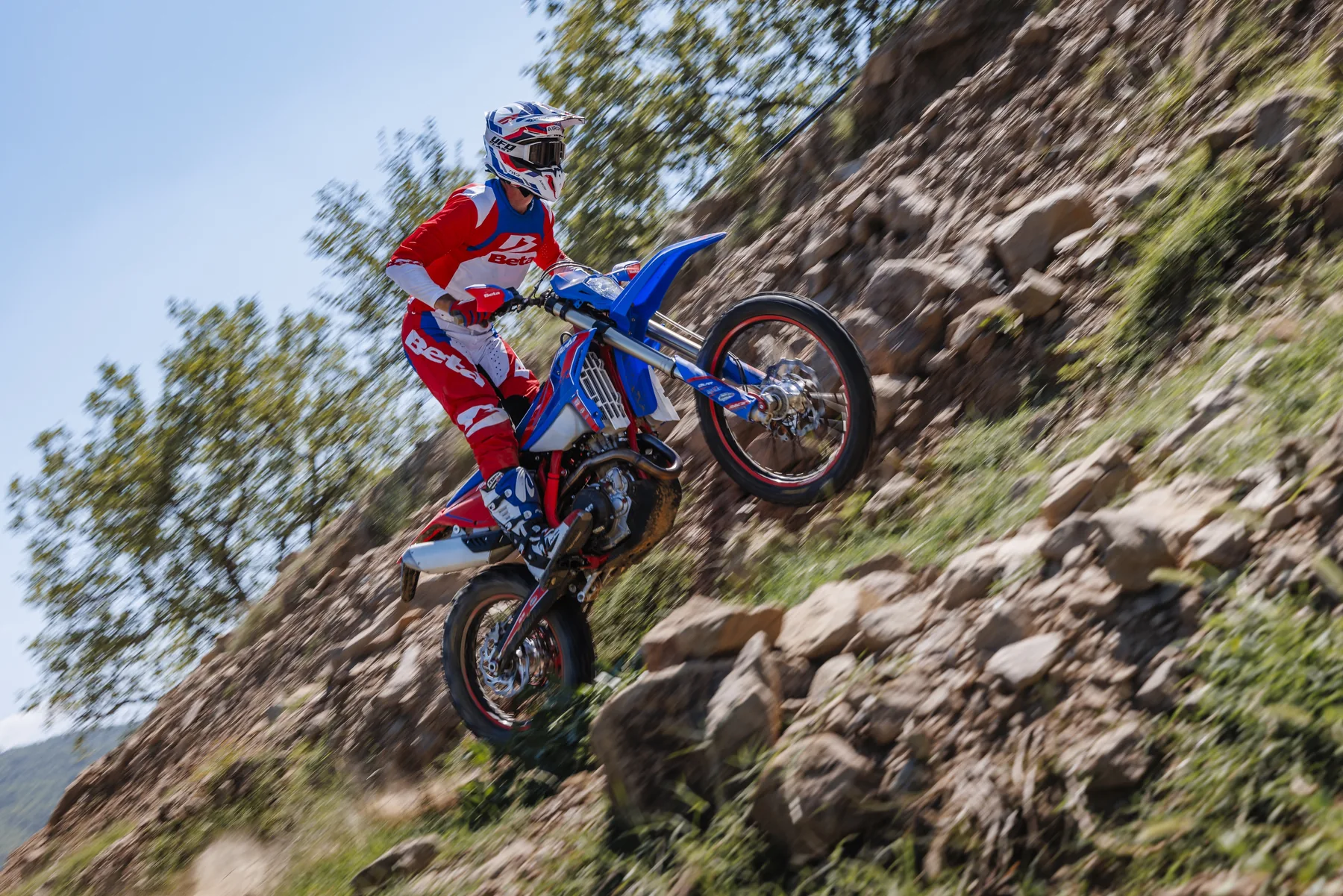
rider on a BETA RR Race 4T 2027 on a rocky climb. Photo: Betamotor.
Each BETA RR Race 2027 in detail
BETA RR Race 125 2T 2027: the lightest
With 124,8 cm³ and 94 kg dry announced, the 125 is the lightest in the family. Its square engine of 54 × 54,5 mm, its carburetor of 36 mm and its kick start translate a very direct approach. The revised piston constitutes its main 2027 evolution. It is aimed at the rider who accepts to exploit the revs and to work on his passing speed rather than relying on a large torque. Its retail price including VAT in France is set at 9 390 €.
BETA RR Race 200 2T 2027: light but more available
The 200 displays 190,2 cm³ and 97 kg in dry condition. It retains the chassis dimensions of the 125, while adopting an electric starter and a 140 mm rear tire. BETA does not assign it a specific engine evolution in the MY 2027 press release. Its interest lies in the compromise between the light size of the small chassis and a displacement greater than that of the 125. Its public price including VAT in France is 9 790 €.
BETA RR Race 250 2T 2027: the classic balance
The 250 develops a real displacement of 249,4 cm³. It shares its main dimensions with the 300 and benefits from the new crankshaft bearings. By construction, it constitutes the intermediate choice for the rider who wants a high-performance two-stroke without seeking the maximum torque of the 300. Its public price including VAT France is announced at 10 290 €.
BETA RR Race 300 2T 2027: torque and progressivity reworked
With 292,6 cm³, the 300 is the top of the 2T range. The main bearings, the cylinder head and the exhaust valve adjustment evolve together. The promise of BETA is clear: to make the response more progressive at low and medium revs in order to exploit the torque with greater precision. This is the version most affected by the engine work of the vintage. Its retail price including VAT France is of 10 490 €.
BETA RR Race 350 4T 2027: the most compact of the four-wheelers
The 350 combines a 88 mm bore with a short stroke of 57,4 mm. Its wheelbase of 1 476 mm is the shortest of the 4T. With the same announced mass, it logically favors liveliness and ease of steering change. Like all 4T 2027s, it benefits from the LC, the QS and the new electrical management. Its public price including VAT France is of 10 950 €.
BETA RR Race 390 4T 2027: the versatile compromise
The 390 retains the 88 mm bore but carries the stroke to 63,4 mm to reach 385,6 cm³. This long stroke engine is positioned between the liveliness of the 350 and the thrust of the 430/480. It is a reading of its geometry and its placement in the range; only a comparative test will allow to precisely measure the differences in behavior. Its retail price including VAT France is of 10 950 €.
BETA RR Race 430 4T 2027: priority to engine power
The 430 goes to 95 × 60,8 mm and 430,9 cm³. It receives titanium intake valves with an optimized finish. It will be of particular interest to riders who know how to exploit strong engine availability, especially in fast specials and recoveries where a higher ratio can be maintained. Its retail price including VAT France is of 10 950 €.
BETA RR Race 480 4T 2027: the largest displacement
The 480 takes the bore to 100 mm for a race identical to that of the 430. With 477,5 cm³, it is at the top of the range. Its potential is aimed at use where torque and elongation are paramount over the search for the least physical motorcycle. Again, BETA does not communicate numerical power or torque. Its retail price including VAT France is of 10 950 €.
Which BETA RR Race 2027 to choose?
The right choice does not depend only on the displacement. The terrain, the duration of the races, the physical level, the way of using the gearbox and the rider's experience count as much as the maximum power.
- 125 2T: To favor lightness, precision and active driving in the turns.
- 200 2T: To maintain a small light chassis with more responsiveness and an electric starter.
- 250 2T: To seek a compromise between liveliness and engine reserve.
- 300 2T: To exploit an important torque, now announced to be more progressive at low and medium speeds.
- 350 4T: To obtain the motor skills of a four-stroke engine with the most compact size of the family 4T.
- 390 4T: For an intermediate response and versatile use.
- 430 4T: To promote engine power and powerful acceleration.
- 480 4T: For experienced riders looking for the largest displacement and a strong torque reserve.
These orientations are an analysis of the displacement, engine geometry and range positioning. They do not replace a test ride. A fast but light rider can be more effective on a smaller displacement better controlled than on a more powerful and tiring motorcycle.
BETA RR Race or RR X-PRO 2027?
The RR Race is the version most directly geared towards competition: KYB closed-cartridge suspension, racing components, 950 mm saddle and absence of automatic mixer on the 2T. A BETA RR X-PRO 2027 Aims for wider enduro use, with a seat height announced at 930 mm, or 20 mm less, and suspensions designed for comfort and versatility.
| criterion | RR Race 2027 | RR X-PRO 2027 |
|---|---|---|
| orientation | Competition and performance | Versatile, technical and sports leisure enduro |
| Announced saddle height | 950 mm | 930 mm |
| fork | KYB 48 mm with closed cartridge | X-PRO configuration with reduced stroke |
| damper | KYB C46 RCU on ball joints | Announced external adjustment without tools for MY 2027 |
| 2T | No automatic mixer in the series | Approach more oriented towards ease of use |
| Price 125 2T | 9,390 € including VAT | 8,290 € including VAT |
| Price 200 2T | 9,790 € including VAT | 8,790 € including VAT |
| Price 250 2T | 10,290 € including VAT | 9,290 € including VAT |
| Price 300 2T | 10,490 € including VAT | 9,490 € including VAT |
| Price 4T, regardless of displacement | 10,950 € including VAT | 9,990 € including VAT |
The price difference between Race and X-PRO reaches €1,100 on the 125 2T, €1,000 on the 200, 250 and 300 2T, then €960 on each of the four 4T. The choice therefore should not be reduced to "Race is better". It is more specialized. For predominantly leisure use, slow crossings or a rider looking for more accessibility, the X-PRO may be more coherent. For racing, a high pace and a rider capable of precisely adjusting his suspension, the RR Race is the most logical proposition.
Availability and price of the BETA RR Race 2027
Betamotor announces availability from September 2026. The France rate, in force since August 7, 2026, sets the following public prices including VAT:
| model | Announced color | Public price including VAT France |
|---|---|---|
| BETA RR Race 125 2T MY27 | Red-Blue | 9 390 € |
| BETA RR Race 200 2T MY27 | Red-Blue | 9 790 € |
| BETA RR Race 250 2T MY27 | Red-Blue | 10 290 € |
| BETA RR Race 300 2T MY27 | Red-Blue | 10 490 € |
| BETA RR Race 350 4T MY27 | Red-Blue | 10 950 € |
| BETA RR Race 390 4T MY27 | Red-Blue | 10 950 € |
| BETA RR Race 430 4T MY27 | Red-Blue | 10 950 € |
| BETA RR Race 480 4T MY27 | Red-Blue | 10 950 € |
The tariff grid separately indicates a participation in marketing costs of 3.50 € per vehicle. can also be modified according to the evolution of supplier prices and the market. The available quantities and arrival dates specific to each cylinder are not detailed in the document.
To check the available models, consult the New BETA motorcycles. or the maintenance or restoration of an existing machine, the catalog of Original BETA parts And the bright views allow a search by model and vintage.
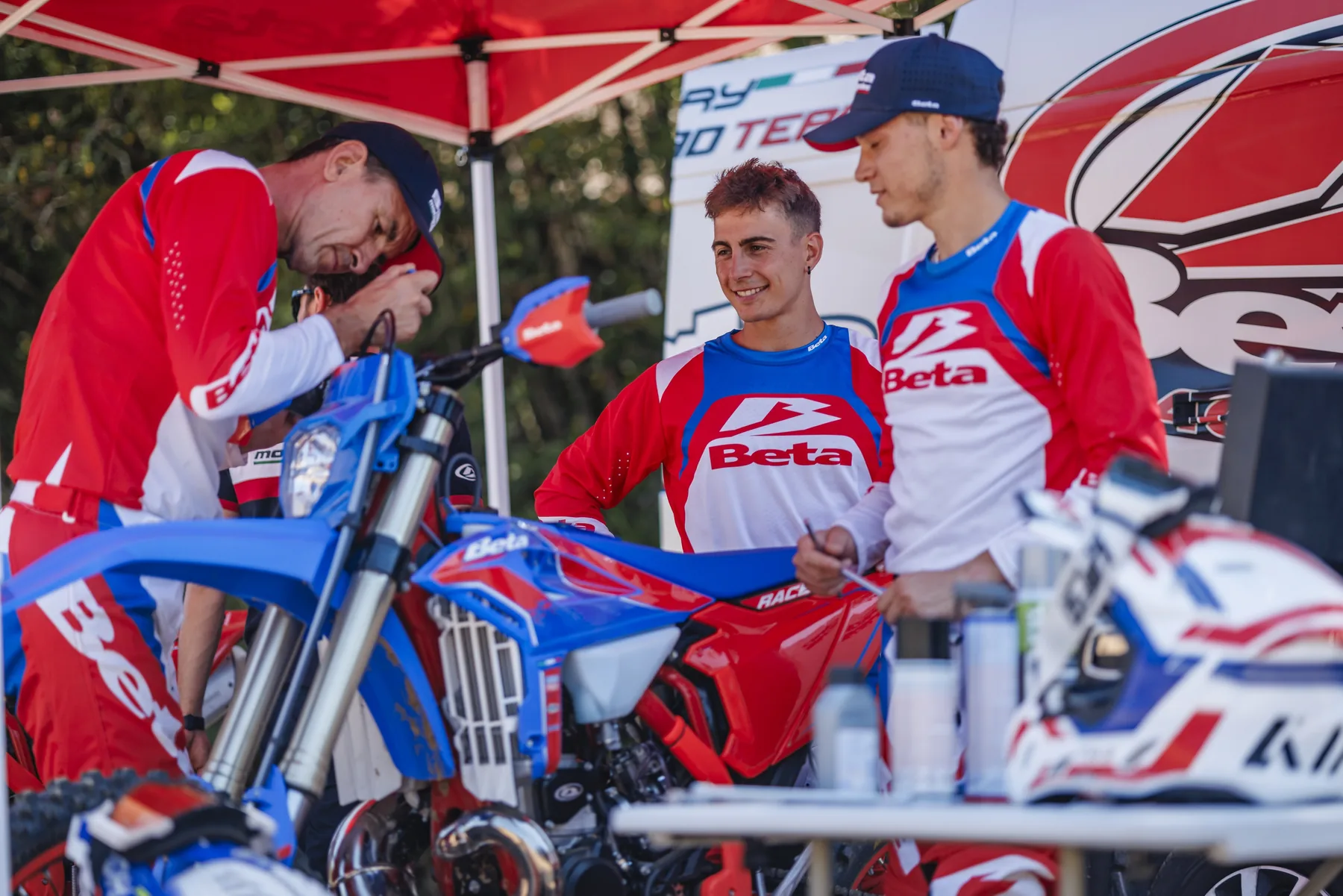
Beta riders and mechanics exchanging around an RR Race 2027. Photo: Betamotor.
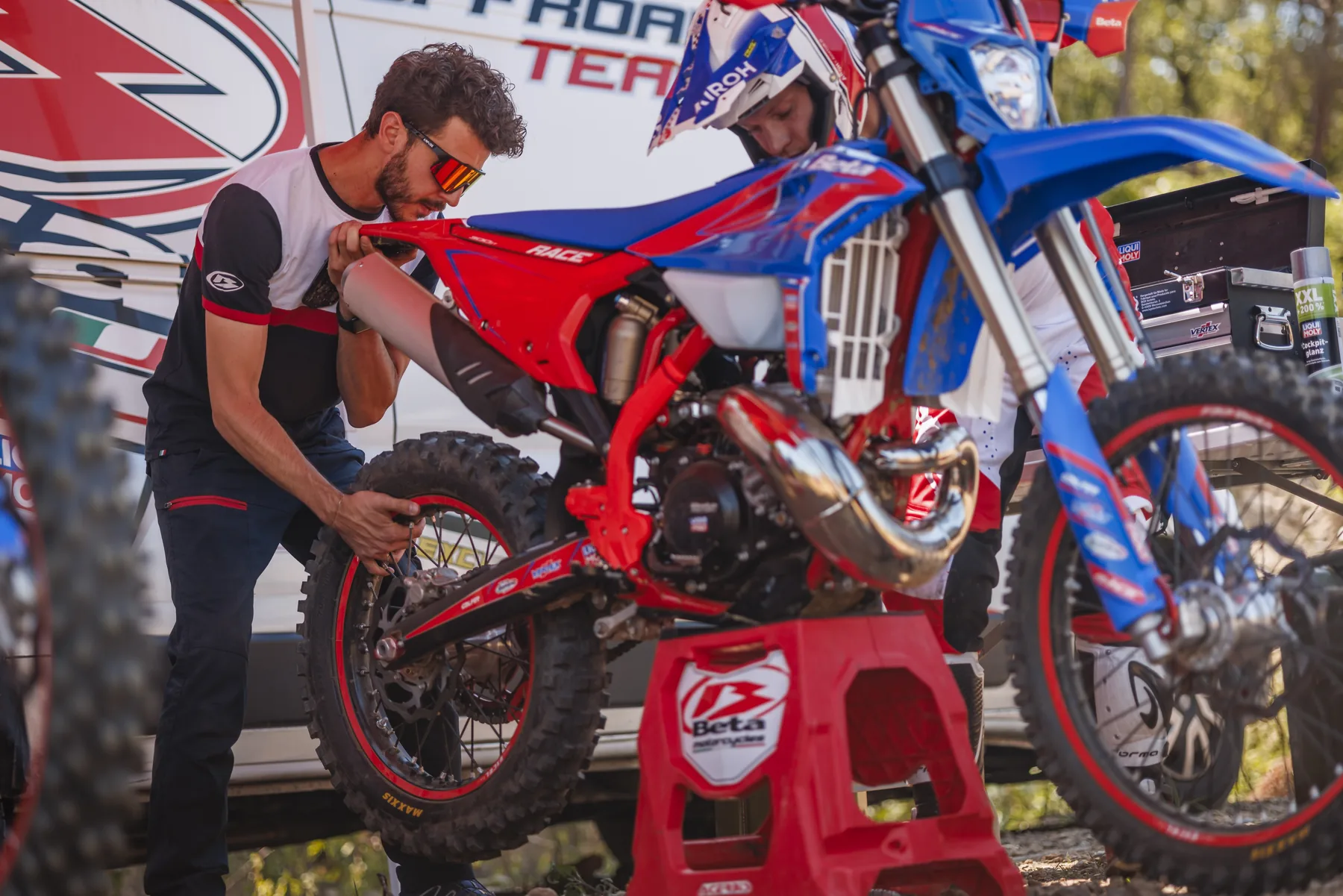
Mechanic controlling a BETA RR Race 2027 in the paddock. Photo: Betamotor.
What to check when taking over
- The sag and precharge with the fully equipped rider;
- The recommended compression and release settings for the displacement;
- The Launch Control level adapted to grip on the 4T;
- The operation and conditions for activating Quick Shift;
- The tension and chain alignment after the first few hours;
- The mixing dosage according to the manual on the 2T;
- The tightening torques, levels and maintenance deadlines of the MY 2027 manual.
The press release does not replace the user manual. Oil references, mixture proportions, piston intervals, valve clearances and tightening torques must always be taken from the documentation corresponding exactly to the chassis number and displacement.
Frequently asked questions about the BETA RR Race 2027
How many models does the BETA RR Race 2027 range have?
The range includes eight motorcycles: 125, 200, 250 and 300 2T, then 350, 390, 430 and 480 4T.
Which RR Race 2027s receive Launch Control?
The four models 4T receive the Launch Control. The English documentation announces five levels of control.
Does the Quick Shift work on uphill and downhill?
The BETA file describes an "up-shift" Quick Shift, therefore intended for gear climbing. It does not claim an assisted reverse function.
What are the new features of the BETA RR Race 300 2T 2027?
The 300 receives new main crankshaft bearings, a revised cylinder head geometry and a new exhaust valve adjustment to achieve a more progressive response at low and medium engine speeds.
Do the BETA RR Race 2T 2027 have separate lubrication?
No, no series. BETA retains a mixing feed on the four 2T to reduce weight. The automatic system is announced in the Factory Parts catalog.
What is the saddle height of an RR Race 2027?
The eight technical sheets indicate a saddle height of 950 mm.
Which is the lightest of the BETA RR Race 2027?
The 125 2T, with a dry weight announced of 94 kg. The 200 2T is announced at 97 kg, the 250 and 300 at 103,5 kg and the four 4T at 107,5 kg.
When will the BETA RR Race 2027 be available?
Betamotor announces availability in September 2026, without specifying in the press release the French date specific to each model.
What is the price of a BETA RR Race 2027?
The VAT-inclusive price in France in force as of August 7, 2026 indicates €9,390 for the 125 2T, €9,790 for the 200 2T, €10,290 for the 250 2T, €10,490 for the 300 2T and €10,950 for each of the four 4T. A participation in the marketing costs of €3.50 per vehicle is mentioned separately.
Complete gallery of the RR Race 2027 BETA
The following photographs come from the official Betamotor media file. They show the 125 and 300 2T, the four-strokes, the technical details and the preparation work in the paddock. The models visible in action are representative of their family; not all displacements have a separate photographic series in the provided file.
BETA RR Race 125 2T 2027 in action
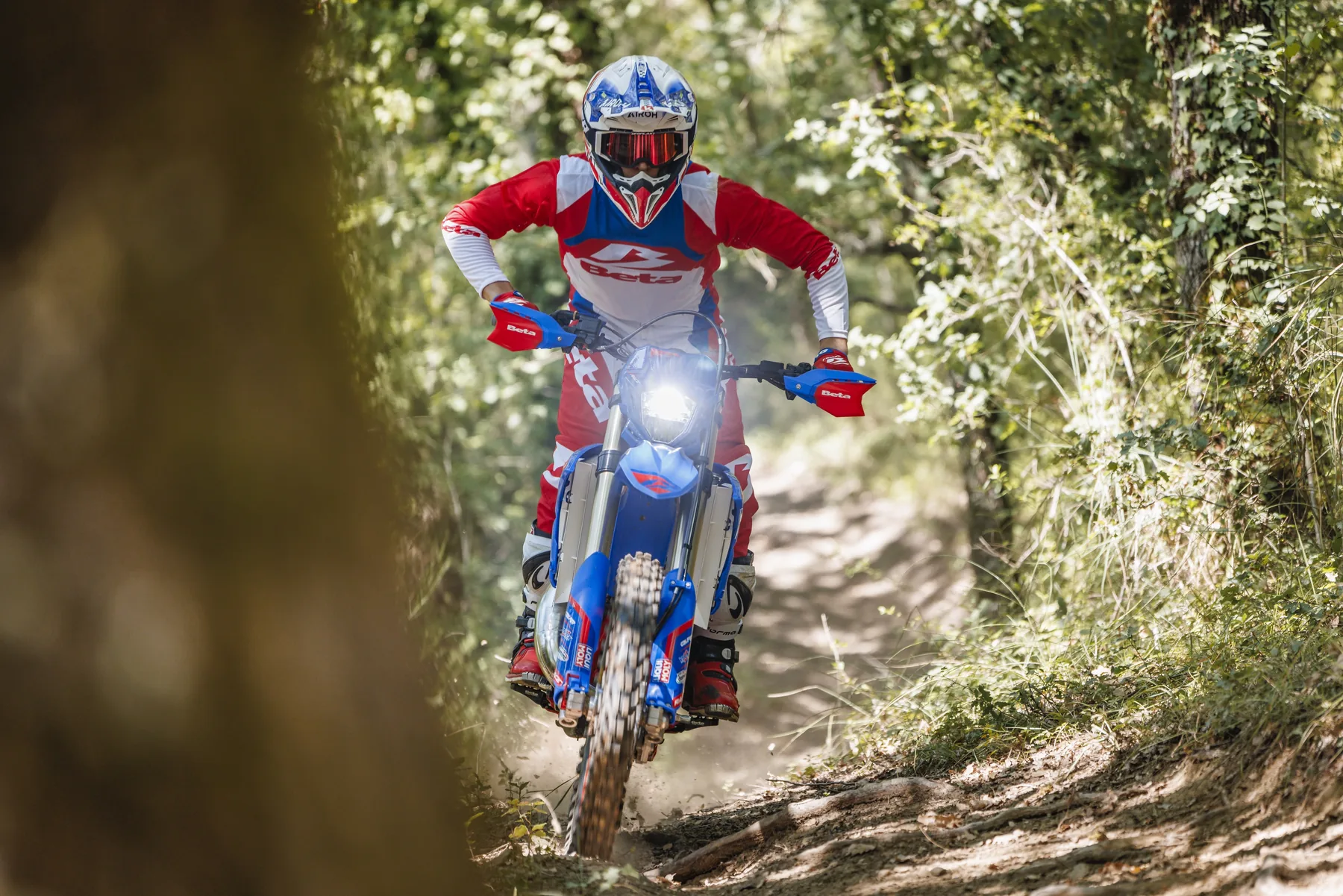
rider on a 2027 BETA RR Race 125 2T from the front in a wooded special, headlight on. Photo: Betamotor.
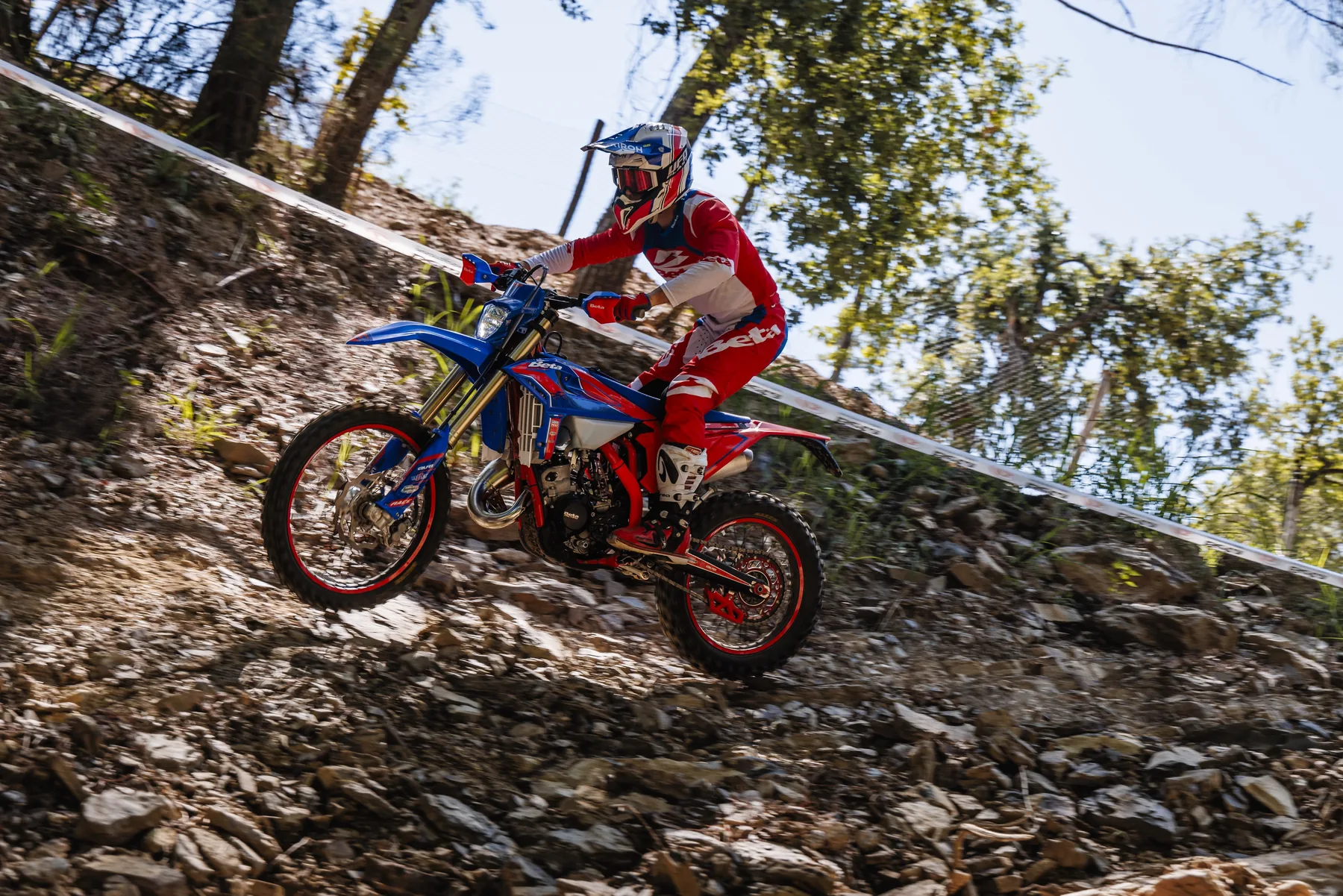
rider on a BETA RR Race 125 2T 2027 on a rocky descent. Photo: Betamotor.
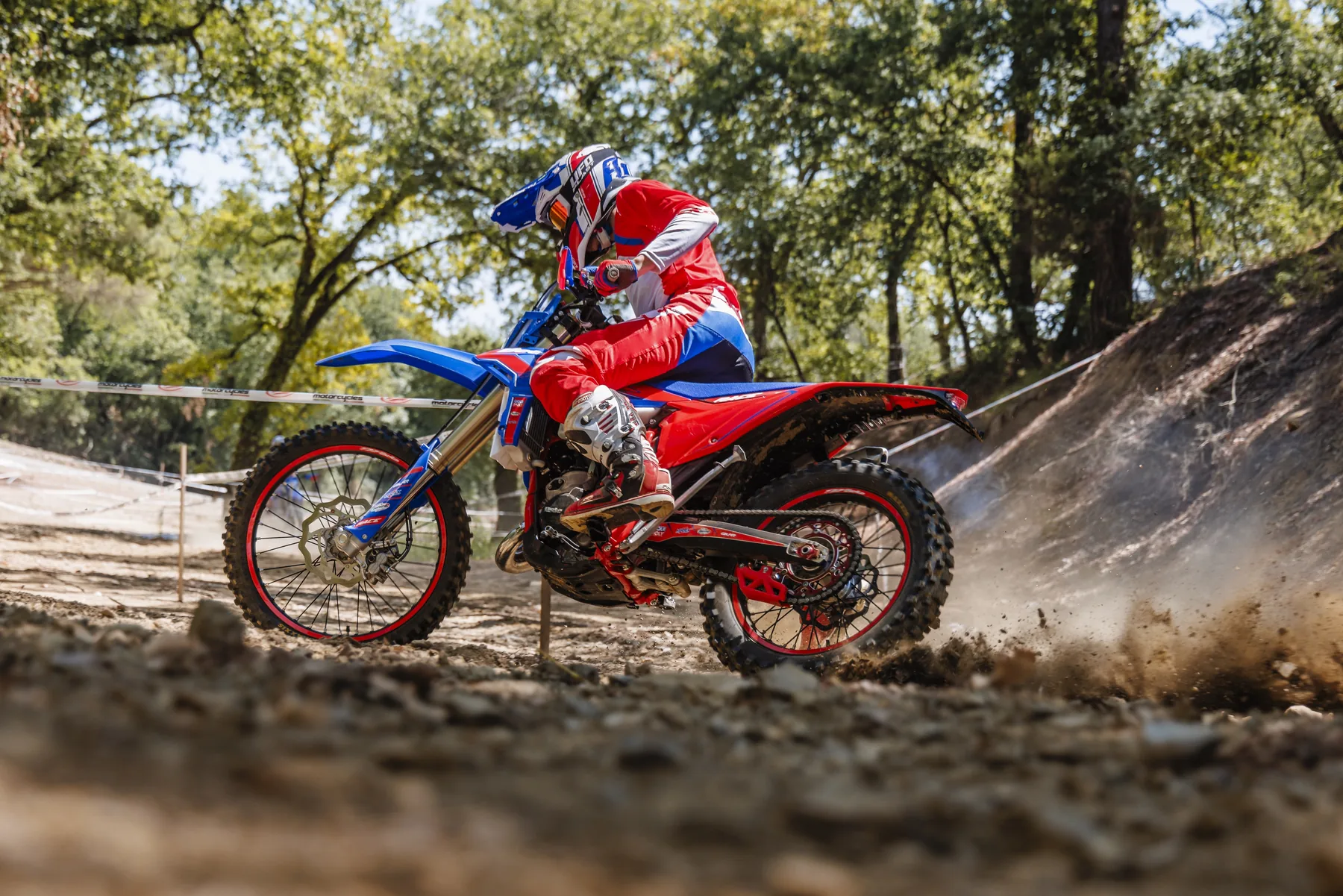
Rider on a BETA RR Race 125 2T 2027 in support in a special in the undergrowth. Photo: Betamotor.
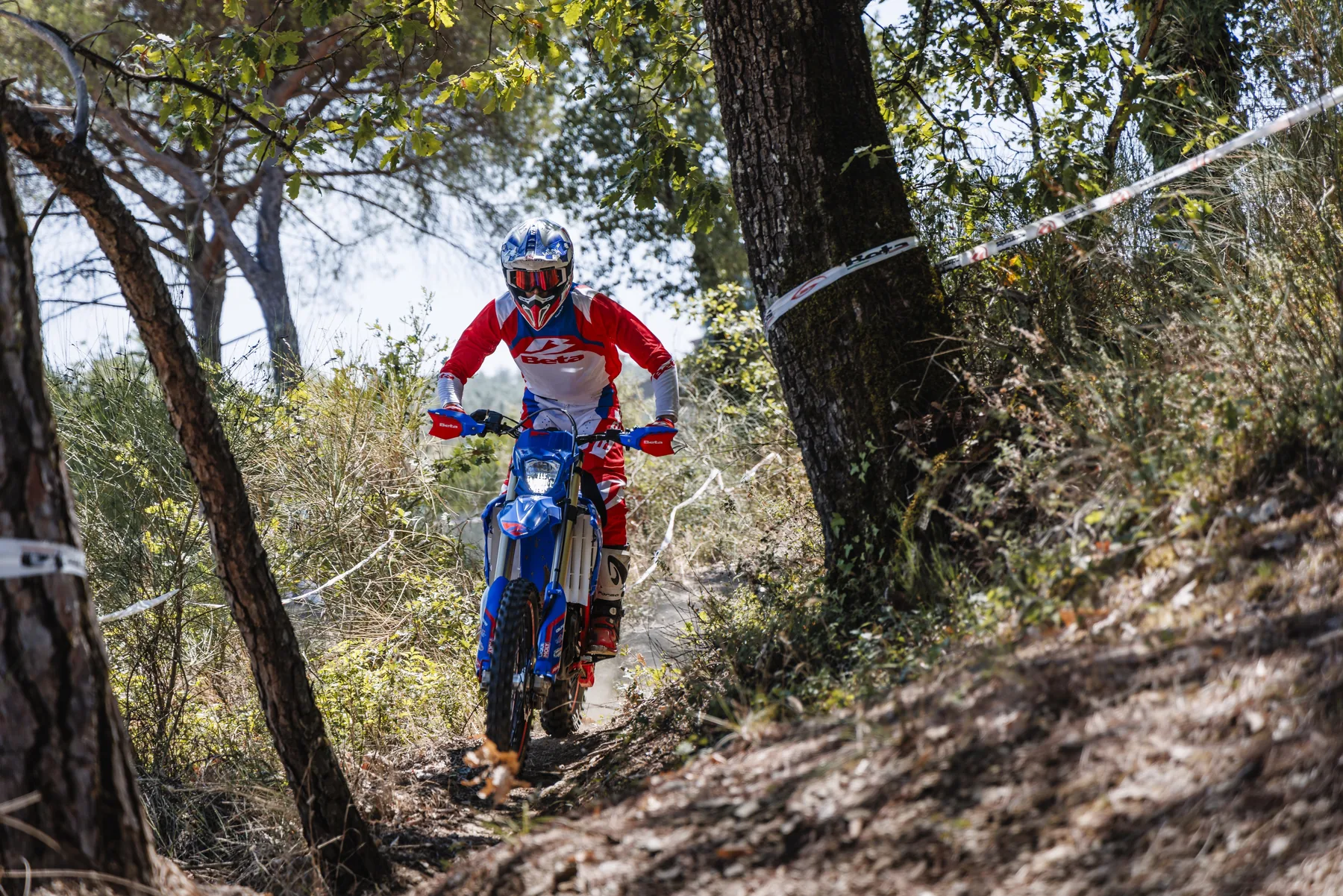
rider on a BETA RR Race 125 2T 2027 in a narrow descent in the forest. Photo: Betamotor.
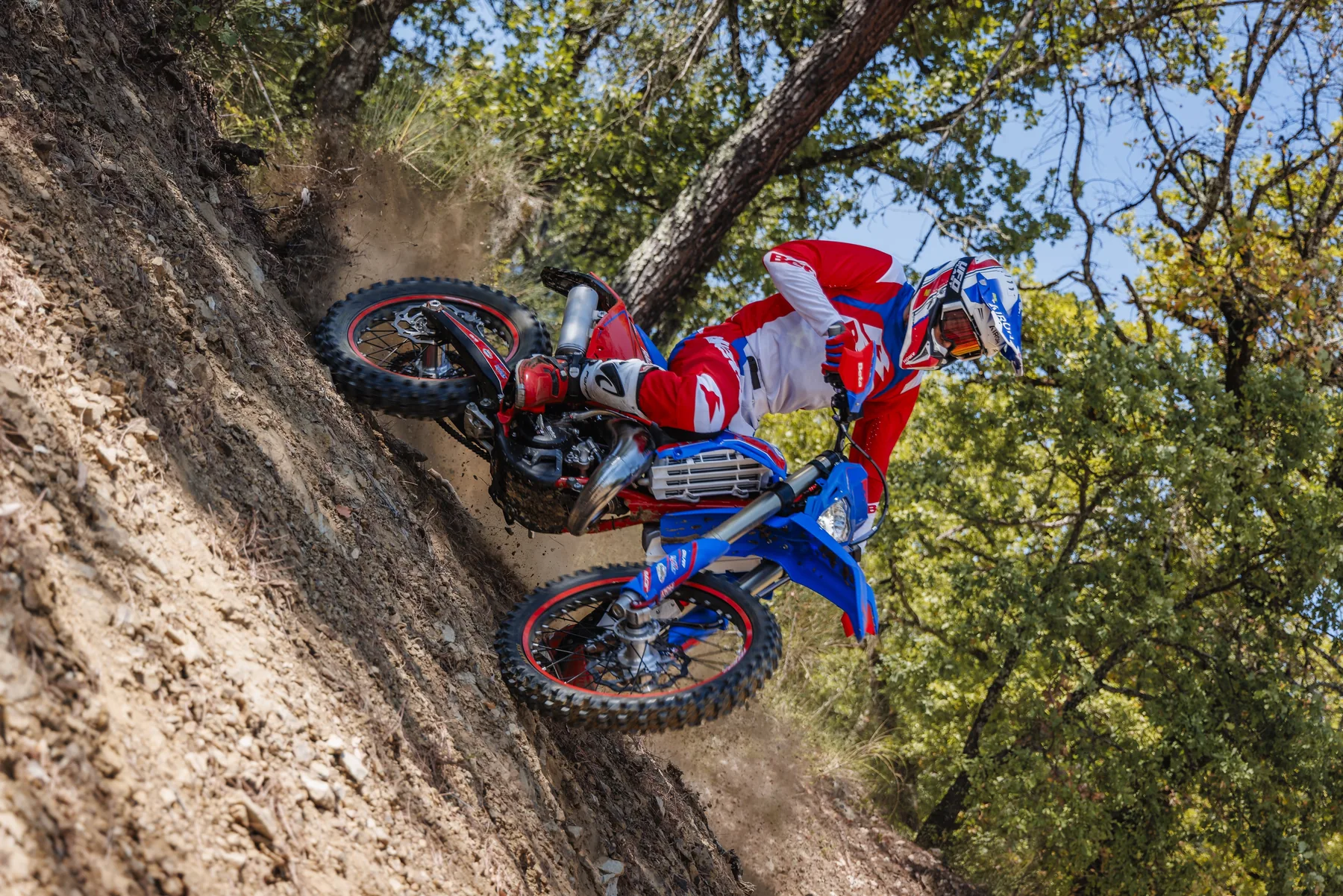
rider on a BETA RR Race 125 2T 2027 on a steep slope. Photo: Betamotor.
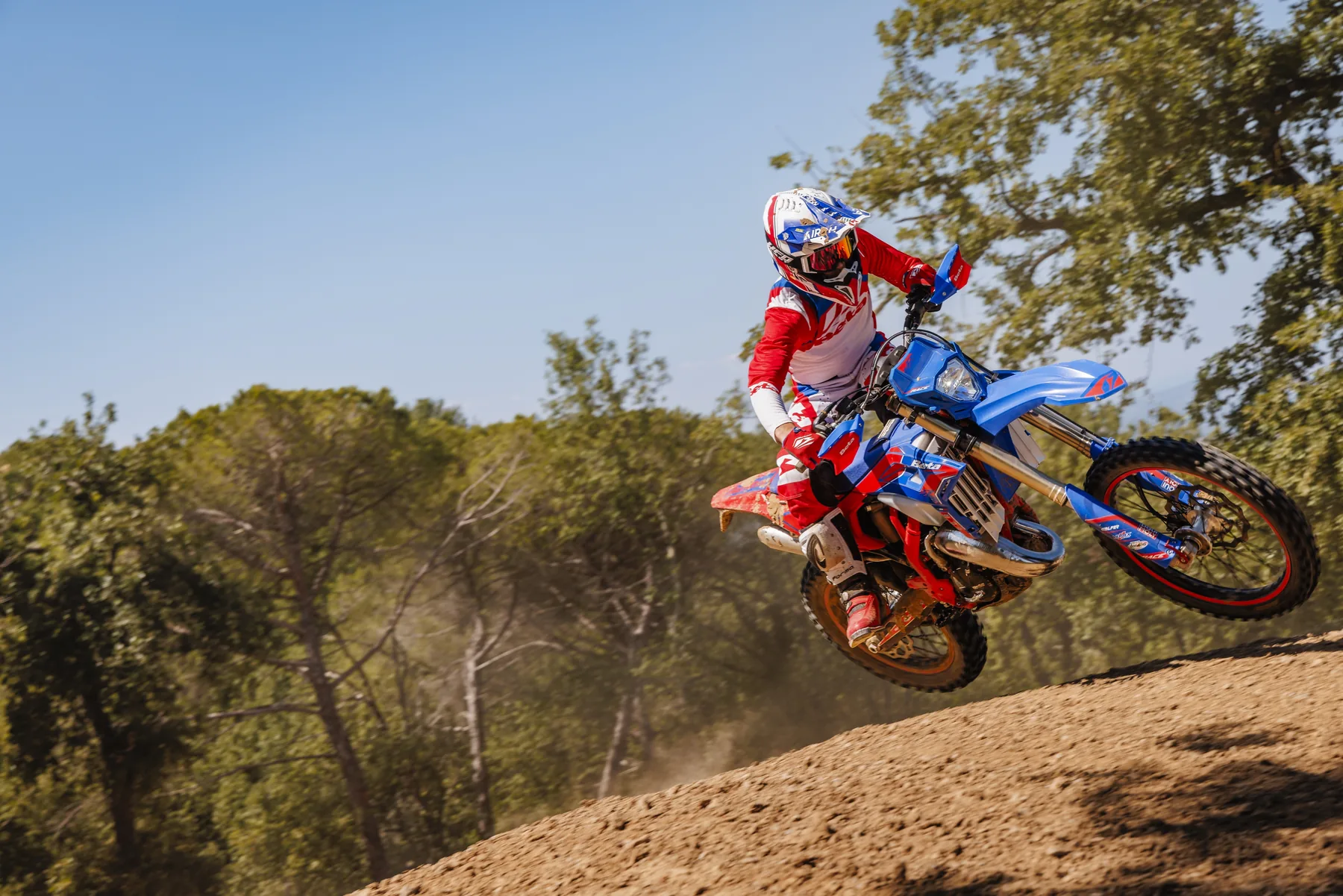
rider on a BETA RR Race 125 2T 2027 in jumping on a dry terrain. Photo: Betamotor.
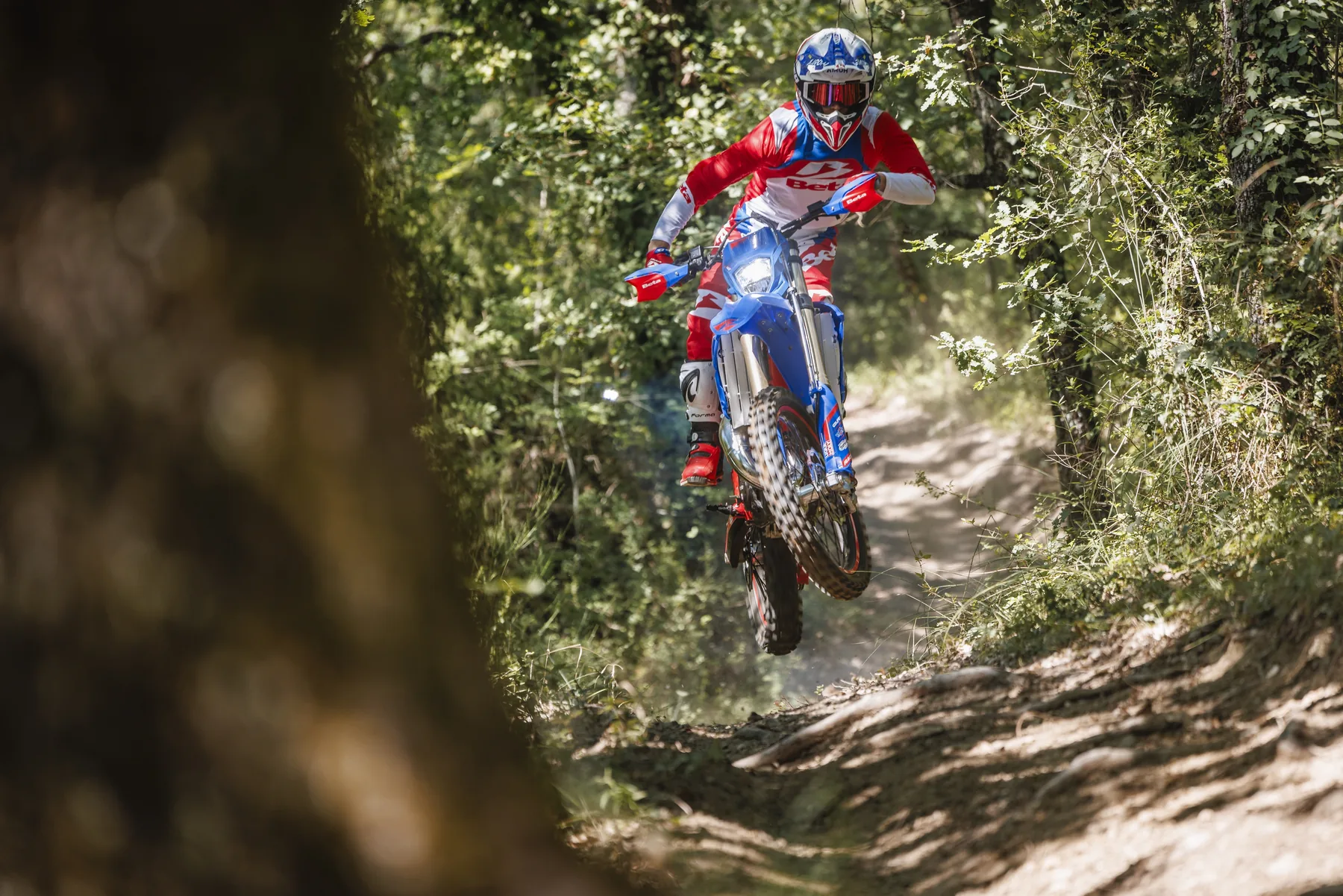
rider on a BETA RR Race 125 2T 2027 jumping in a wooded area. Photo: Betamotor.
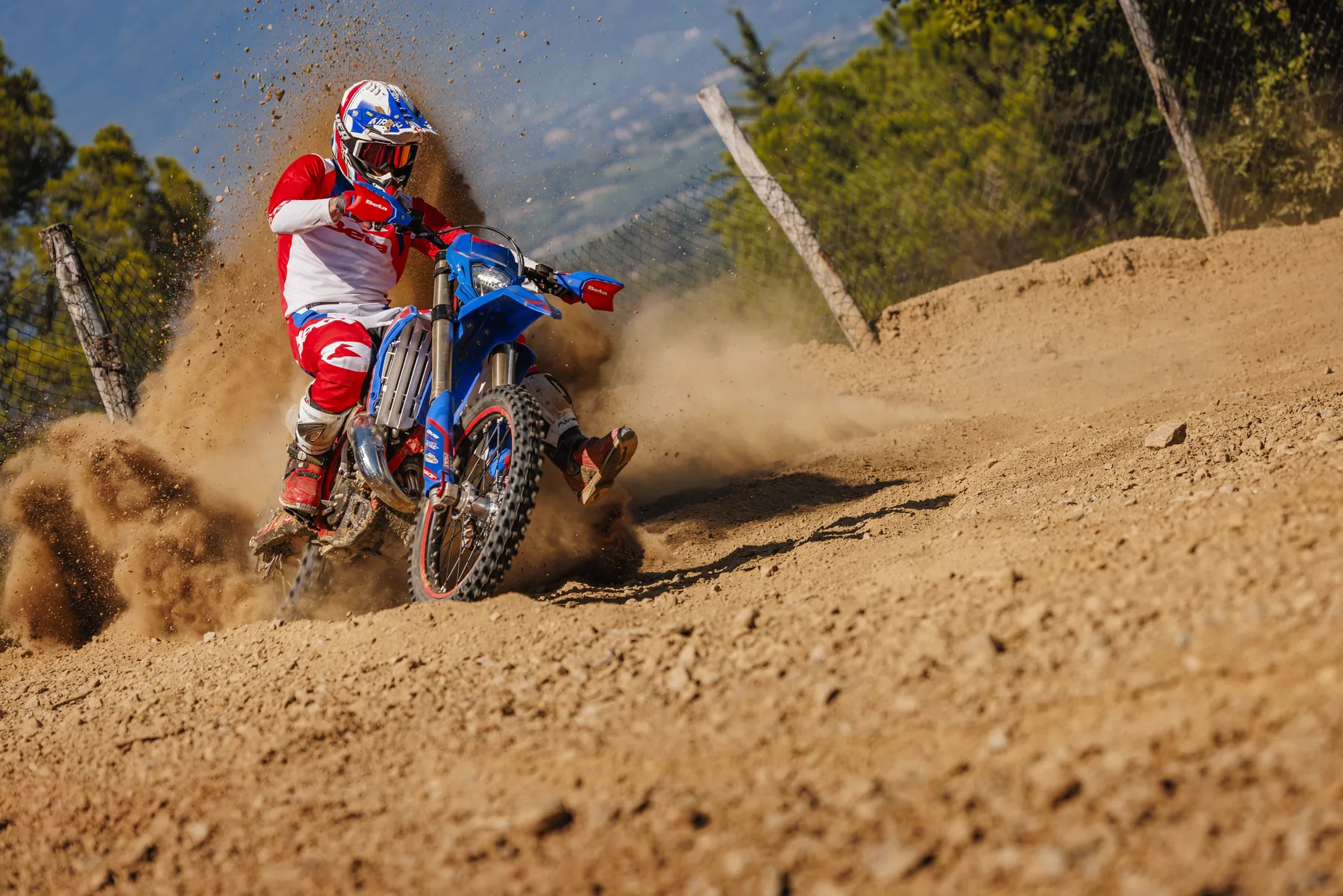
rider on a BETA RR Race 125 2T 2027 restarting in a corner with a cloud of dust. Photo: Betamotor.
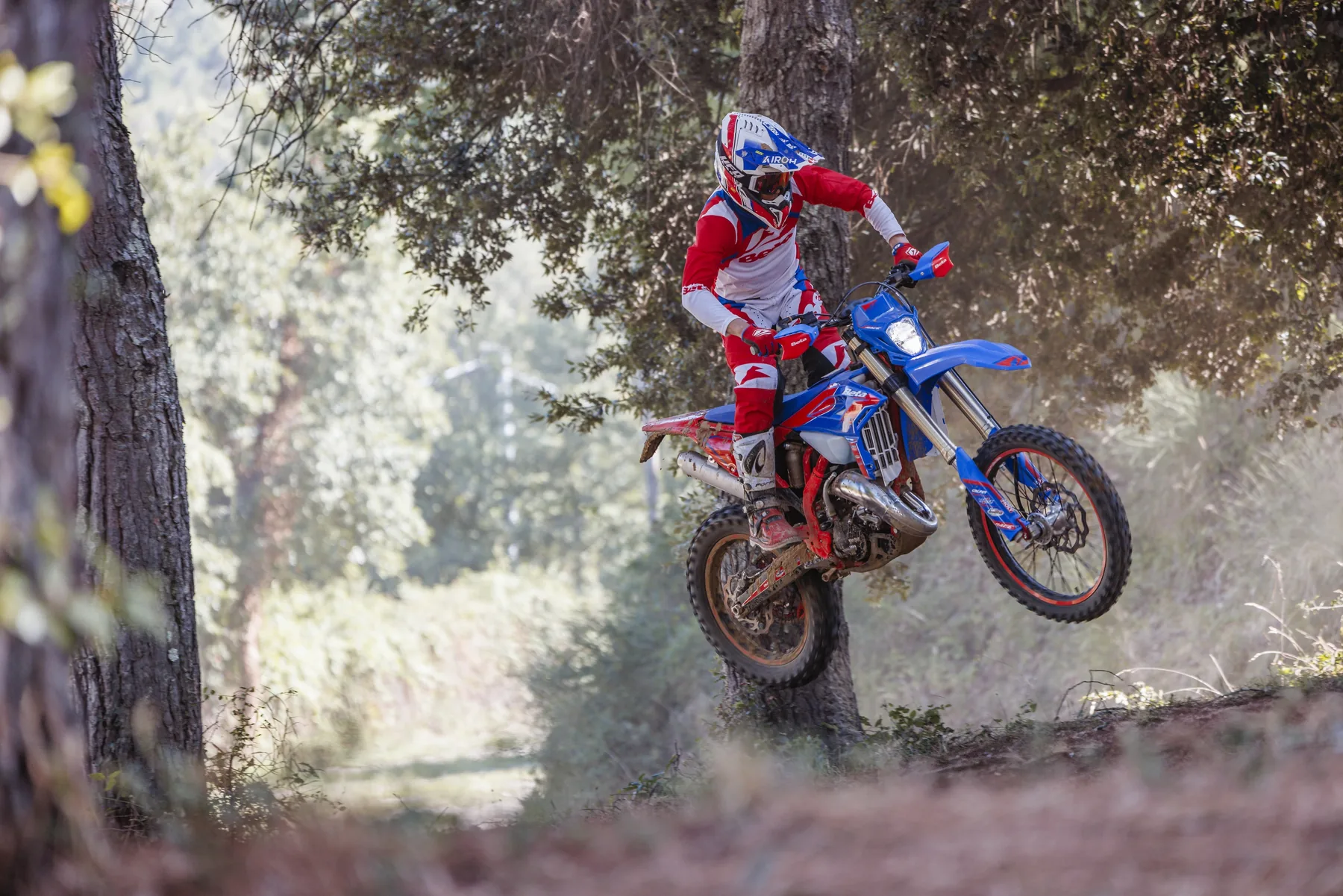
rider on a BETA RR Race 125 2T 2027 in a jump in a forest section. Photo: Betamotor.
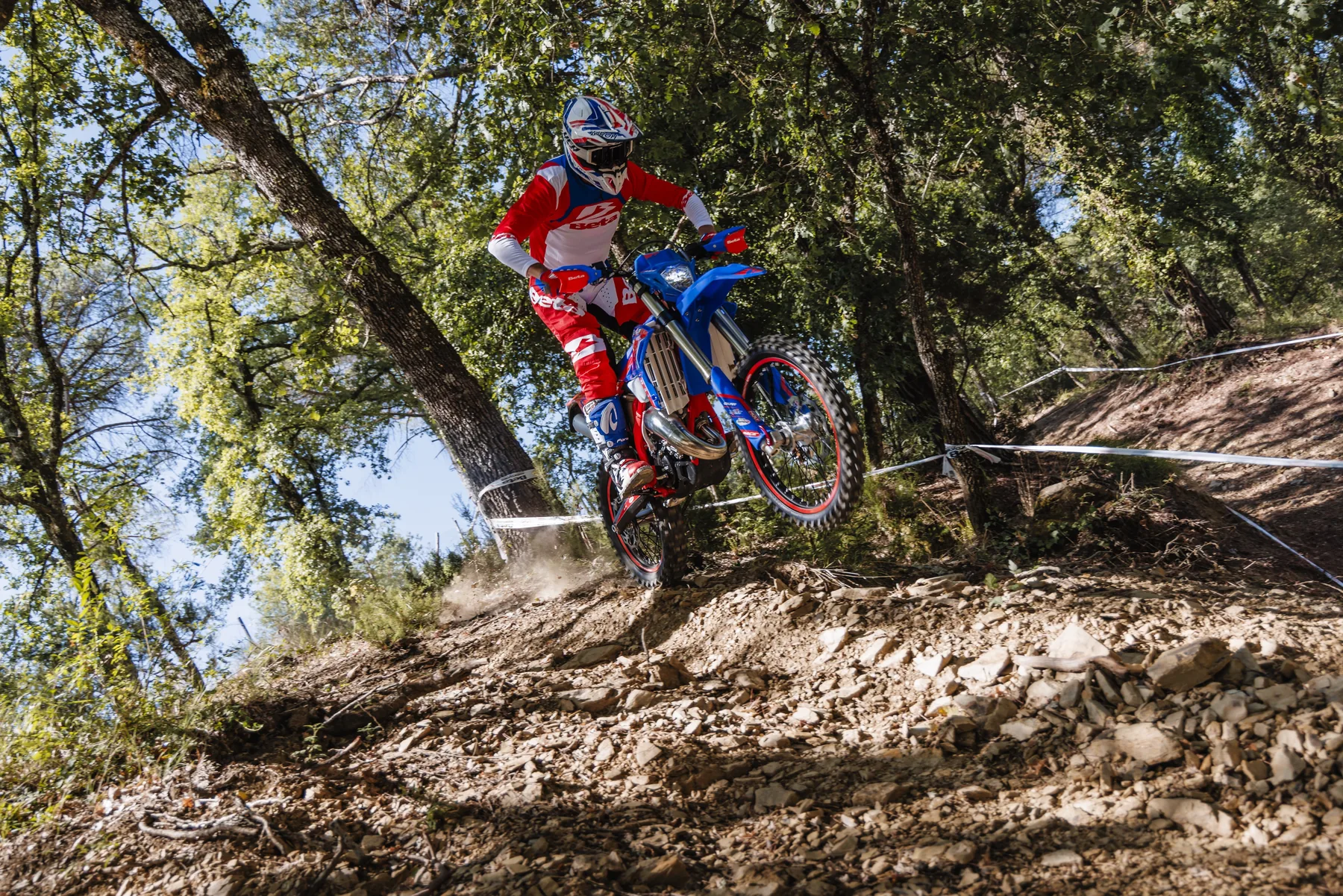
rider on a BETA RR Race 125 2T 2027 crossing a root zone on a descent. Photo: Betamotor.
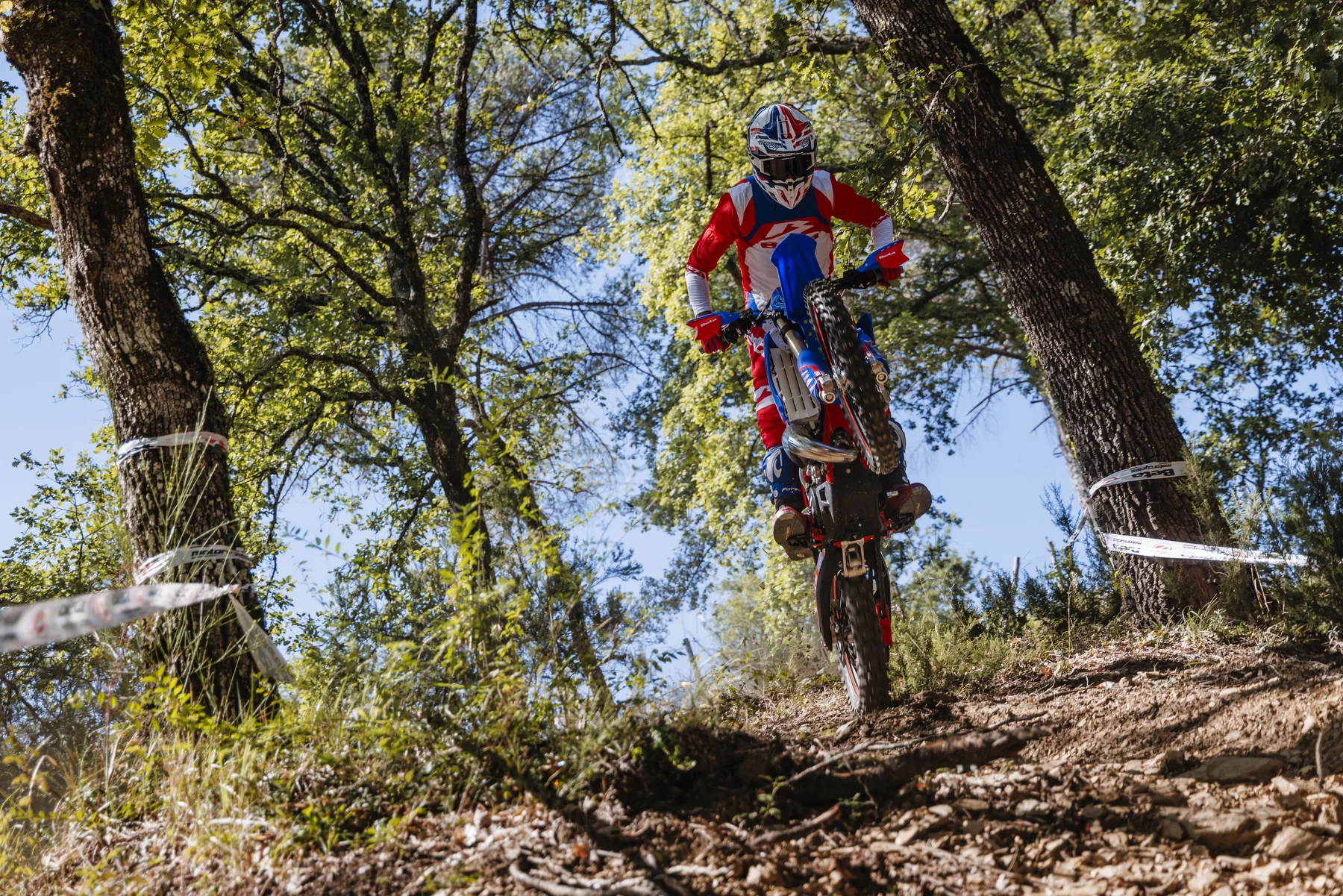
rider on a BETA RR Race 125 2T 2027 when crossing a step in the undergrowth. Photo: Betamotor.
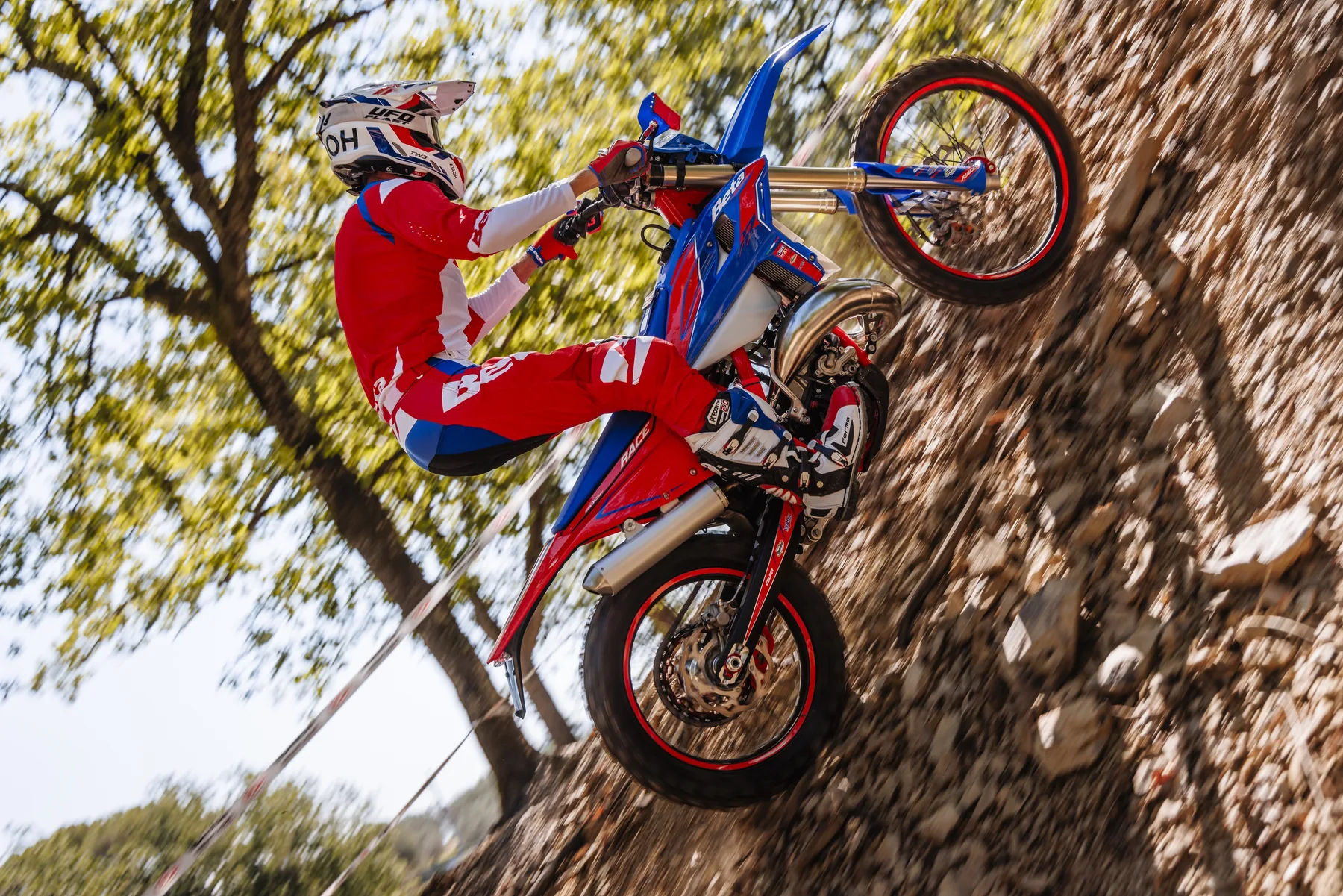
rider on a BETA RR Race 125 2T 2027 on a steep incline. Photo: Betamotor.
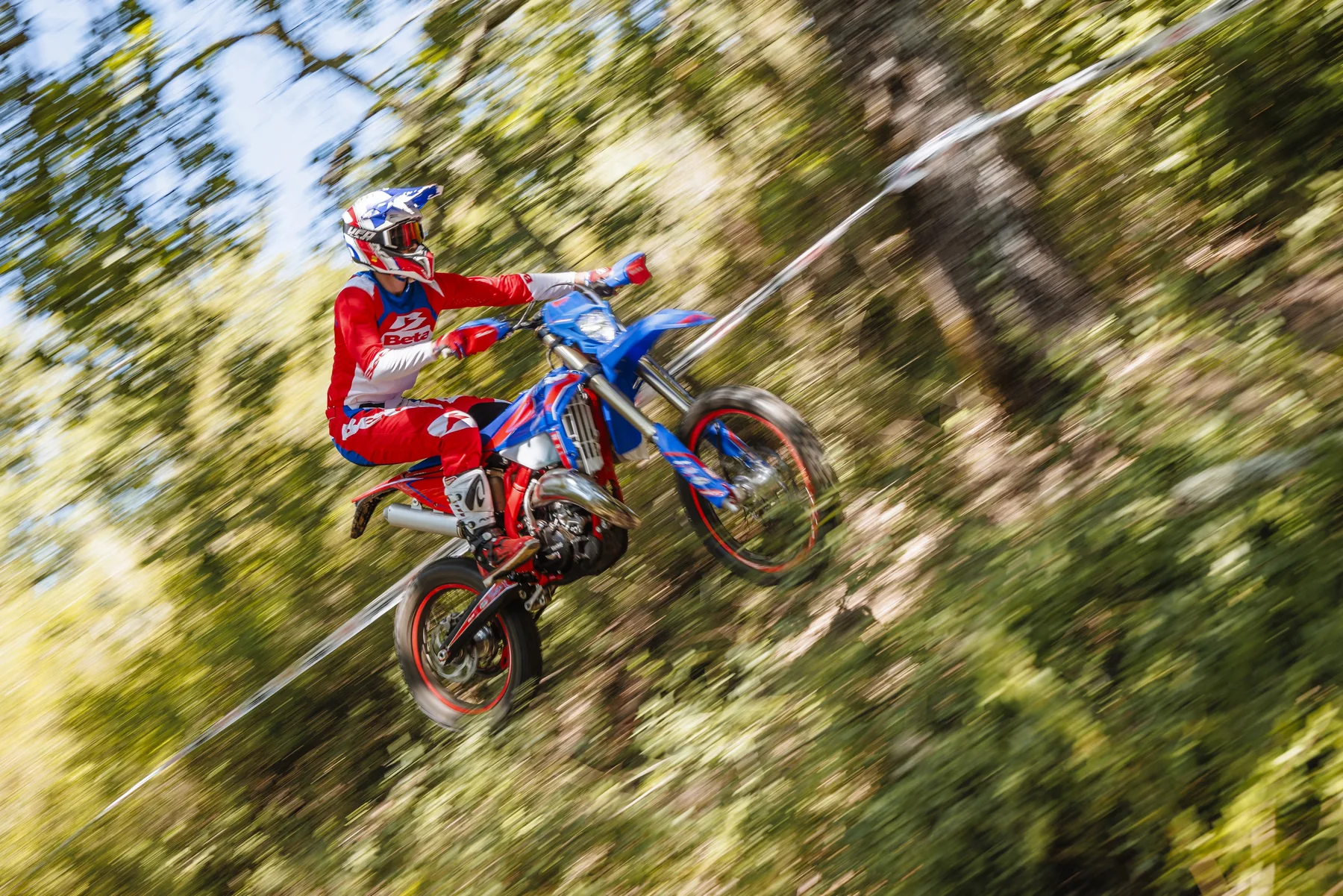
rider on a BETA RR Race 125 2T 2027 in jump with a dynamic filé. Photo: Betamotor.
BETA RR Race 300 2T 2027 in action
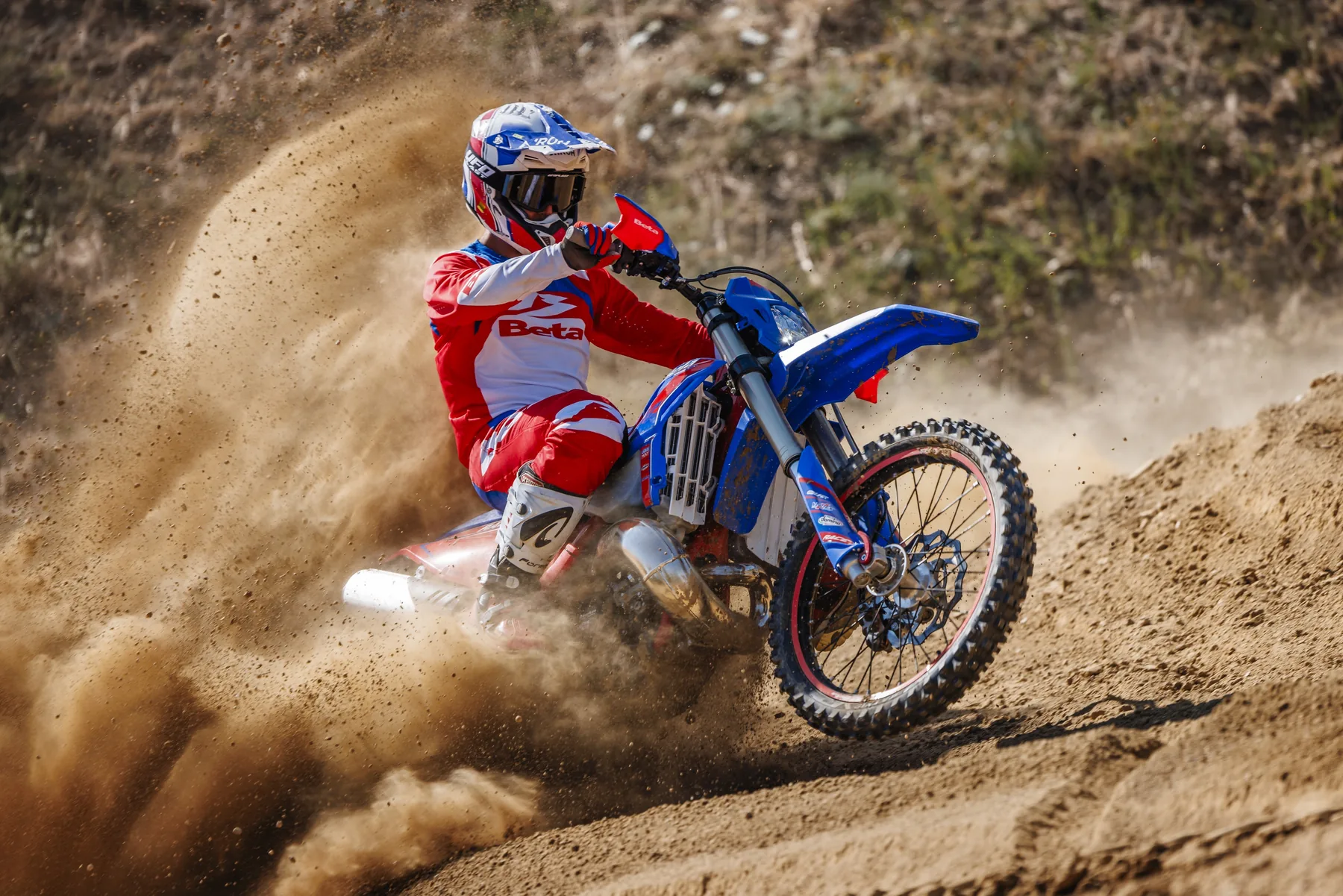
rider on a BETA RR Race 300 2T 2027 exiting a corner in a cloud of dust. Photo: Betamotor.
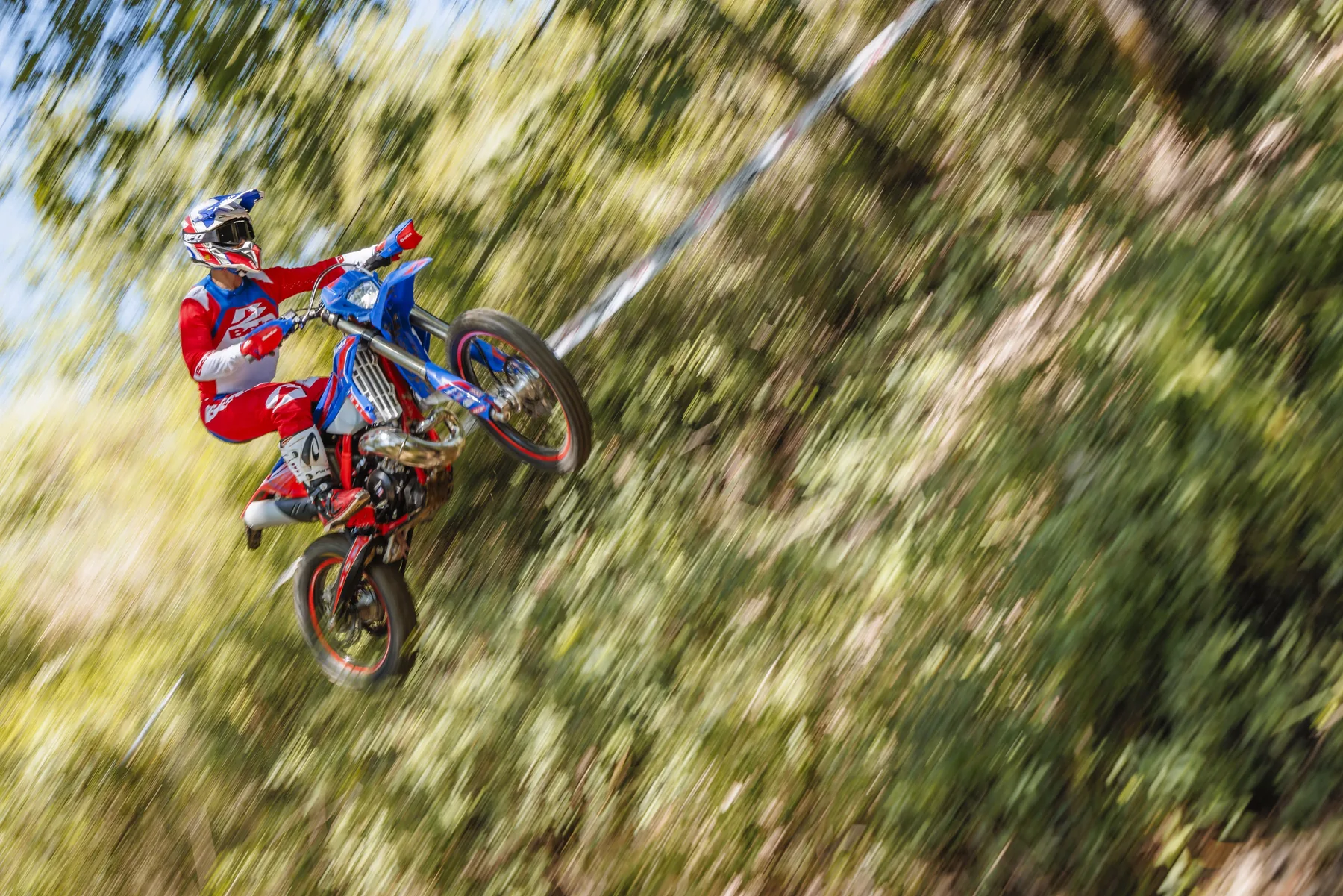
rider on a BETA RR Race 300 2T 2027 in jump with a dynamic filé. Photo: Betamotor.
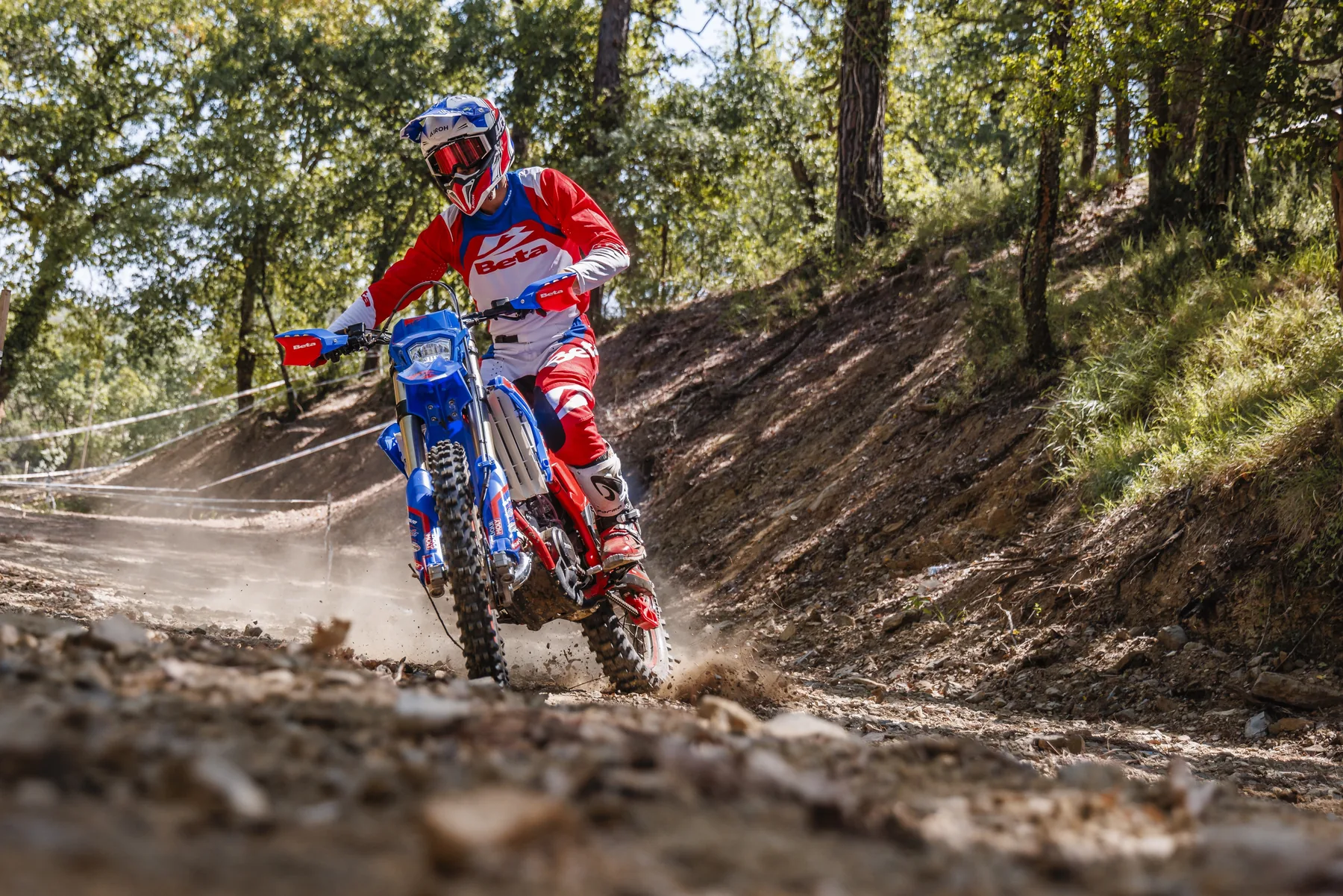
rider on a BETA RR Race 300 2T 2027 exiting a corner in a wooded area. Photo: Betamotor.
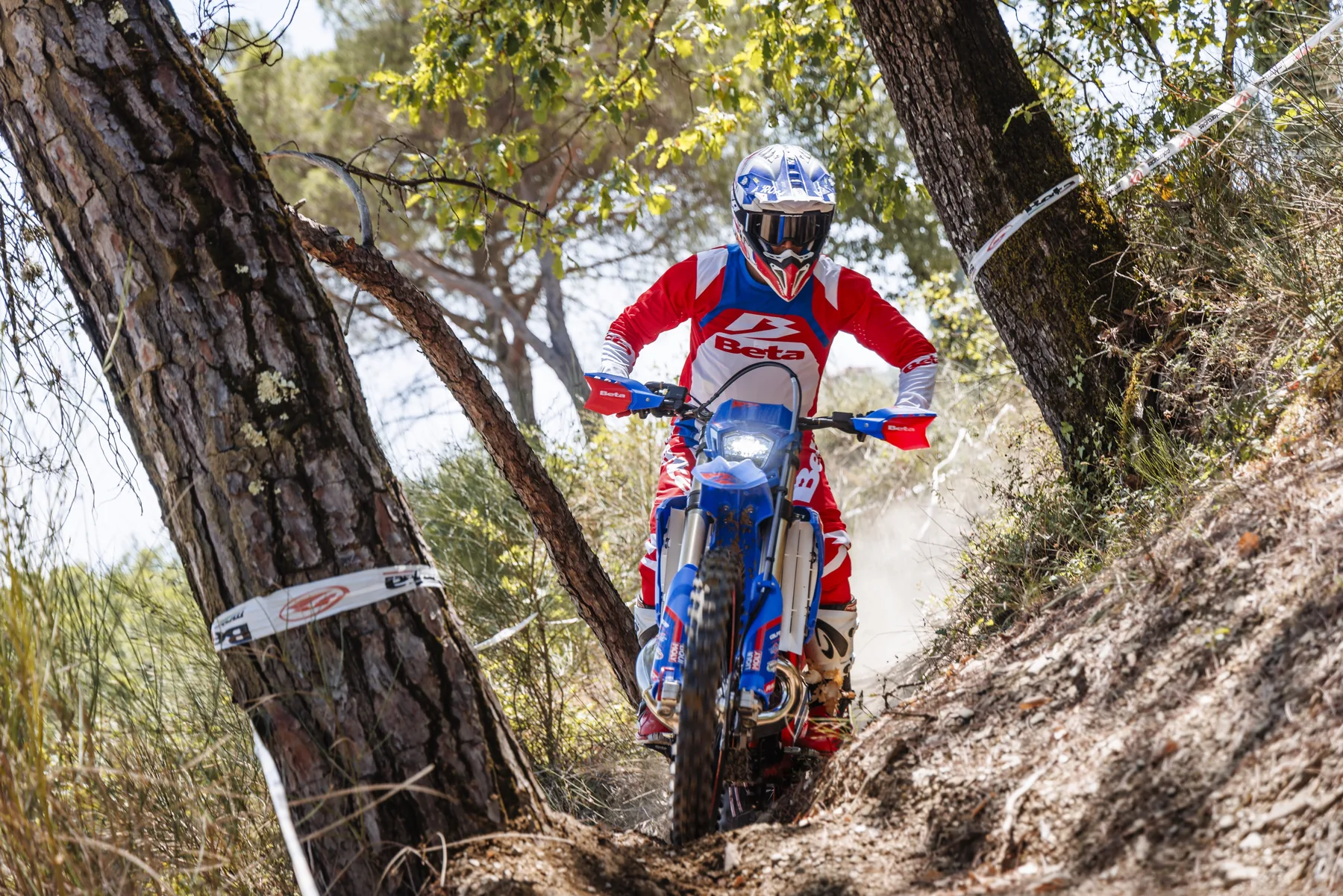
rider on a BETA RR Race 300 2T 2027 jumping between trees. Photo: Betamotor.
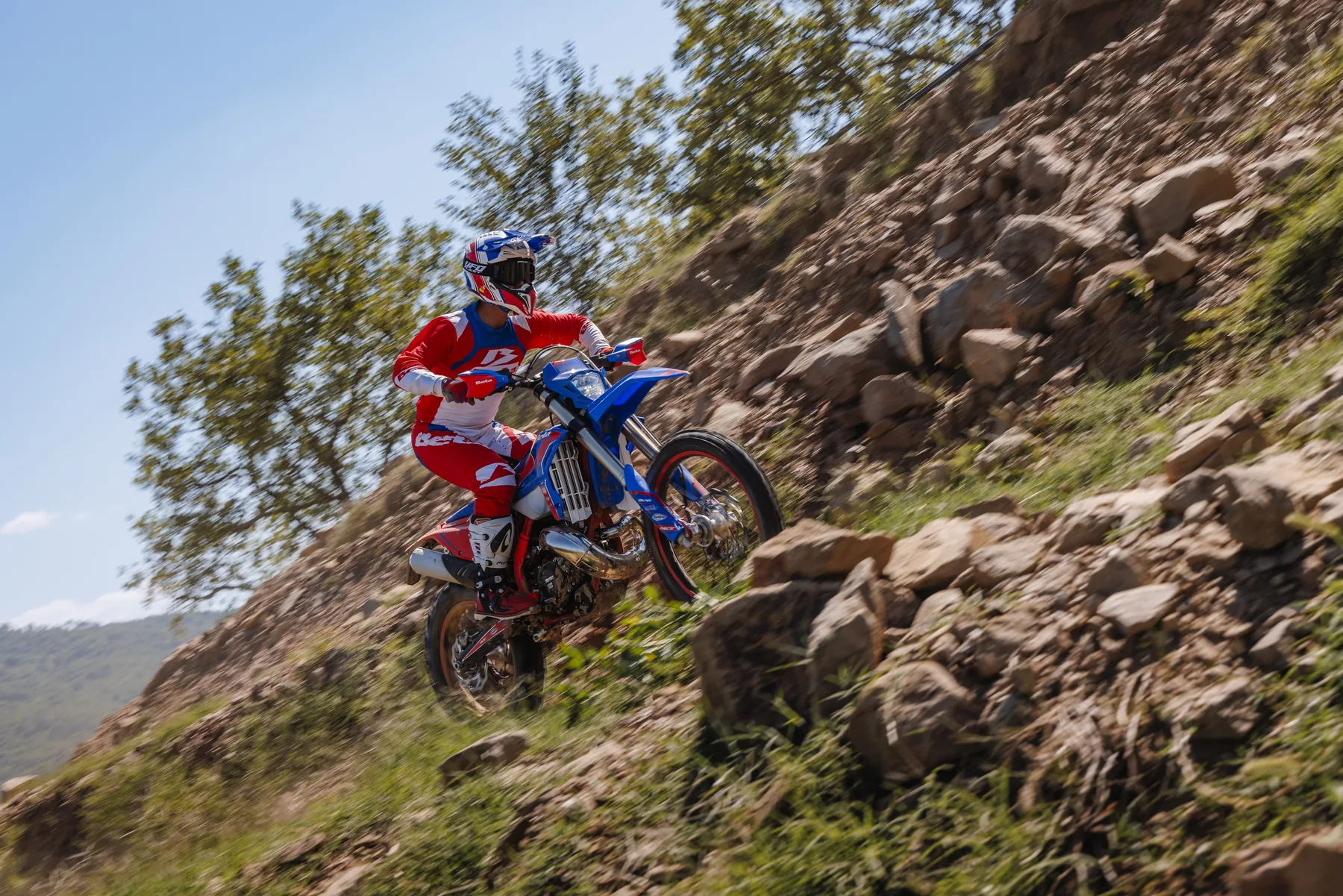
rider on a BETA RR Race 300 2T 2027 on a rocky climb. Photo: Betamotor.
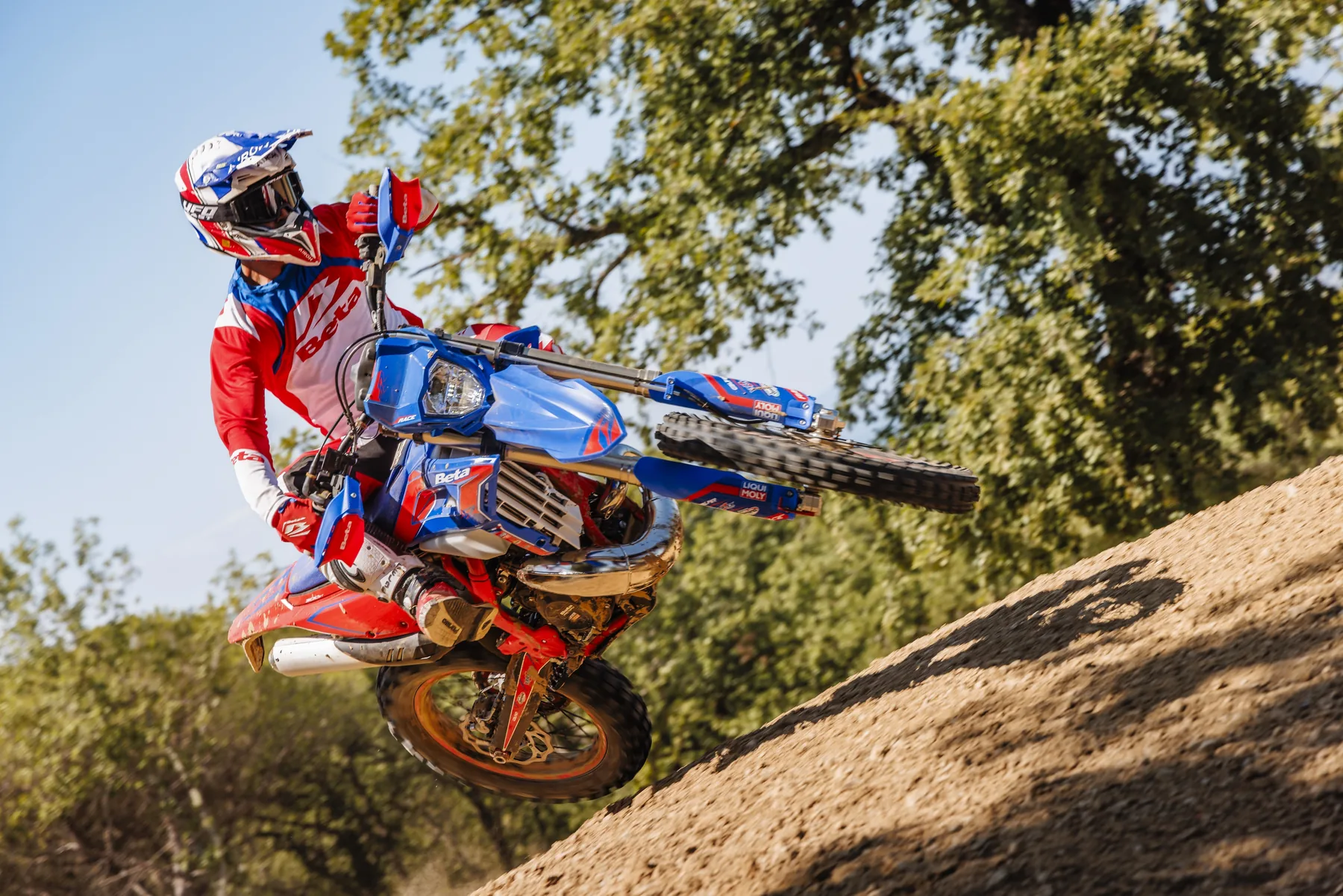
rider on a BETA RR Race 300 2T 2027 on a sandy terrain on a hill. Photo: Betamotor.
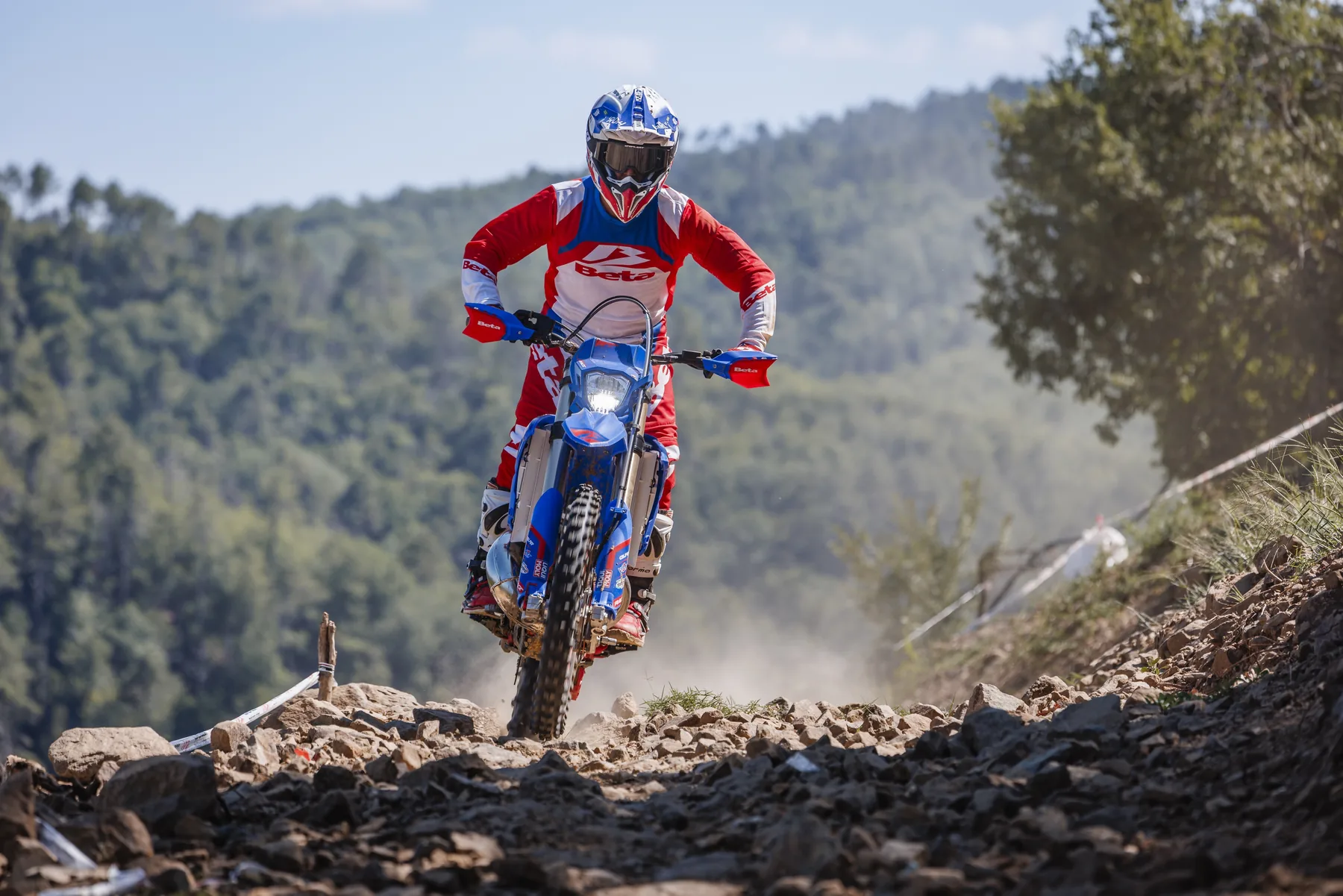
rider on a BETA RR Race 300 2T 2027 jumping on a rocky area. Photo: Betamotor.
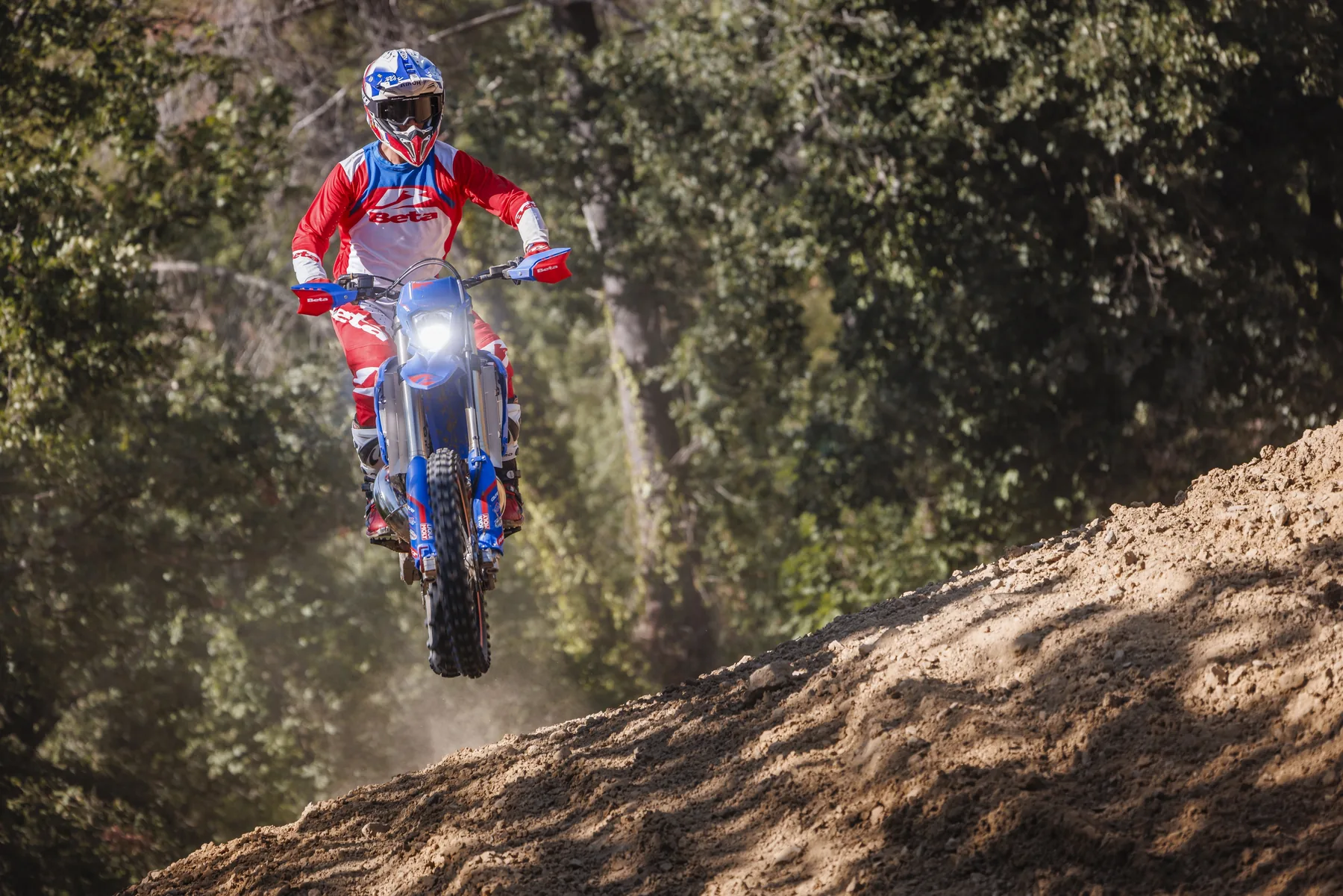
rider on a 2027 BETA RR Race 300 2T front-end jump, headlight on. Photo: Betamotor.
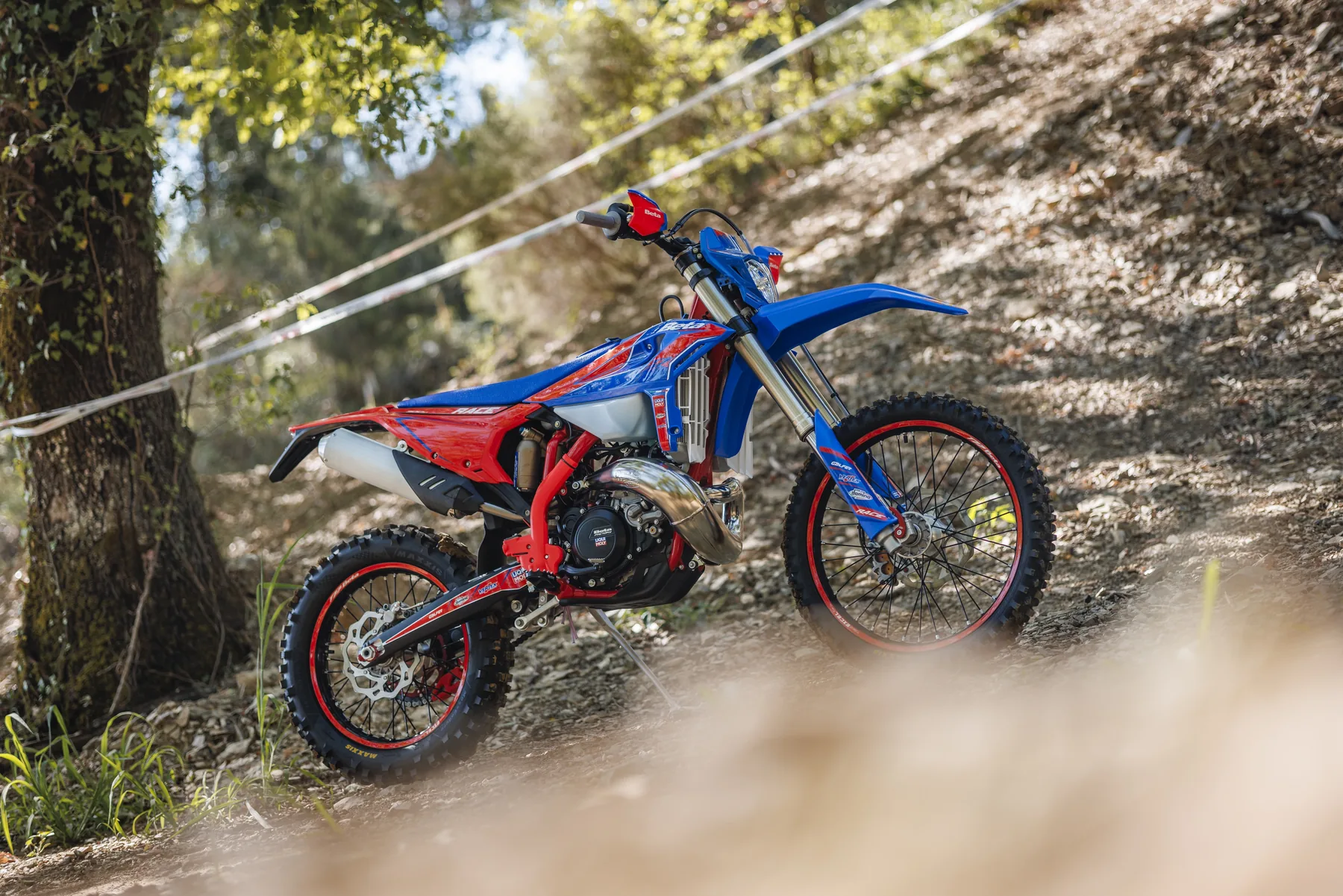
rider on a BETA RR Race 300 2T 2027 immobilized in a thicket. Photo: Betamotor.
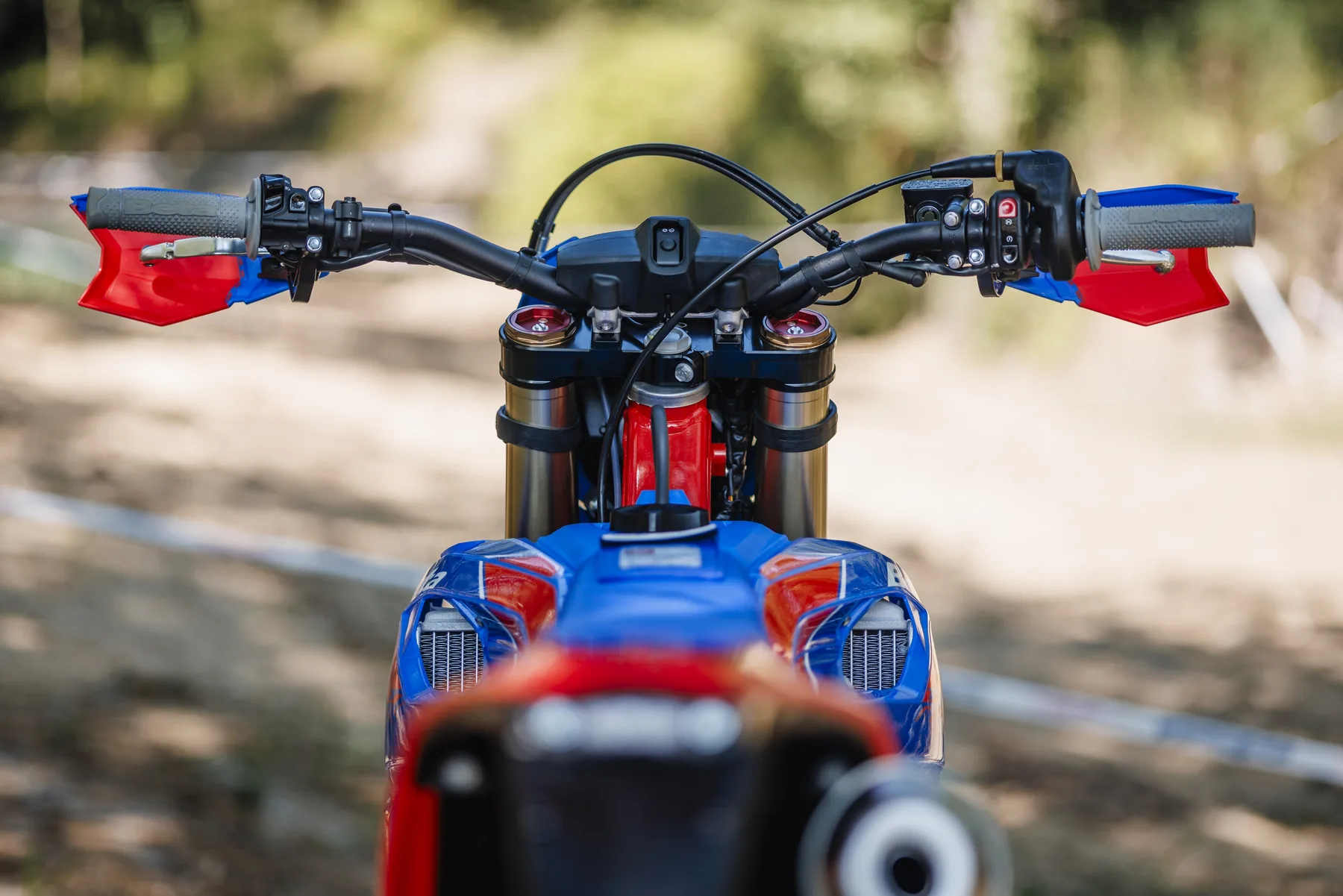
rider on a BETA RR Race 300 2T 2027 viewed from the cockpit. Photo: Betamotor.
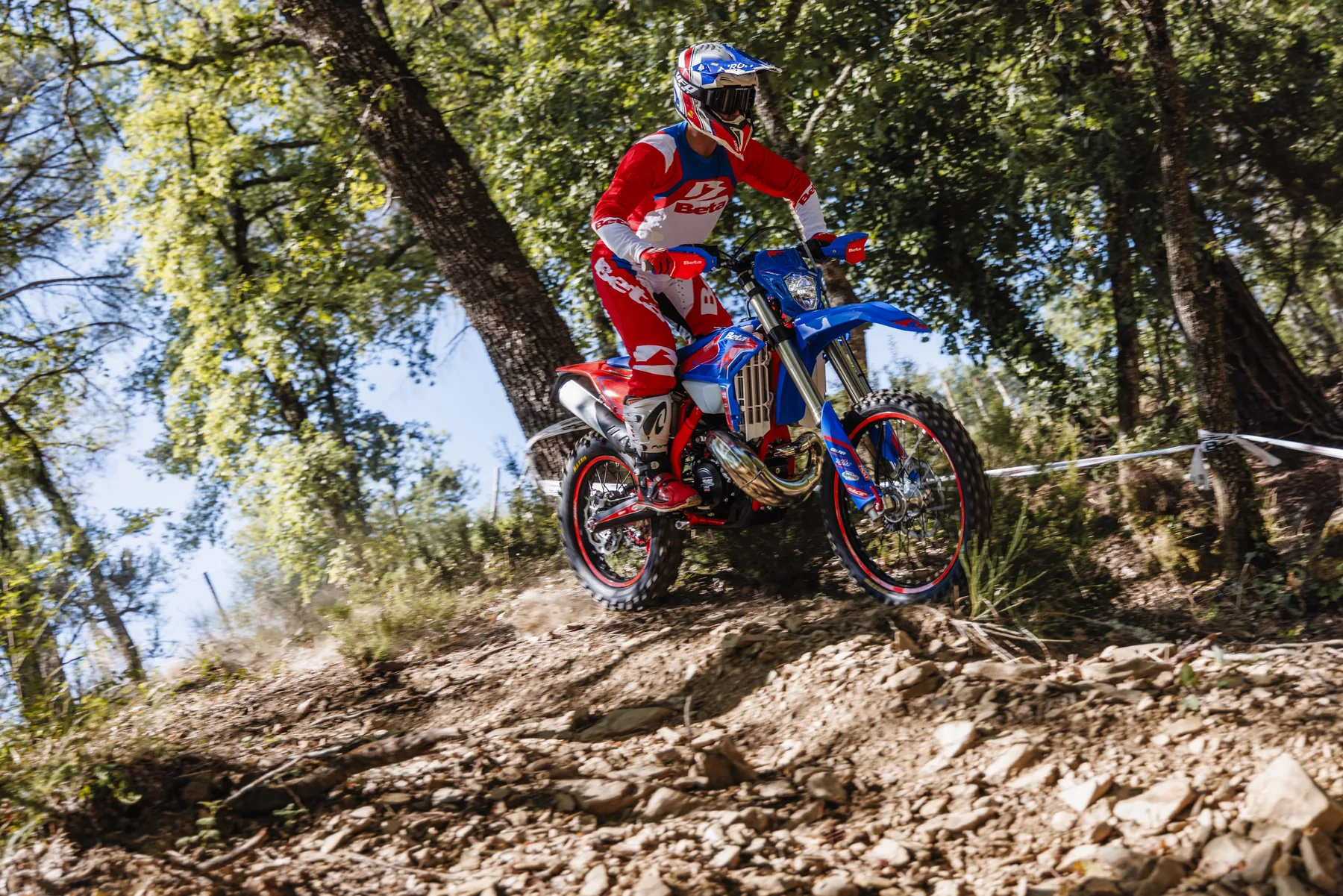
rider on a BETA RR Race 300 2T 2027 when crossing a rocky descent. Photo: Betamotor.
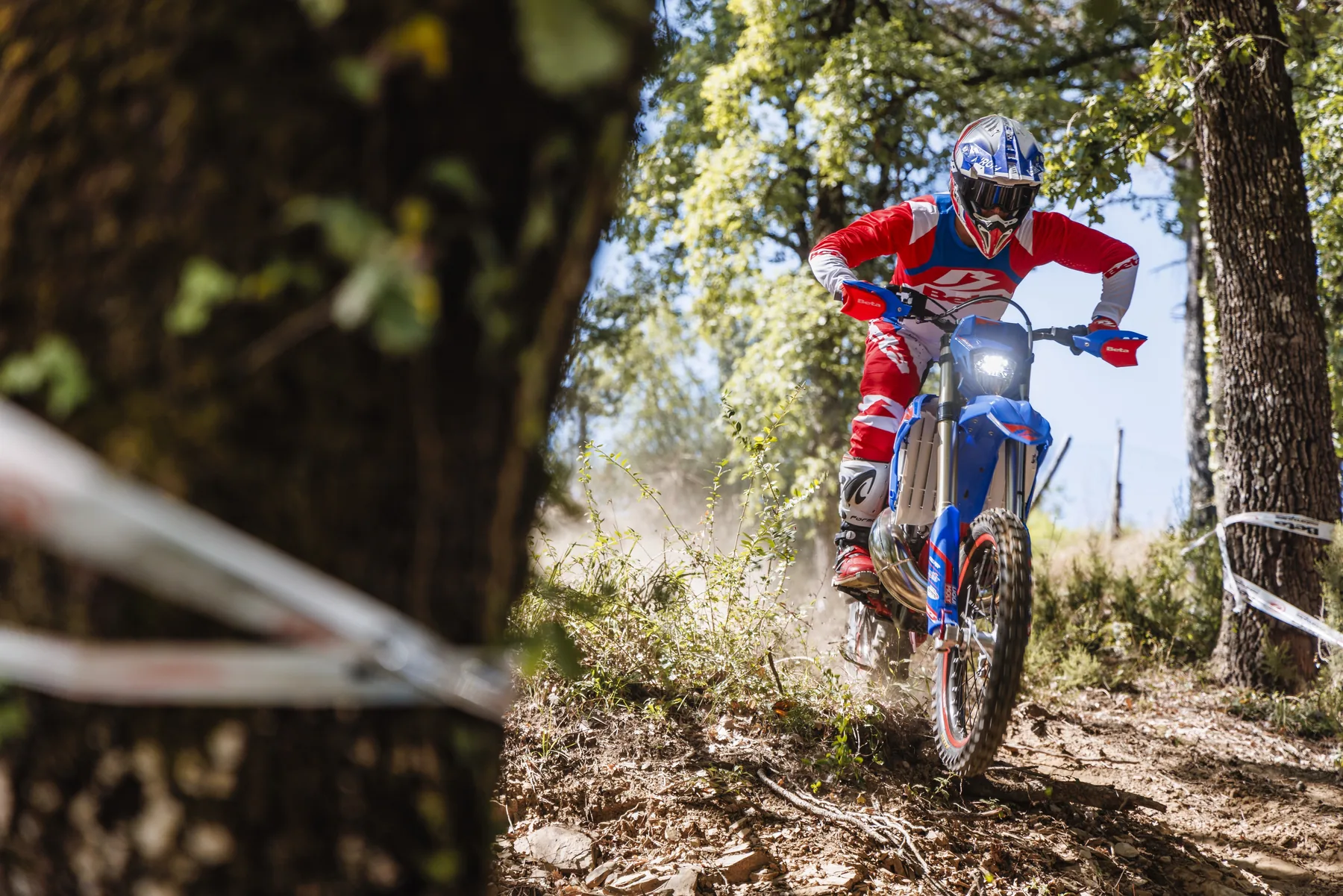
rider on a 2027 BETA RR Race 300 2T front in a wooded special. Photo: Betamotor.
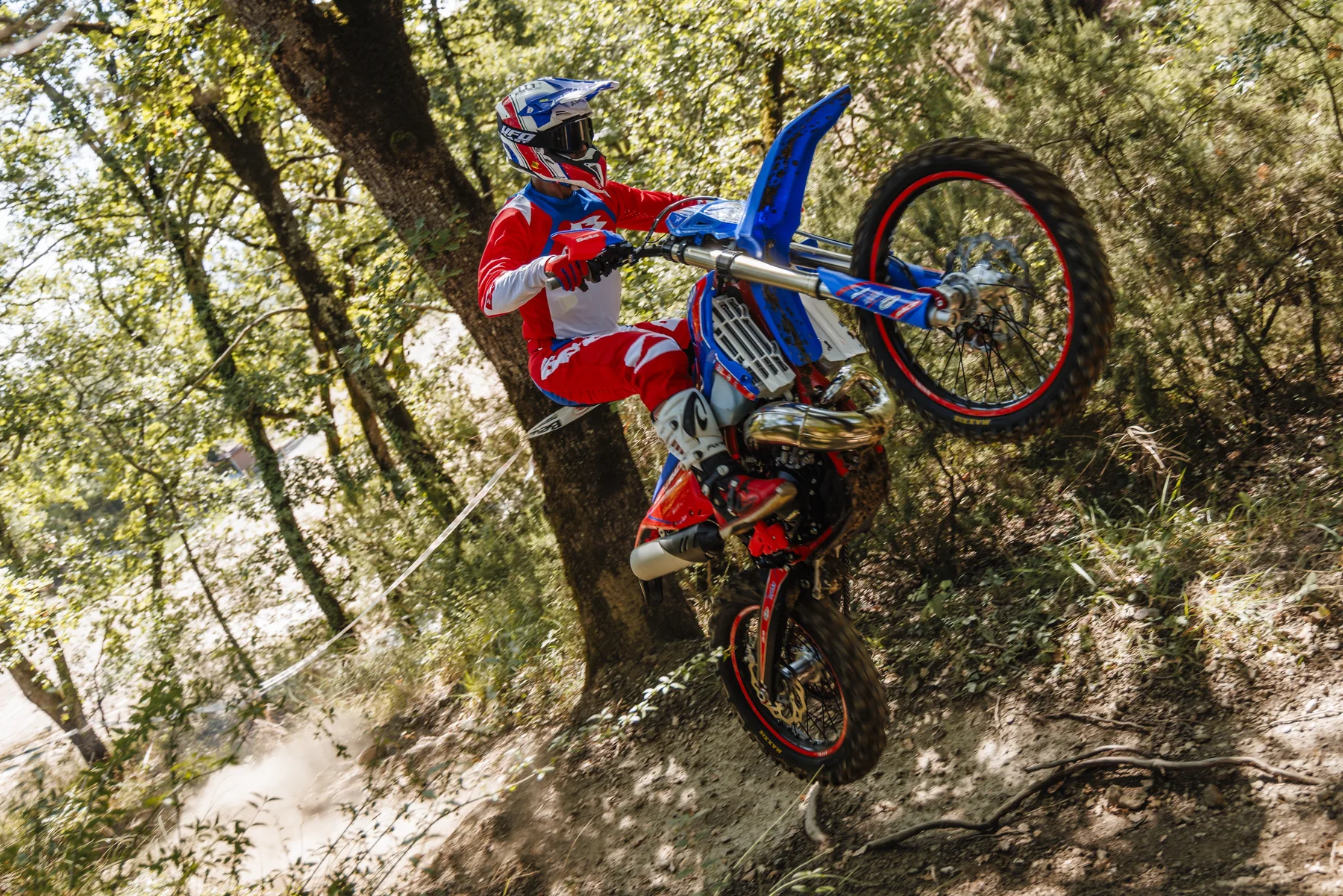
rider on a BETA RR Race 300 2T 2027 on a steep incline. Photo: Betamotor.
BETA RR Race 4T 2027 in action
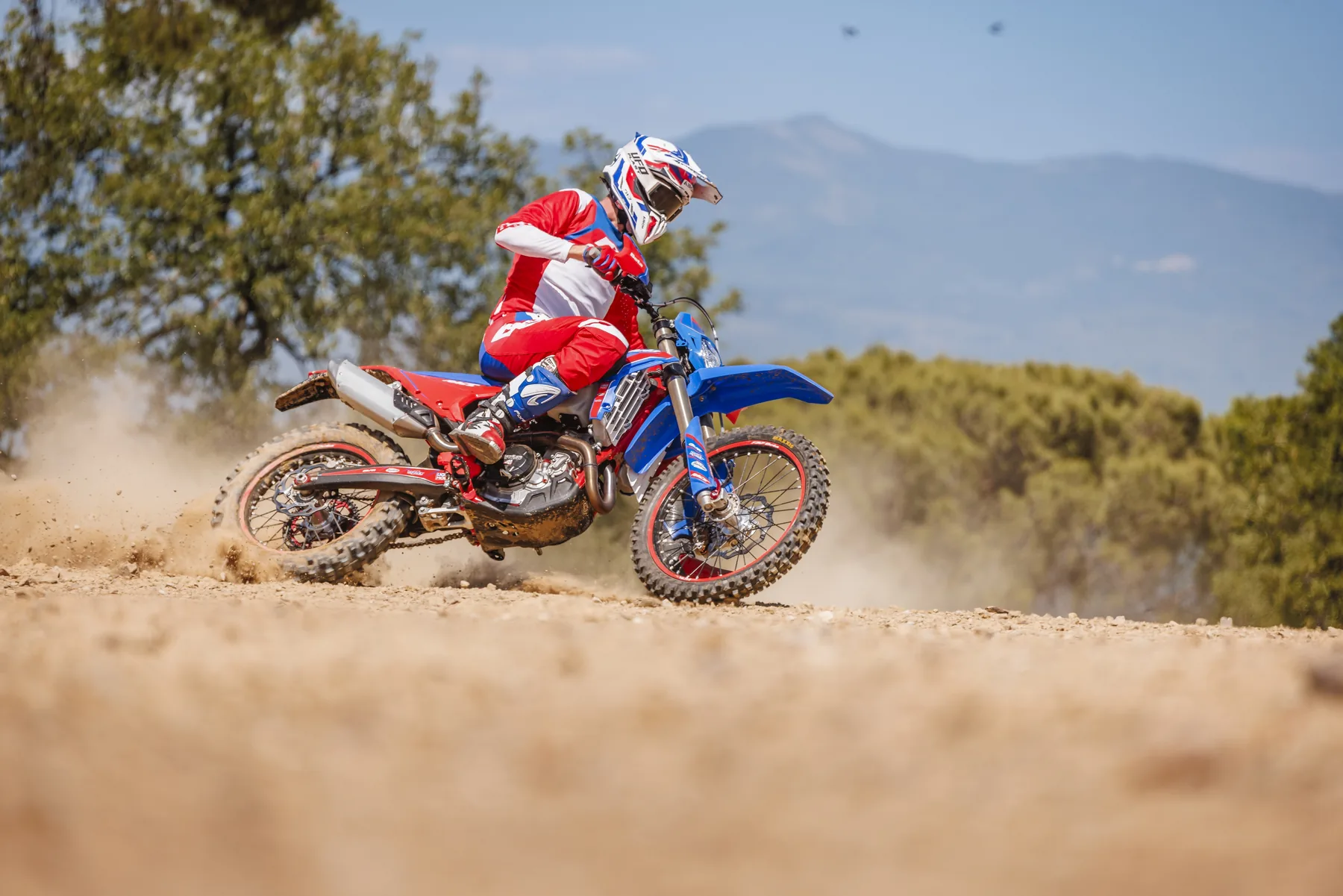
rider on a BETA RR Race 4T 2027 on a large curve on dry ground. Photo: Betamotor.
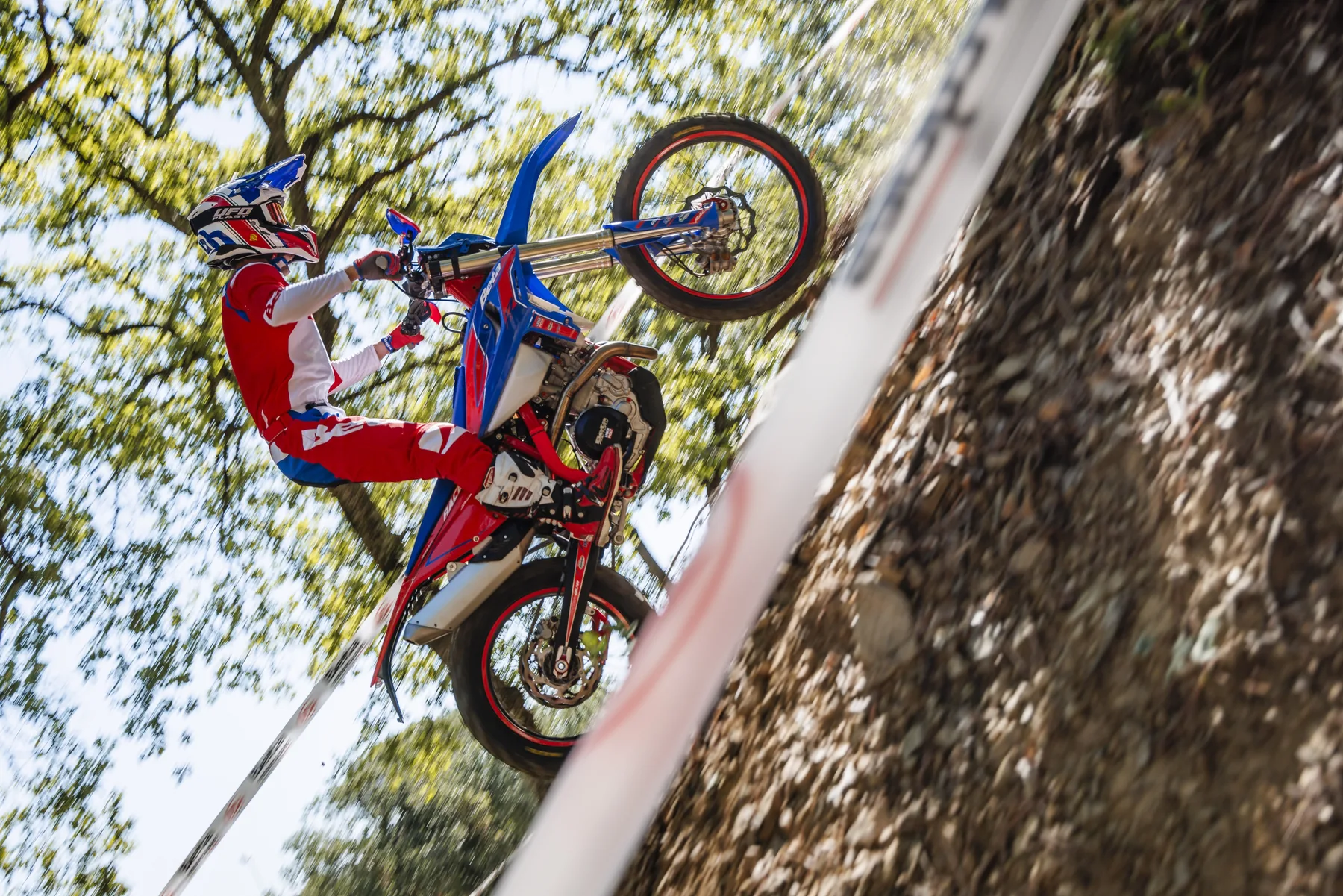
rider on a BETA RR Race 4T 2027 on a very steep incline. Photo: Betamotor.
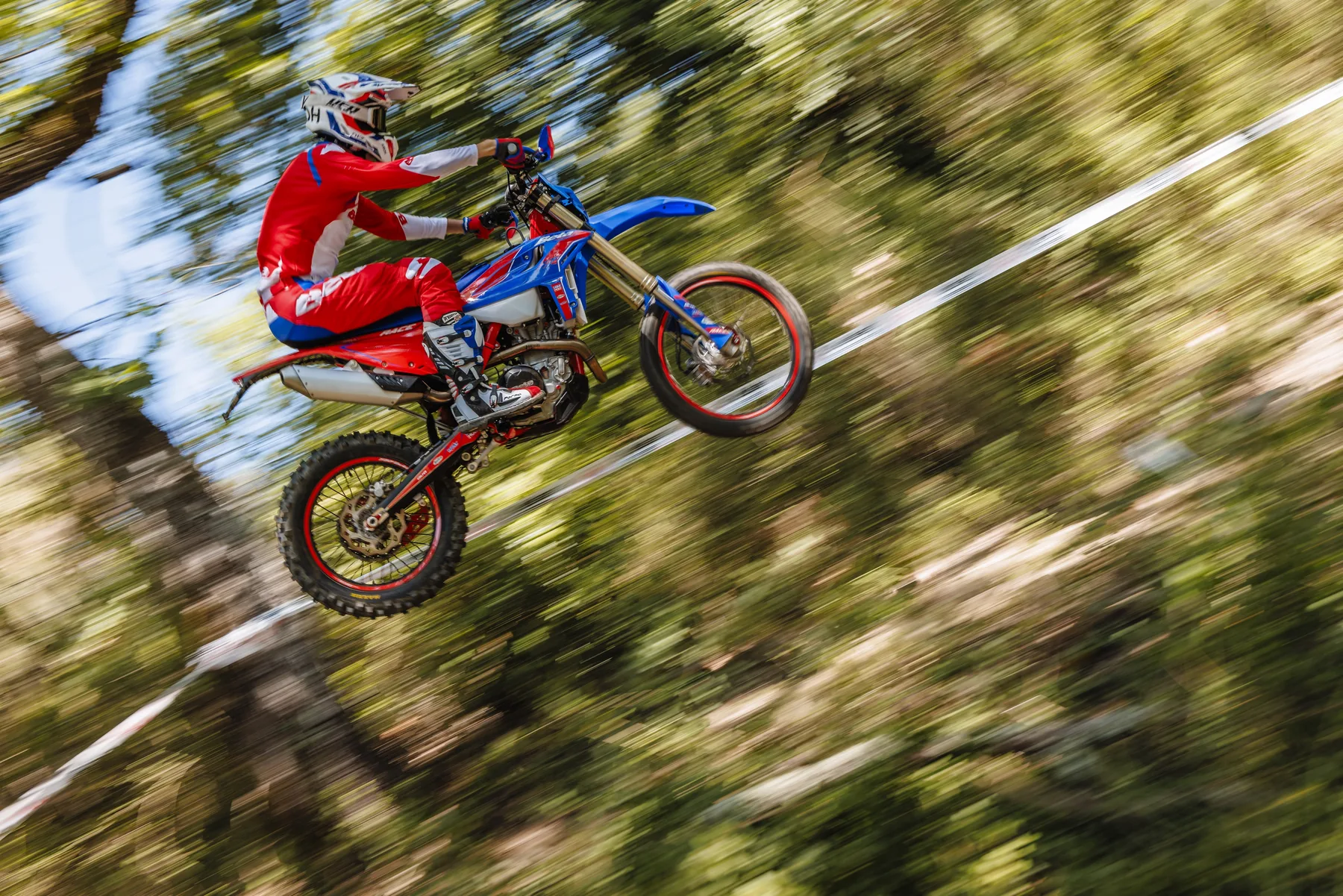
rider on a BETA RR Race 4T 2027 in jump with a dynamic filé. Photo: Betamotor.
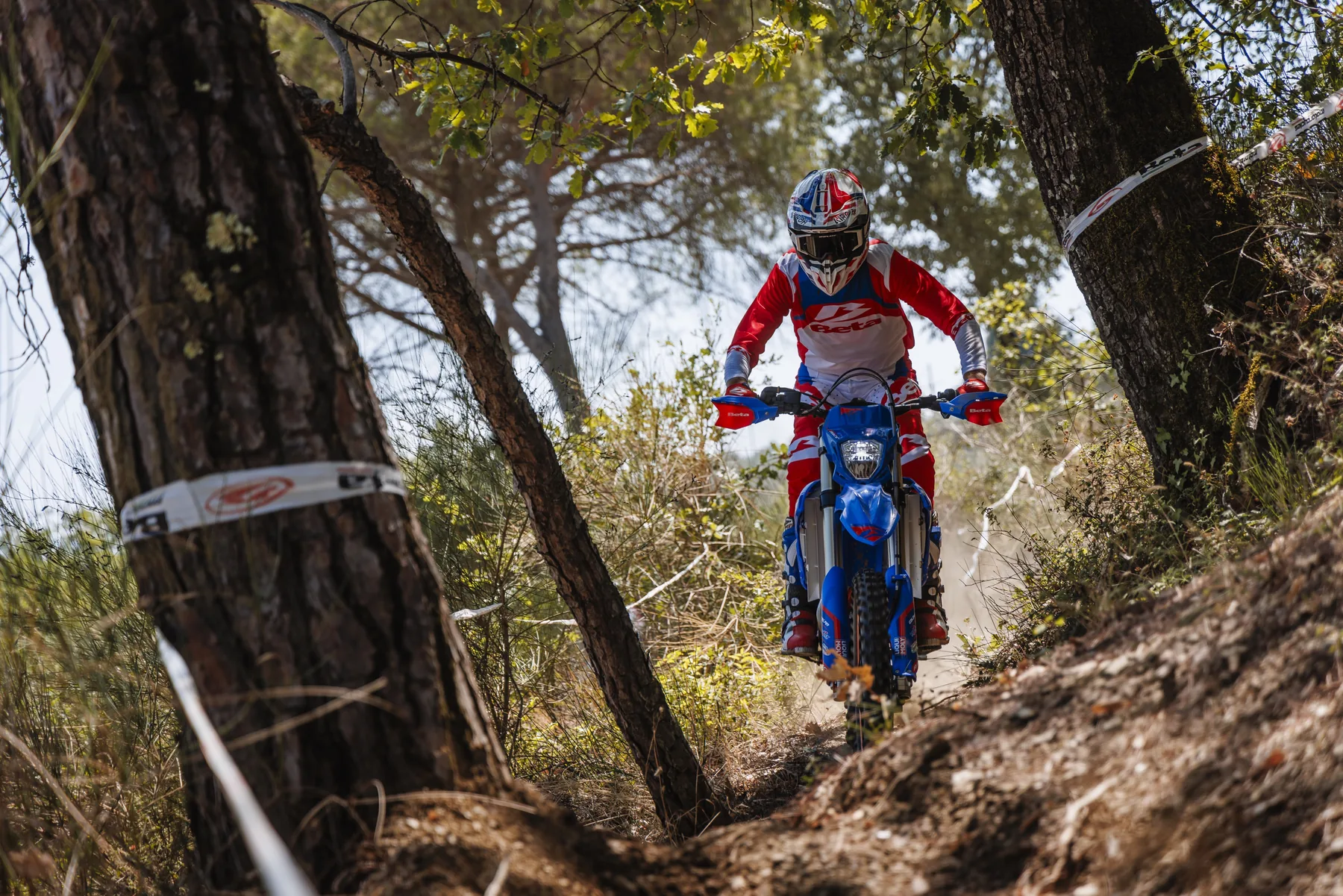
rider on a 2027 BETA RR Race 4T from the front in a wooded special, headlight on. Photo: Betamotor.
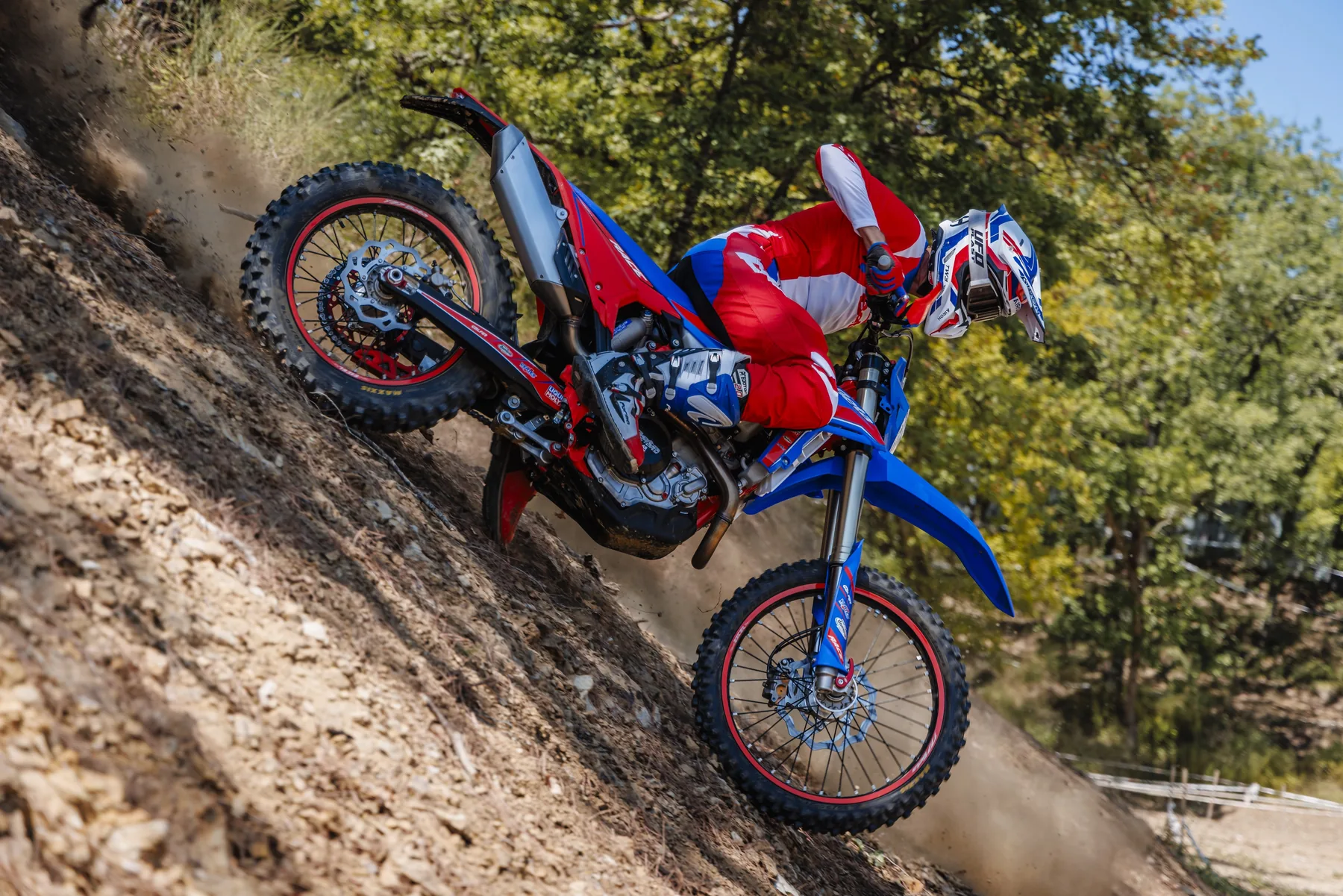
rider on a BETA RR Race 4T 2027 on a steep slope. Photo: Betamotor.
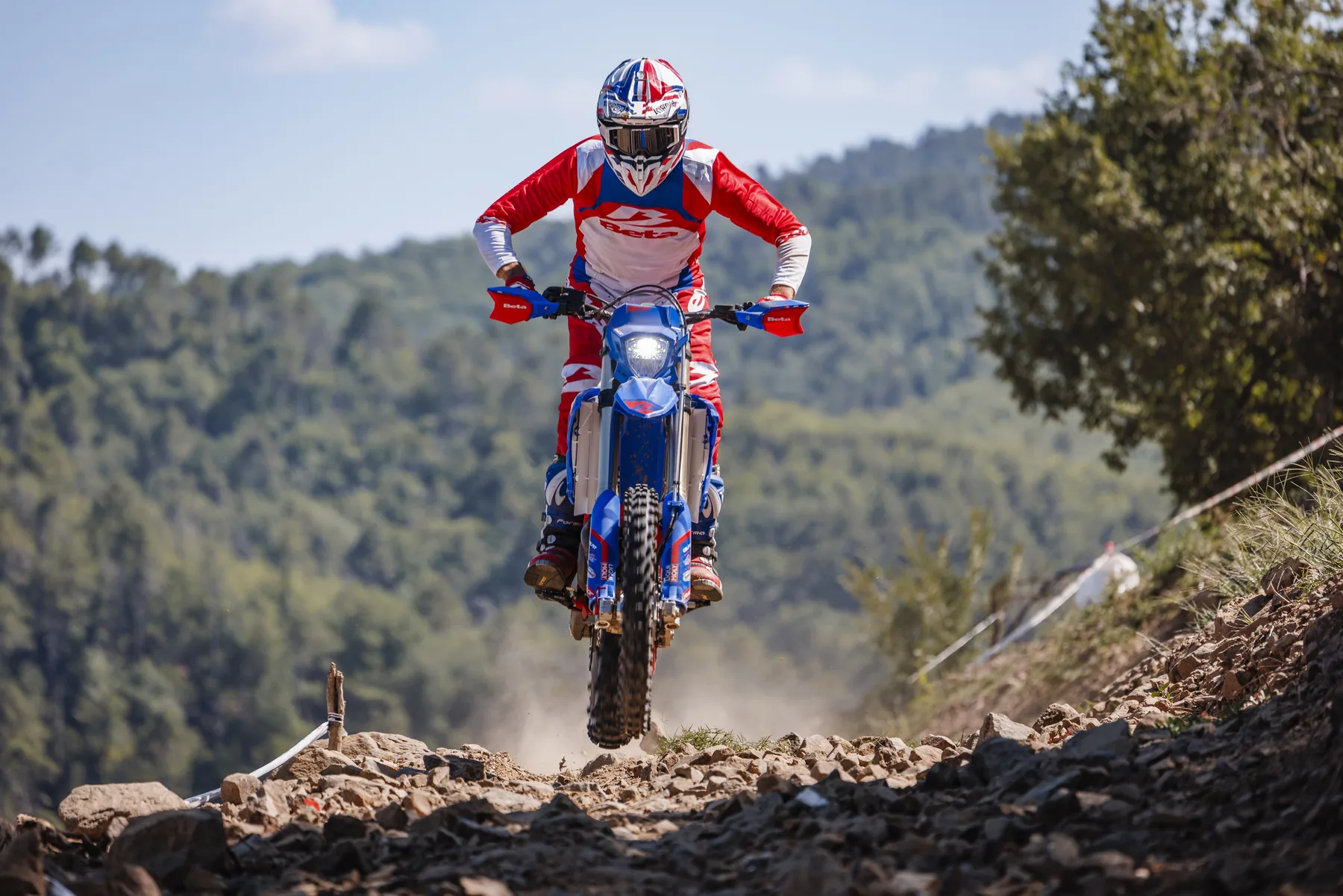
rider on a BETA RR Race 4T 2027 from the front in a jump on a rocky area. Photo: Betamotor.
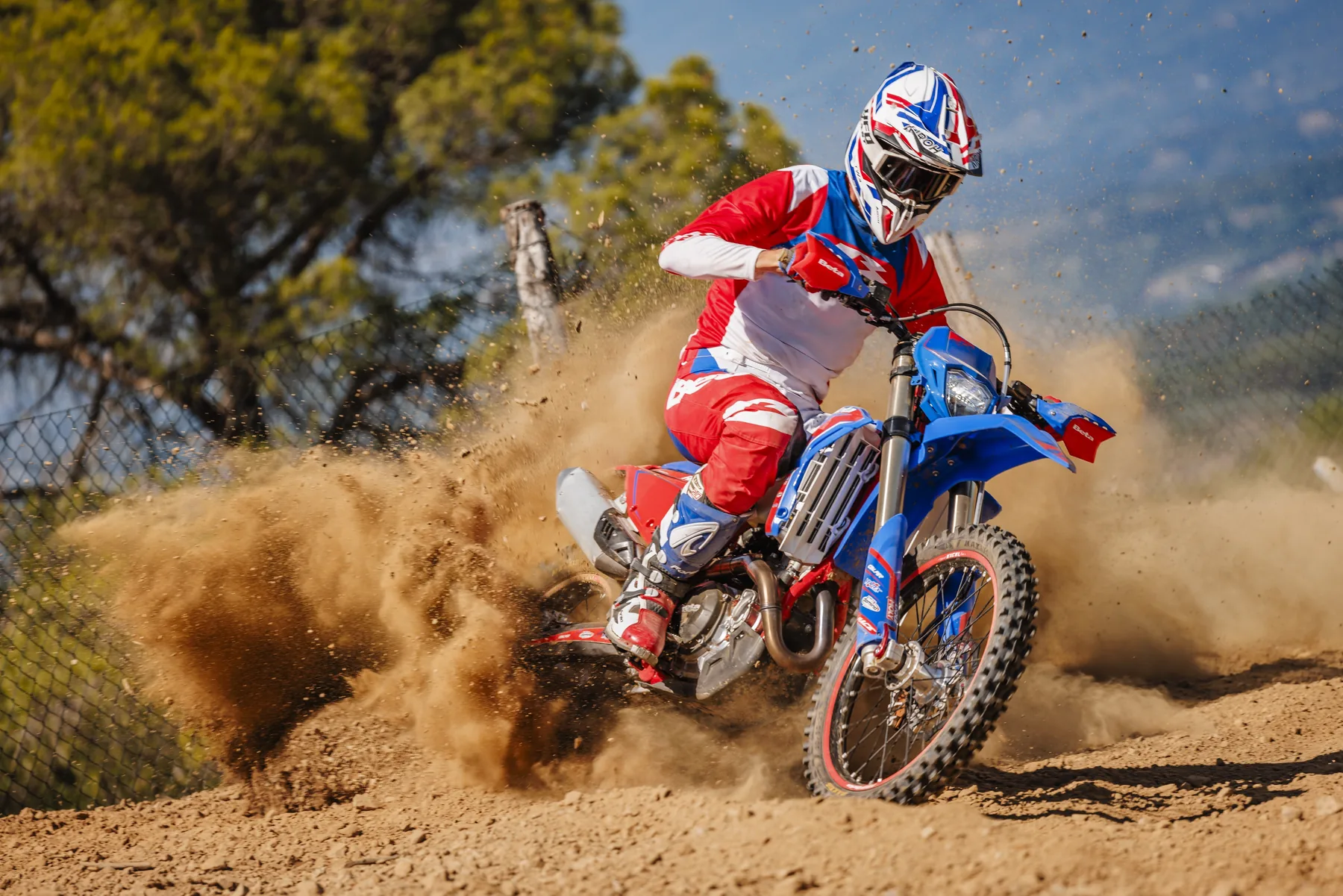
rider on a BETA RR Race 4T 2027 in support in a sandy corner. Photo: Betamotor.
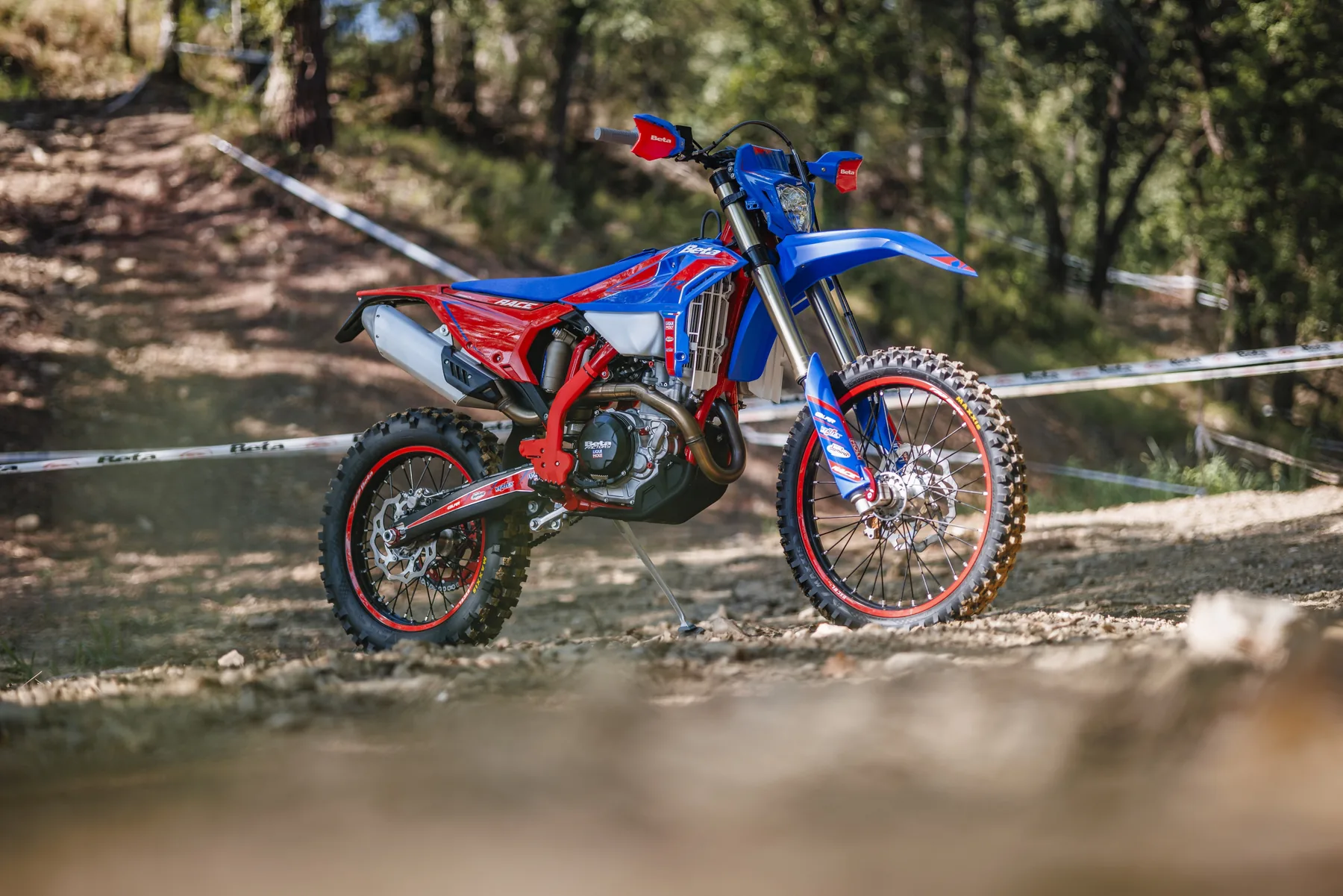
rider on a BETA RR Race 4T 2027 immobilized in a wooded special. Photo: Betamotor.
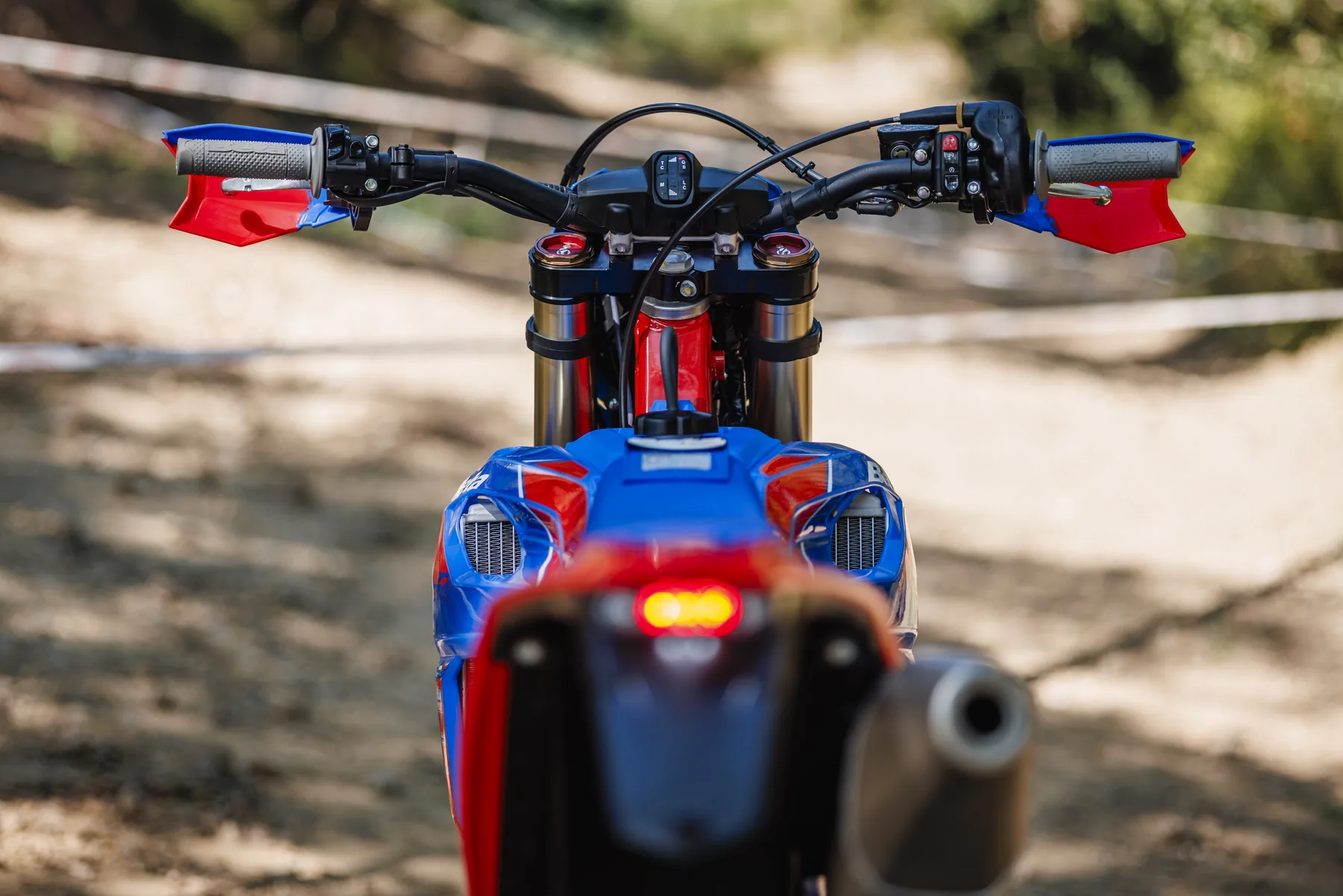
BETA RR Race 4T 2027, rear view with lights on. Photo: Betamotor.
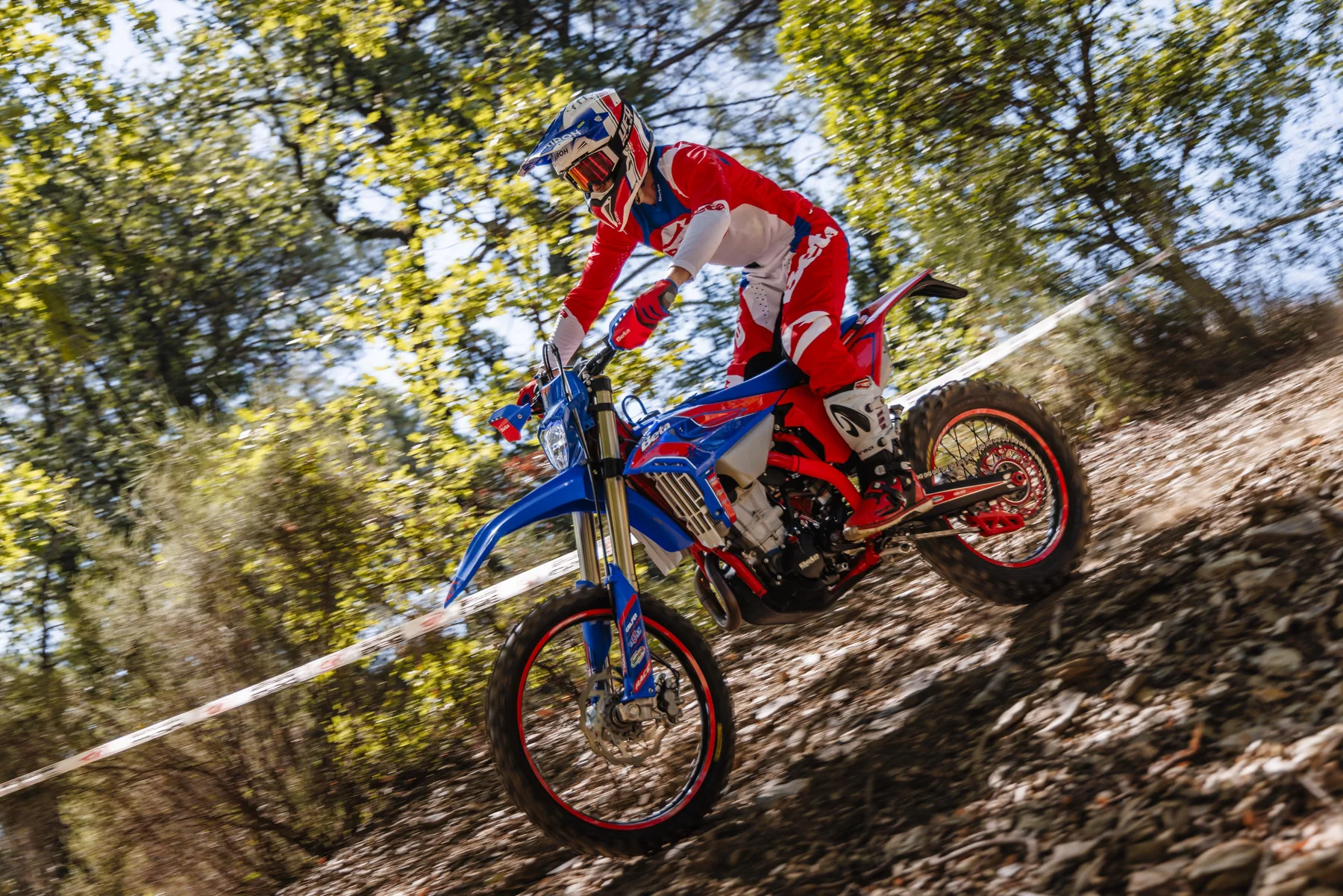
rider on a BETA RR Race 4T 2027 in a rocky descent. Photo: Betamotor.
Additional studio views
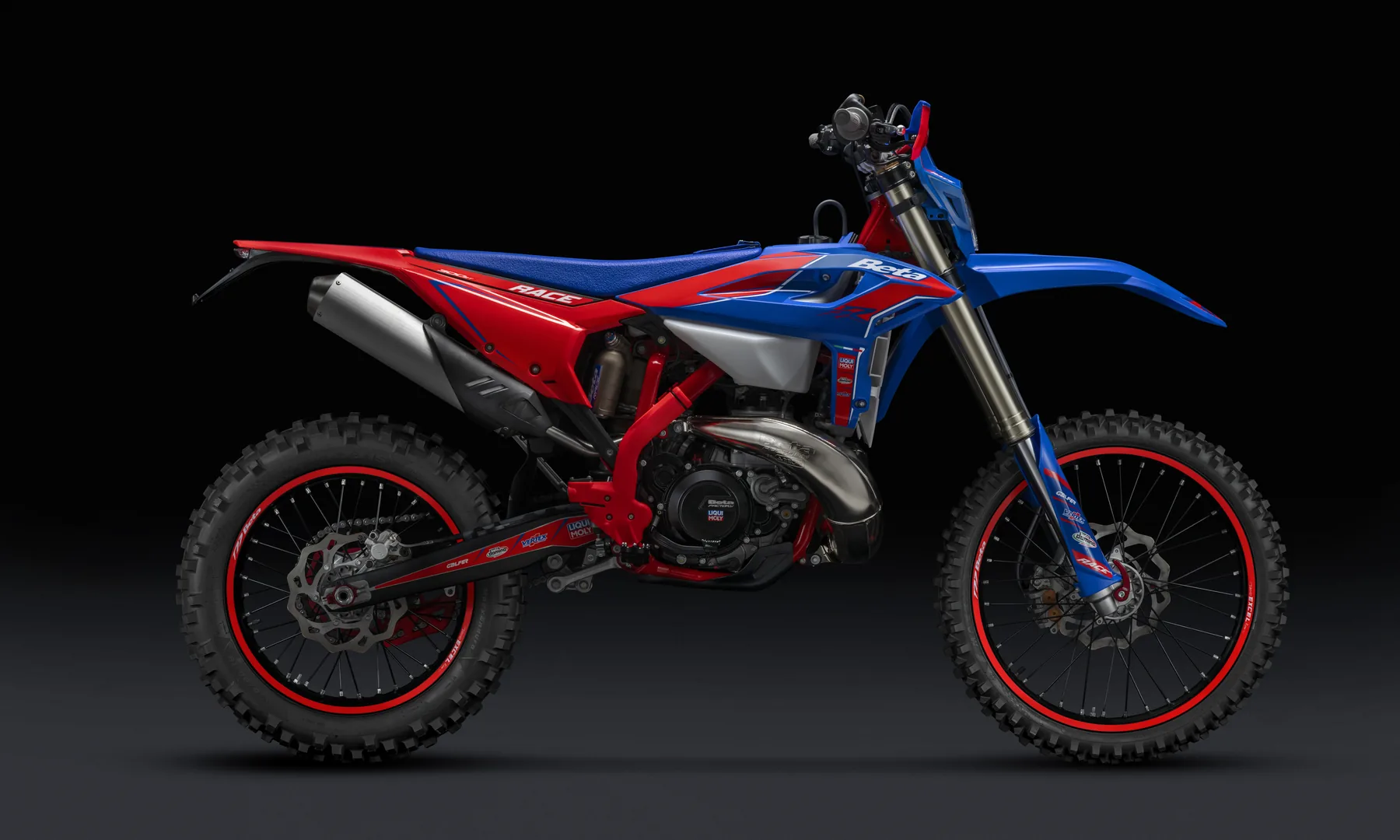
BETA RR Race 300 2T 2027 on a dark background. Photo: Betamotor.
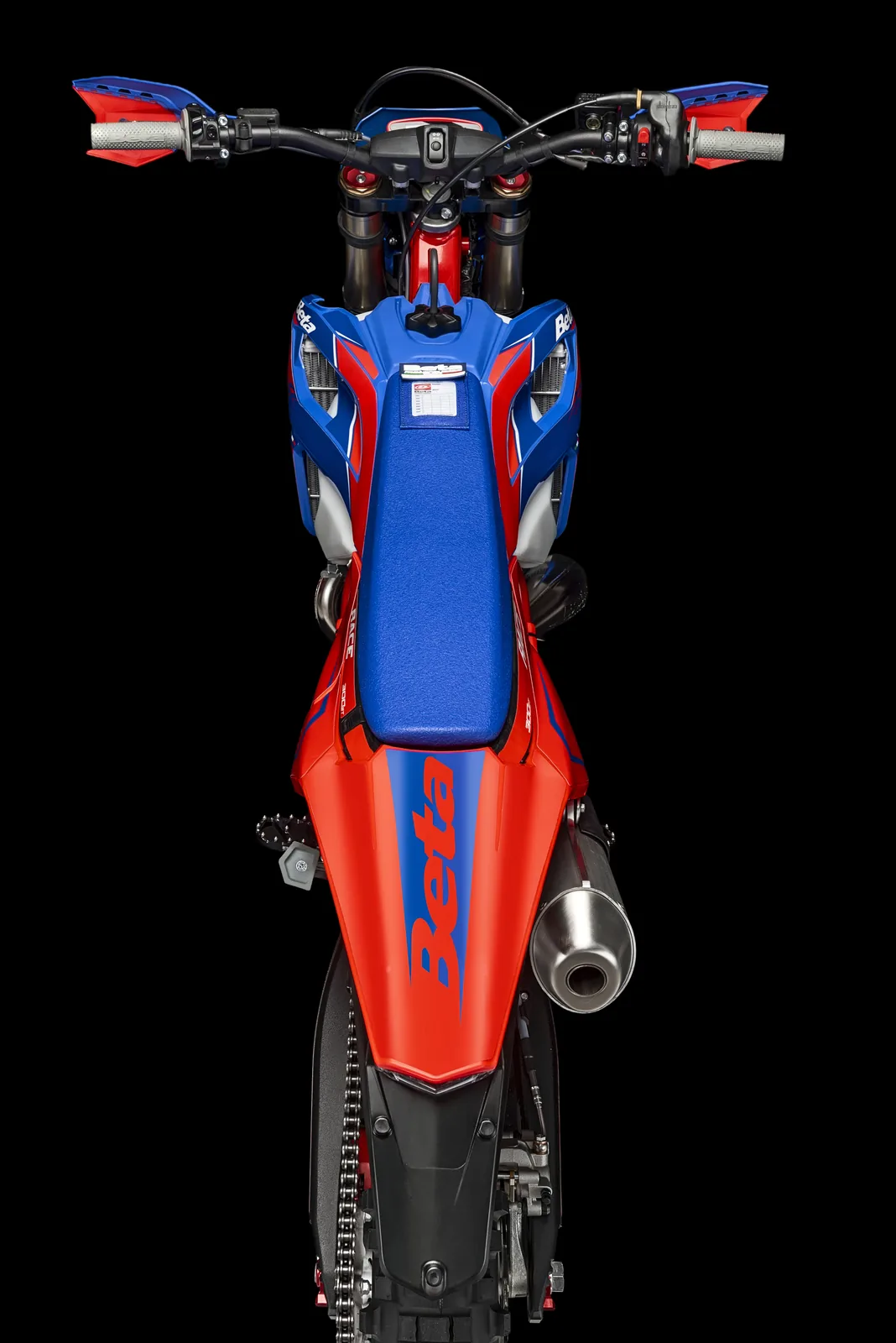
BETA RR Race 300 2T 2027 top and rear view. Photo: Betamotor.
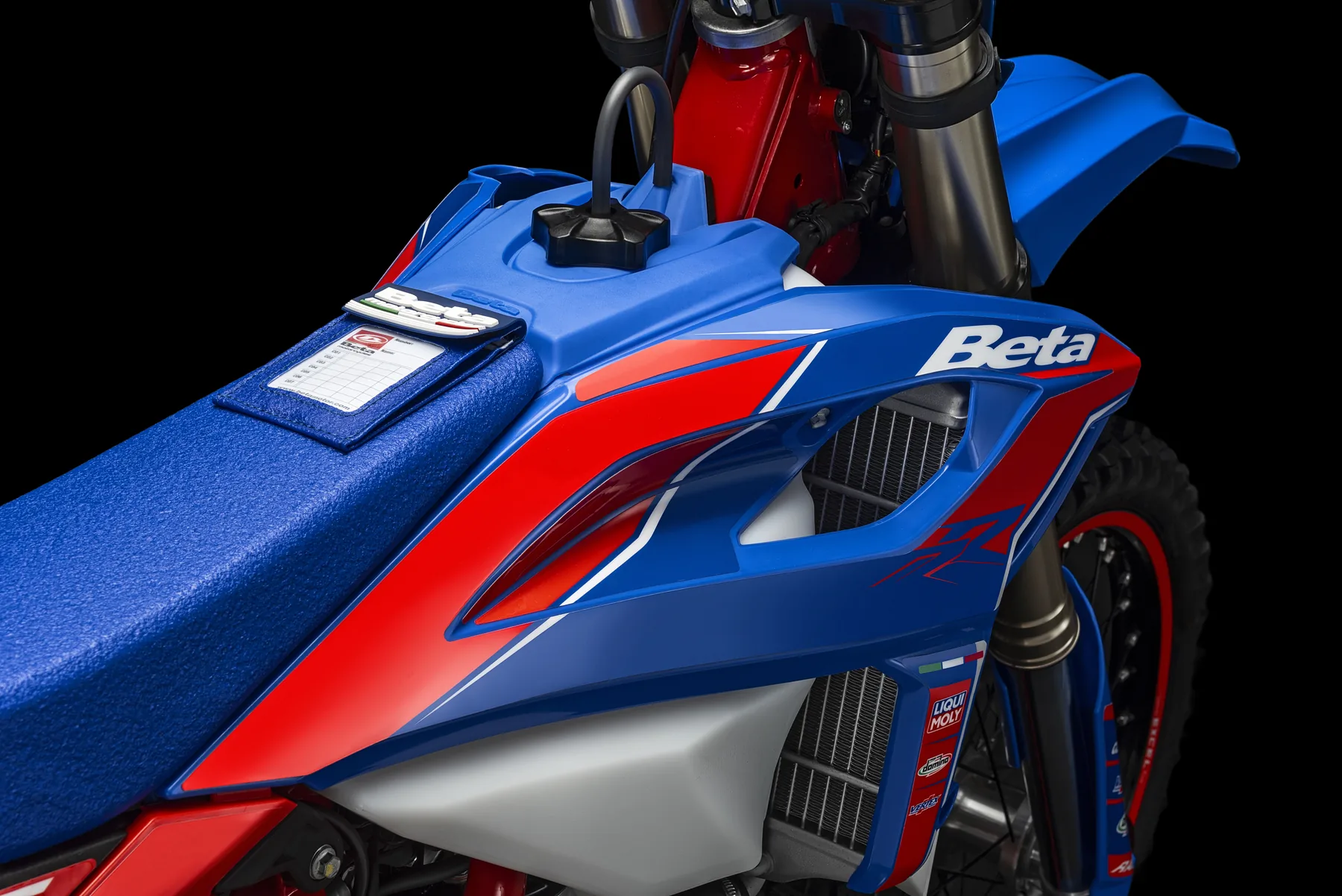
BETA RR Race 300 2T 2027 on a white background. Photo: Betamotor.
RR Race Universe
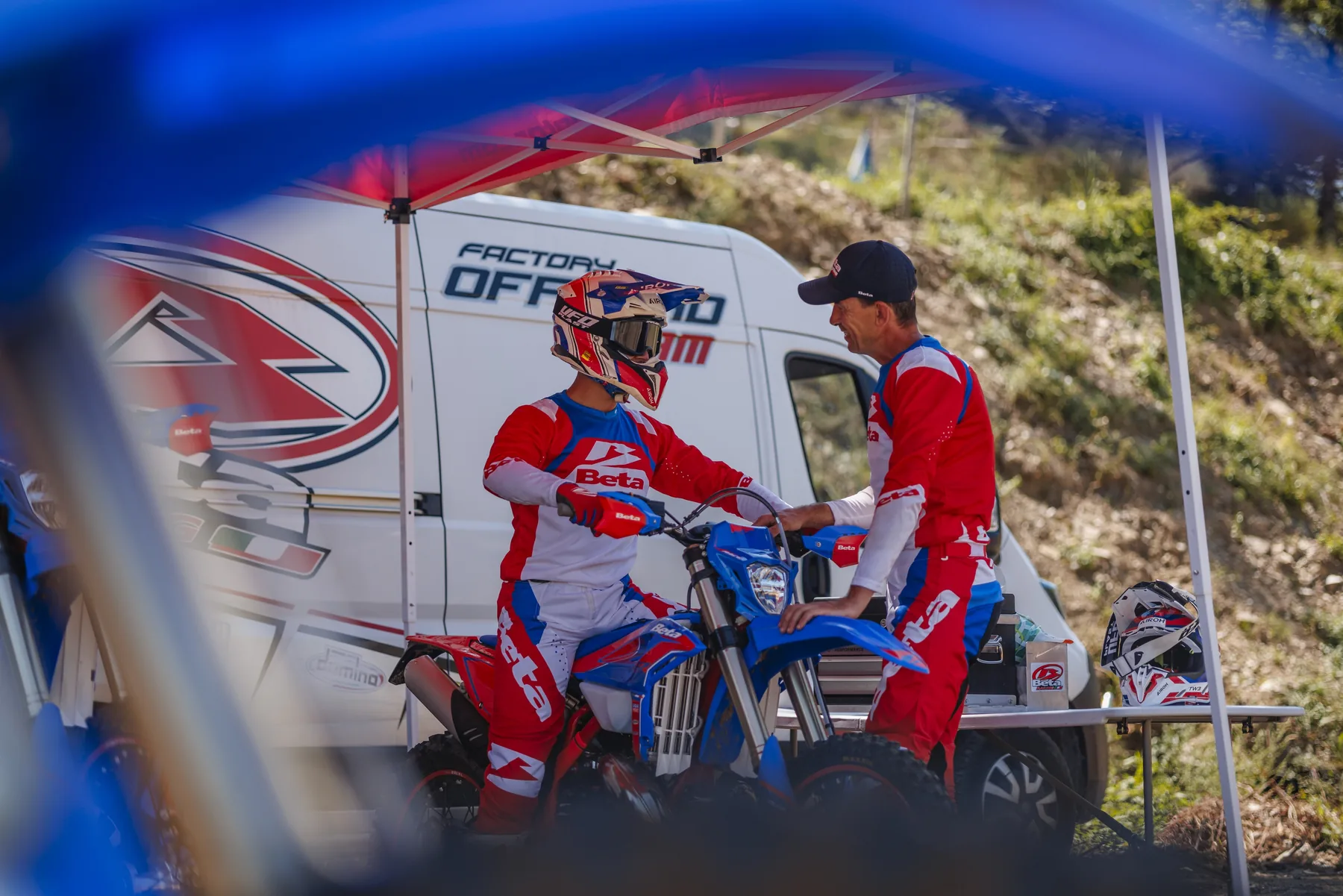
Beta rider and technician preparing an RR Race 2027 in the paddock. Photo: Betamotor.
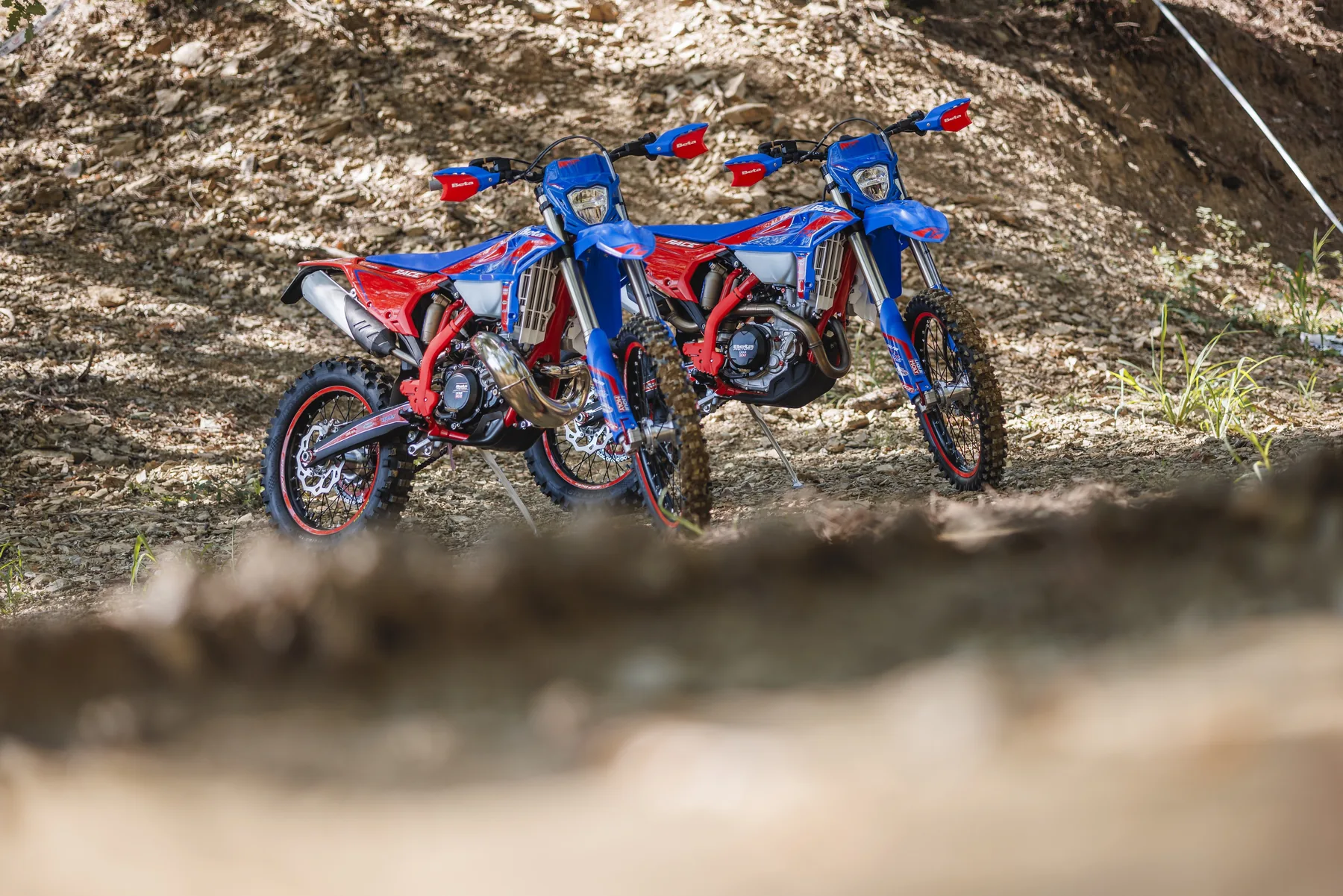
Three BETA RR Race 2027s gathered in a special. Photo: Betamotor.
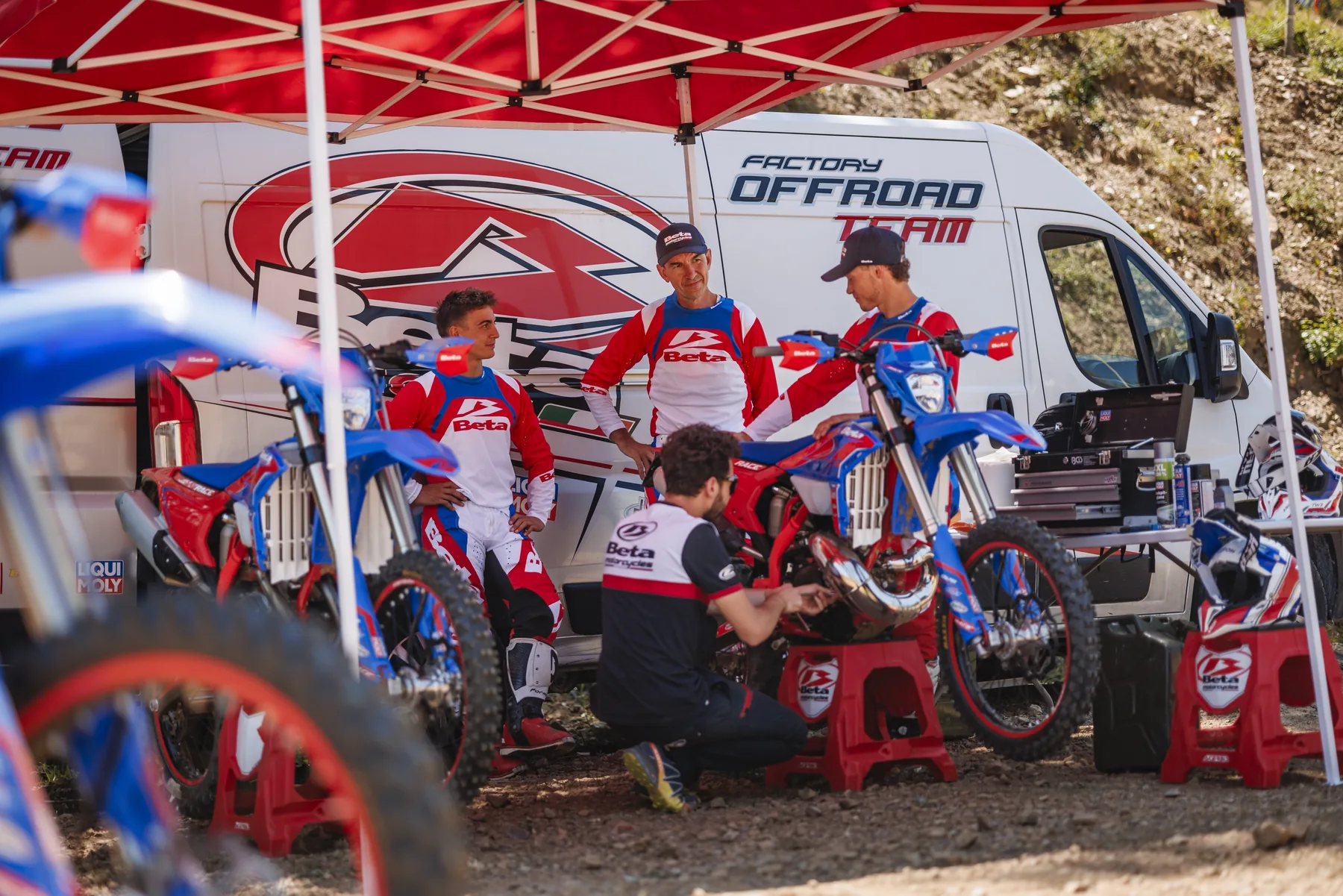
Beta team around the RR Race 2027 in the paddock. Photo: Betamotor.
Preparation and paddock
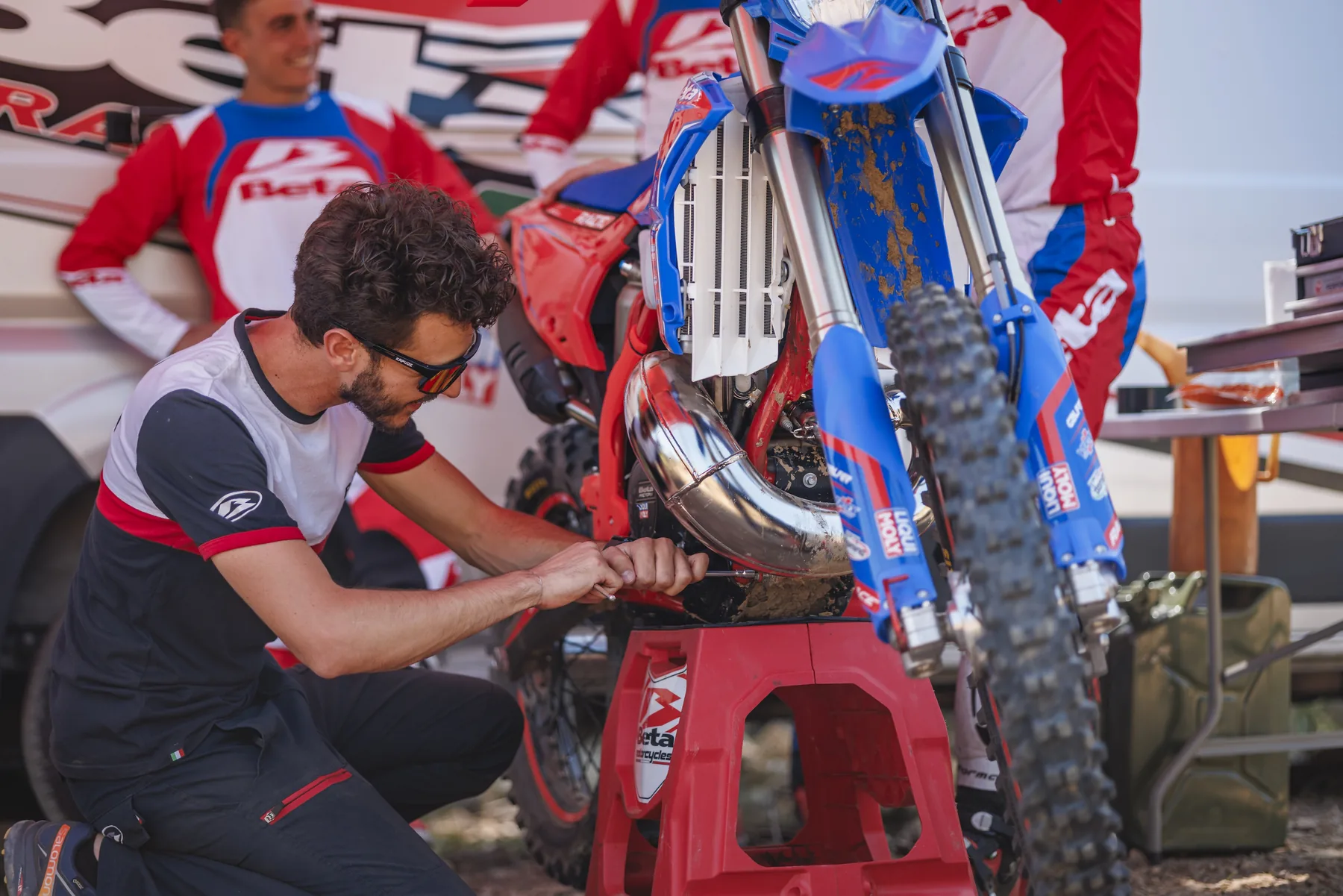
Beta technician working on the front wheel of an RR Race 2027. Photo: Betamotor.
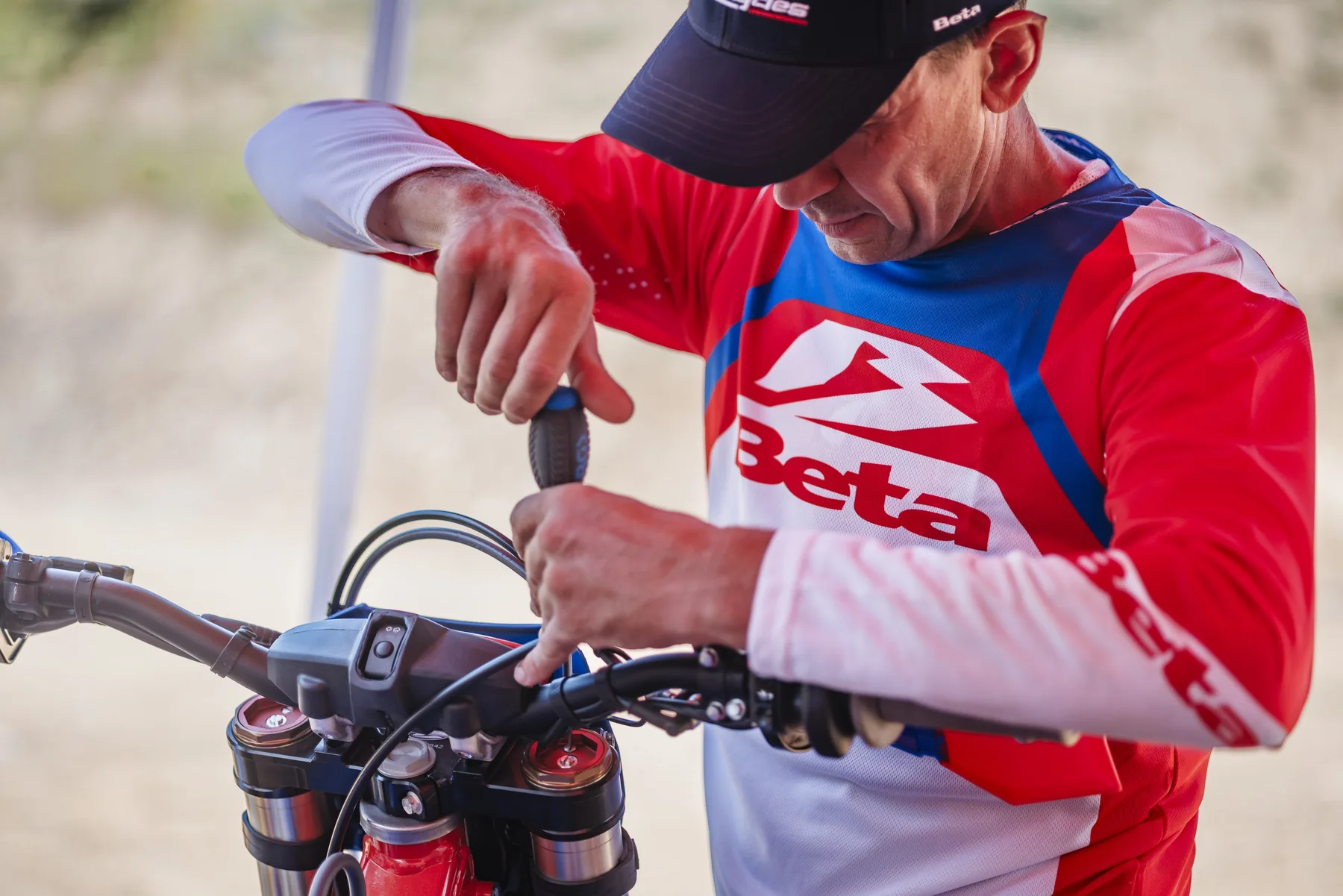
rider adjusting the KYB fork of a BETA RR Race 2027. Photo: Betamotor.
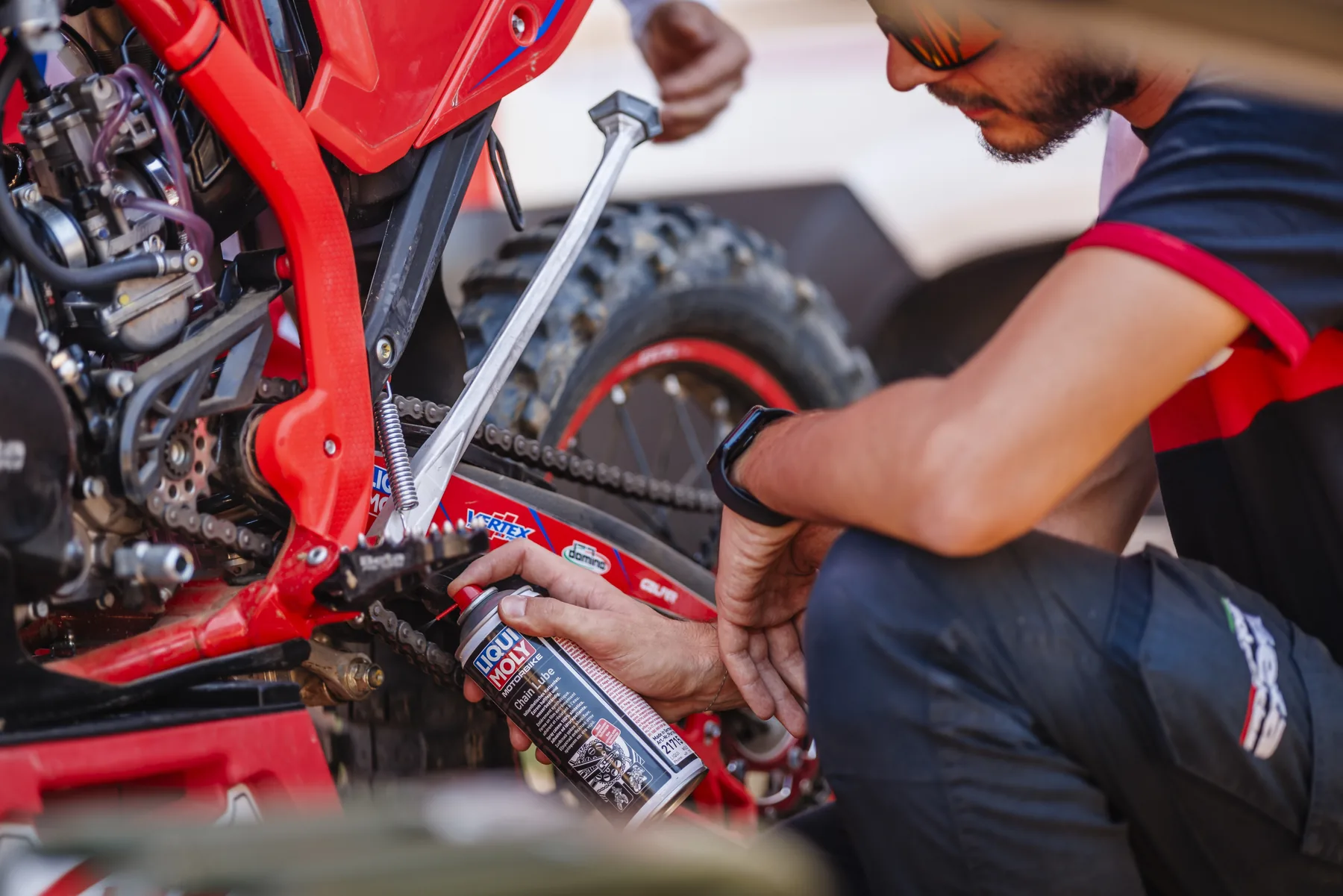
Maintenance of the engine of a BETA RR Race 2027 in the paddock. Photo: Betamotor.
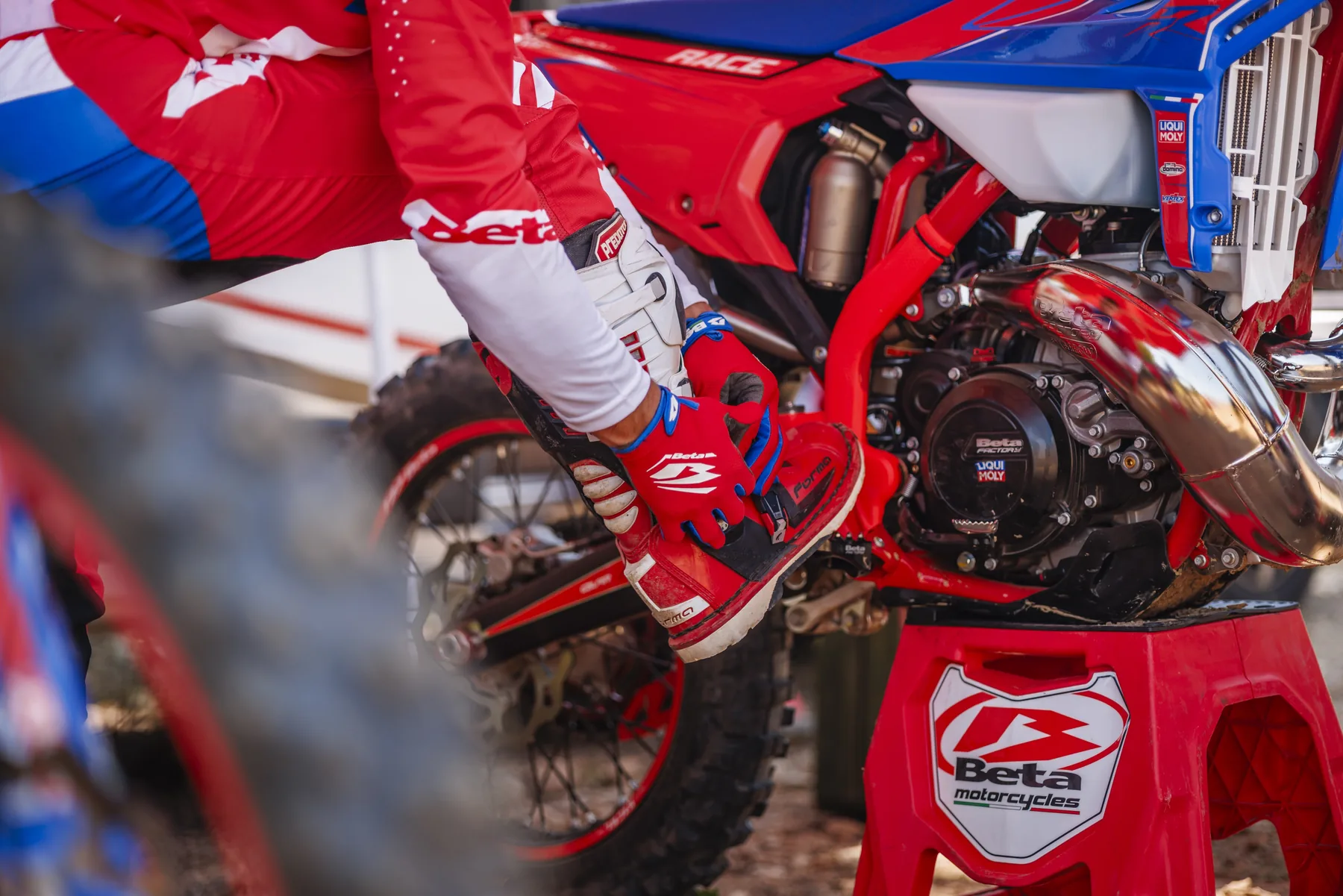
rider on the handlebars of a BETA RR Race 2T 2027 on the motorcycle lift. Photo: Betamotor.
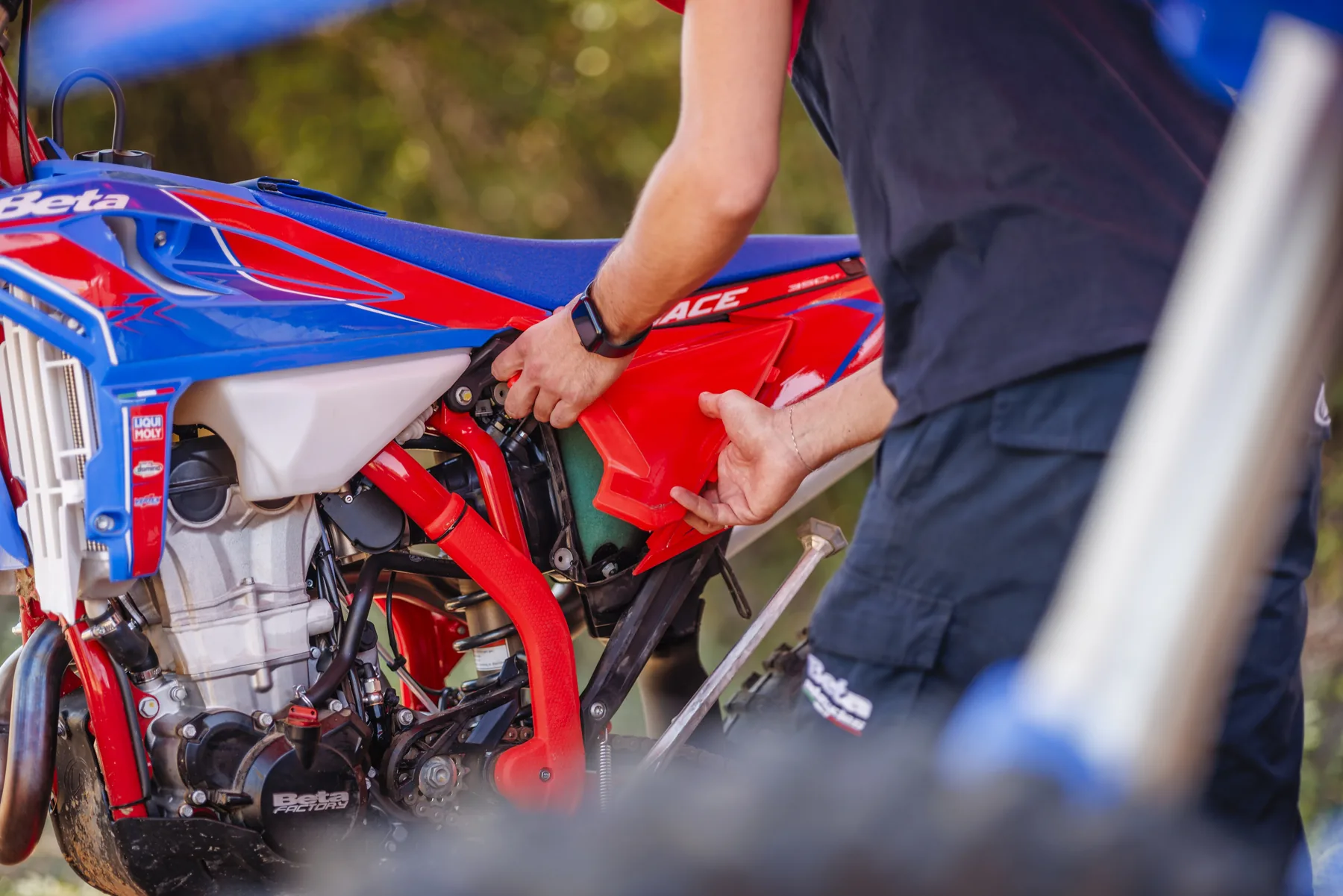
Detail of the blue and red livery of a BETA RR Race 2027. Photo: Betamotor.
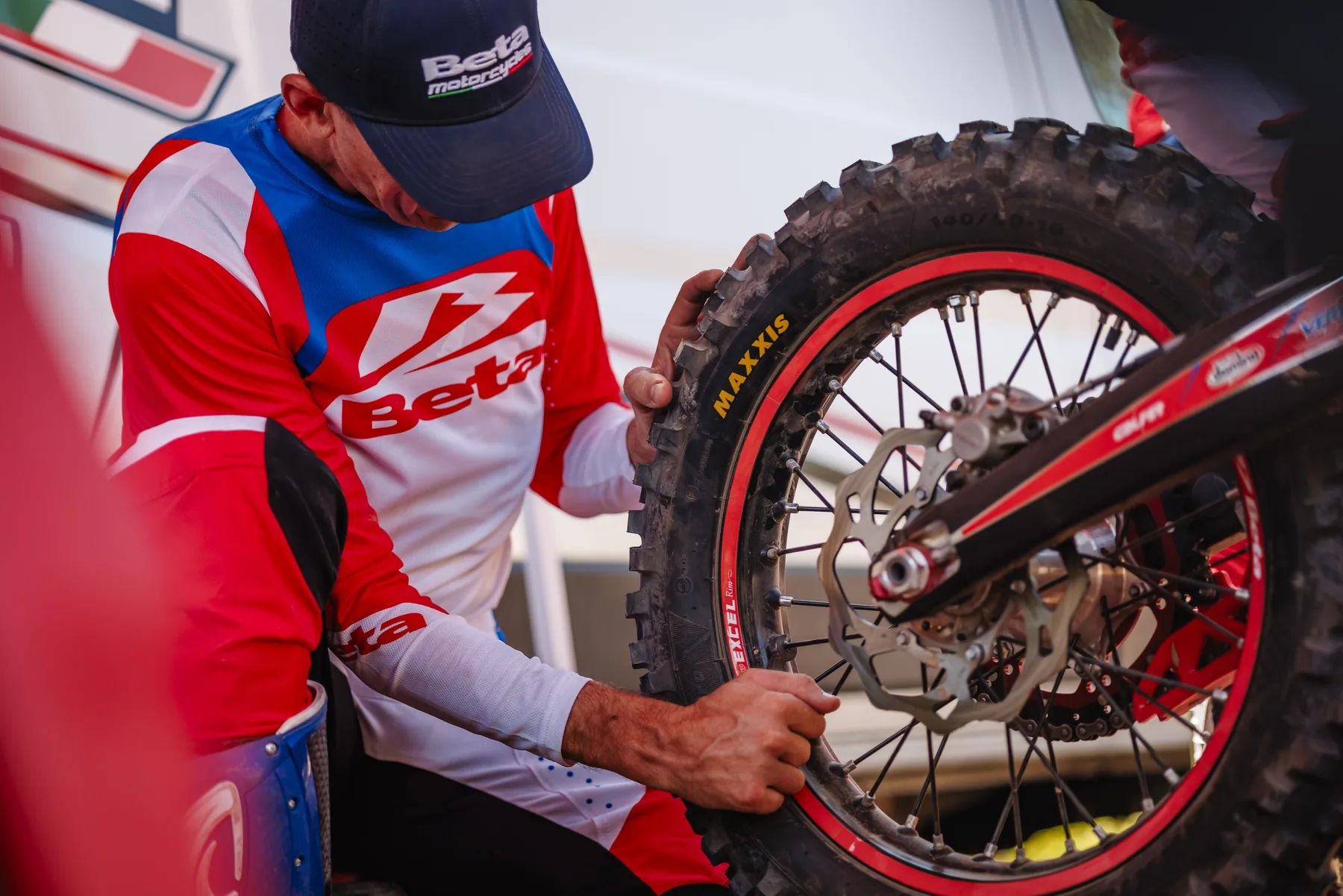
rider controlling the rear wheel of a BETA RR Race 2027. Photo: Betamotor.
Sources and method
- Official press file "RR Race MY 2027", French and English versions, Betamotor, transmitted on August 31 and September 1er 2026.
- Official technical sheets "TECH DATA RR Race MY 2027", French and English versions, eight models.
- Sales price including VAT France Betamotor in force as of August 7, 2026.
- Official presentation of the RR Race range by Betamotor.
- Official presentation of the RR X-PRO 2027 range For positioning comparison.
Credit for all photographs: Betamotor. Features may change without notice; always check the sheet of the model actually marketed and its user manual.
Frequently asked questions
How many models does the BETA RR Race 2027 range have?
Eight models: 125, 200, 250 and 300 2T, then 350, 390, 430 and 480 4T.
Which RR Race 2027s receive Launch Control?
The four RR Race 4T. The English documentation announces five levels of control.
Does the Quick Shift work on uphill and downhill?
BETA describes it as an up-shift system, therefore intended for gear shifting.
What are the new features of the RR Race 300 2T 2027?
New main crankshaft bearings, revised cylinder head geometry and new exhaust valve adjustment.
Do the RR Race 2T 2027 have separate lubrication?
No, no series. They work by mixing to reduce weight.
What is the saddle height?
950 mm on the eight models according to the official technical sheets.
Which is the lightest?
The 125 2T, with a dry weight announced of 94 kg.
When will they be available?
Betamotor announces availability in September 2026, without a detailed French date by engine displacement.
What is their price in France?
The VAT included price for France as of August 7, 2026 is €9,390 for the 125 2T, €9,790 for the 200 2T, €10,290 for the 250 2T, €10,490 for the 300 2T and €10,950 for each of the four 4T.